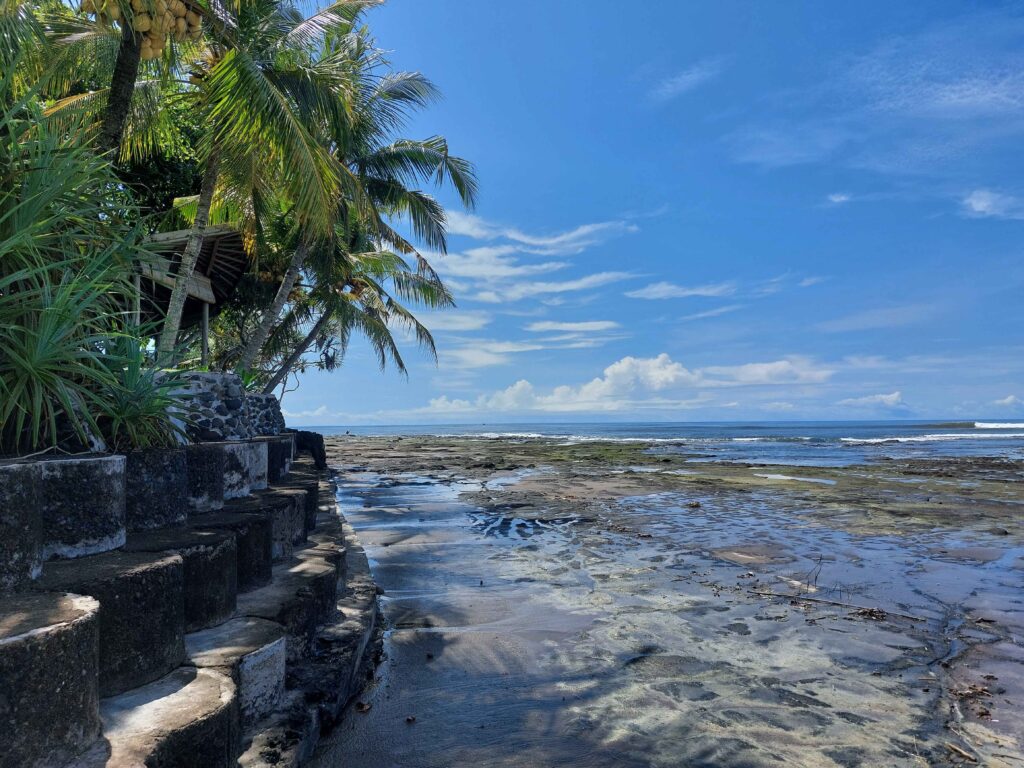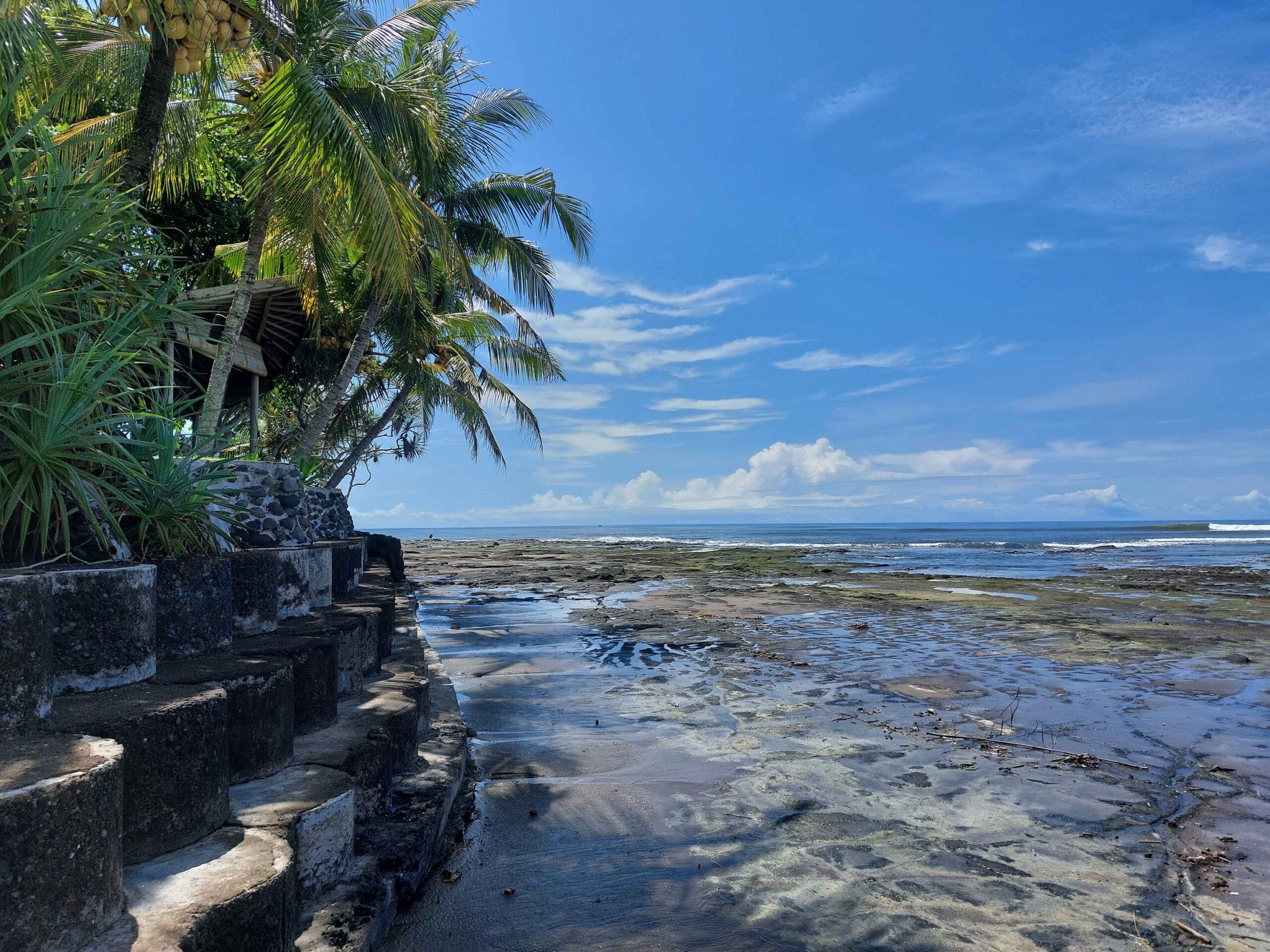
Coming from Java, we started our trip through Bali with a visit to the peaceful village of Pekutatan, located on the southwestern coast of Bali.
A place far away from popular mass-tourism places like Kuta Beach, Seminyak or Ubud. And for that reason, still blessed with a real taste of the Authentic Bali.
- We really have to thank Mark Eveleigh for our visit to Pekutatan. A tip he gave us when visiting us in Ecuador. After hearing of our plans for Indonesia he invited us to occupy one of the beautiful Airbnbs he & his other half – Narina – own in Pekutatan (see below, on Where to Stay).
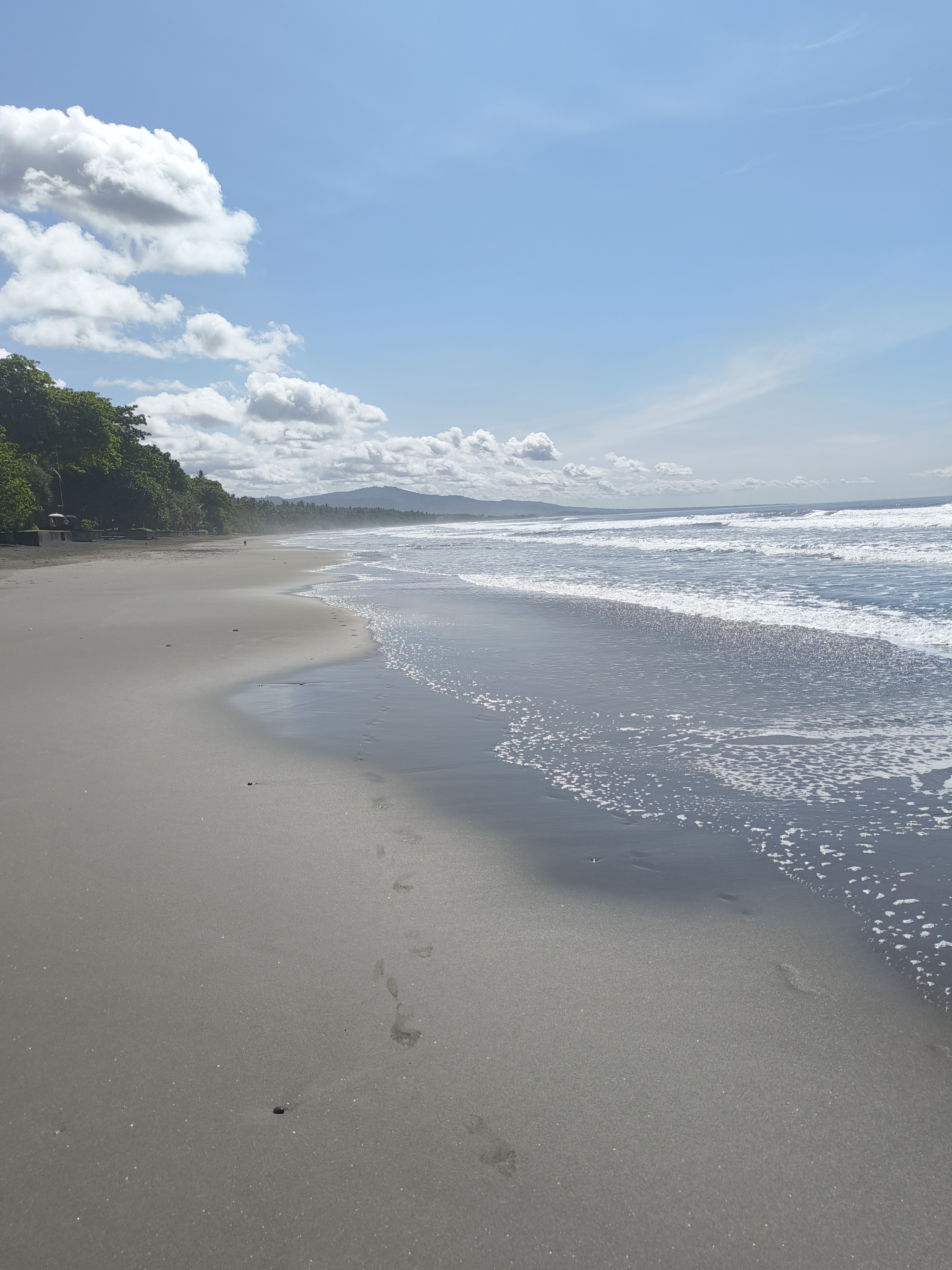
Starting in Pekutatan for us was a perfect choice. After visiting a lot of urban areas on Java, we needed clean air & a taste of nature again. That’s the “Escape” I’m referring to in this Post’s title.
Visit Pekutatan: Introduction
Although you’ll find tourists almost everywhere on Bali nowadays, Pekutatan still offers a glimpse of traditional village life. Mainly, the daily routine of farmers & fishermen.
I can imagine some readers asking themselves at this point: “Shouldn’t we leave them alone then?”. Certainly a valid question, but for many inhabitants tourism provides them with a welcome extra. Responsible tourism, that is.
Most inhabitants of this part of Bali welcome every visitor with open arms. The only thing they ask in return is to respect their way of life, the environment & their culture.
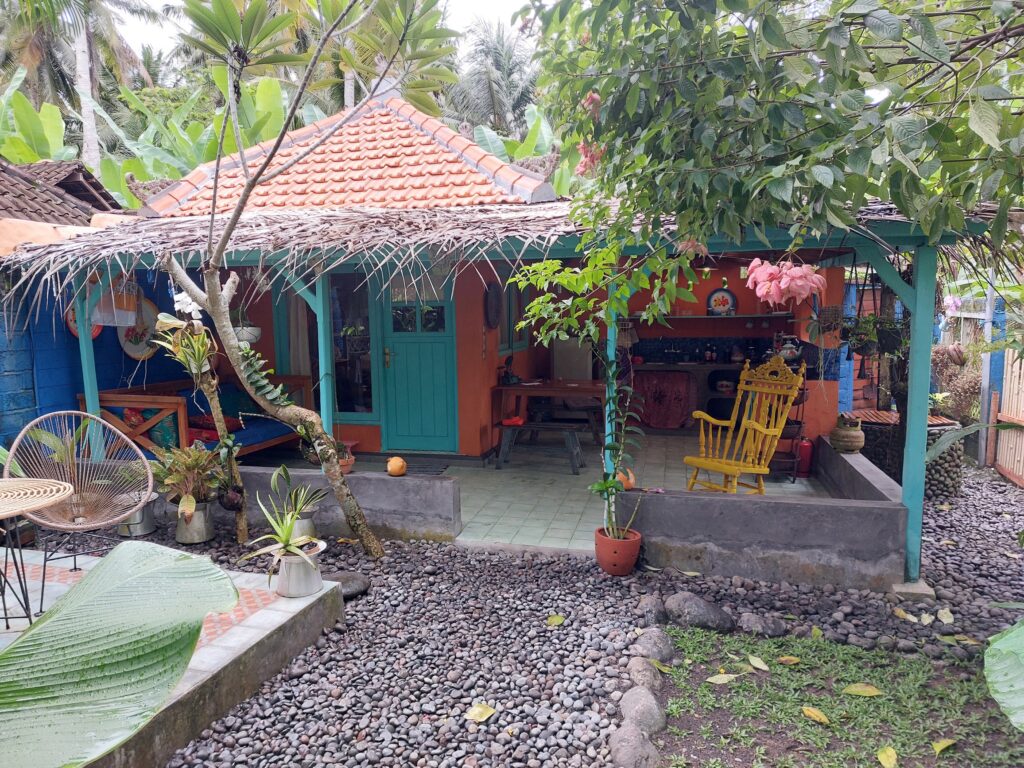
- As Mark & Narina are traveling the world almost continually, their Airbnbs are managed by a befriended local family. It was one of them – Komang (remember his name) – who picked us up at the Airport in Denpasar & took us to the “Hidden Well” – one of the Airbnbs.
Once there, we immediately felt the contrast between the busy setting we came from – urban areas, airports & loads of traffic – and the tranquility of our temporary “home” set in jungle greenery mixed with the sound of a sea breeze coming from the nearby sea & beach.
- The coast near Pekutatan is actually renowned among surfers worldwide. Particularly, Medewi Beach, having one of the longest left-hand breaks in the world.
In a few words, if you want to “escape the crowds” & get a real idea of a beautiful, authentic part of Bali, I highly recommend you to visit Pekutatan.
Before reading on:
- IMPORTANT MESSAGE: Throughout this post you’ll find affiliated links & ads provided by travel platforms like Trip.com & GetYourGuide. Links & ads that may help you plan & fill in your next trip to Bali, Indonesia.
- If you click on them & buy a ticket for a museum or a tour a small commission of your purchase will go to me (Paid by the provider, without any extra cost to you!).
- If you first want to learn a little bit more about me, the blog writer, please click on: Better call me Art.

Short history of Pekutatan
Pekutatan village (desa) belongs to the Jembrana Regency, which is the westernmost part of Bali.
- !!! Before visiting a certain place, it’s good to learn about its history. However, if you already know about Bali’s past, or aren’t that interested for now, click on the next segment: Things to do in Pekutatan & around.
Early history
The Jembrana Regency has a long history. Archaeological evidence in areas like Gilimanuk – at the western tip of Bali – suggests human habitation even before the Christian era.
For a long time however, West Bali – including Pekutatan – was sparsely populated & considered somewhat of a “marginal part” of the larger Balinese kingdoms centered in the east.
The Majapahit Empire
Around the middle of the 14th century Bali fell under the influence of the East Java-based Majapahit Empire (1292–1527). An extensive realm which at the time continued its steady expansion across the archipelago & around.
- At its peak in the 14th century, Majapahit ruled the major islands of modern Indonesia & exerted primary economic influence over the present-day Malaysia, Singapore and southern parts of Thailand & the Philippines.
When later on – during 15th & 16th centuries – Islamic sultanates rose to power, the Majapahit Empire began to collapse. Triggering an exodus of many Javanese Hindus across the Bali Strait.
In that sense, most Hindus in Bali nowadays are survivors of the Islamic takeover. Guarding with dedication their religion, culture, customs & traditions.
Especially West Bali, which was always nearest to Java & is still not affected too much by mass-tourism.
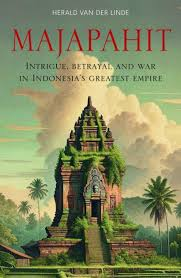
- Booktip: If you want to know more about the Majapahit Empire I highly recommend you to read: Van der Linde, Herald, Majapahit – Intrigue, betrayal and war in Indonesia’s greatest Empire, 2024, Monsoon (Burrough on the Hill, UK).
Dutch colonial presence
Although the Dutch traders – who arrived in the Indonesian archipelago during the 16th century – concentrated their first attention on Java, over time they would also set their eyes on neighboring Bali.
Like the rest of the island, the Jembrana Regency came under Dutch colonial rule in the first half of the 19th century.
- In years leading up to the final Dutch takeover, hundreds of Balinese royals & warriors chose to commit ritual suicide (“Puputan”). A dark period in the history of Bali.
An outside occupation which logically would significantly disturb the local way of life.
Local resistance
Although the Dutch generally worked with local authorities – regents or rajas – they obliged peasants to work for them. That is, producing certain products for export, as well as paying taxes. Logically leading to a lot of resistance.
Although the opposition was fiercer on other parts of the island, the people in the Jembrana Regency also found many ways to resist the Dutch colonizers, their rules & laws.
Meanwhile the Dutch managed to open up the Regency to the rest of Bali and the world. Constructing & improving roads along the coast as well as inland. Mainly for military & economic reasons of course, but simultaneously ending Jembrana’s isolation from the rest of the island.
Cultural survival
Fortunately, through it all, the local inhabitants could & would cling on to their cultural Hindu roots. Most probably reinforced even by foreign domination.
Throughout its history, Pekutatan, like much of Bali, has always been deeply spiritual. Something you’ll notice soon enough when you visit the island.
Pekutatan as a tourist destination
Although West Bali got more tourists after the Gilimanuk-Ketapang ferry between Bali & Java was inaugurated in the 1930s, a more serious tourist stream only started fifty years later.
That’s when Medewi & other beaches started to attract surfers from all over the world.
Although still popular among surfers & off-the-beaten-track travelers Pekutatan & surrounding area so far managed to maintain a more tranquil & authentic feel compared to many other parts of Bali where mass-tourism took over.
Although a growing number of inhabitants depend on tourism, hopefully it won’t be at the expense of Pekutatan’s beautiful, colorful culture & green environment.
Things to do in Pekutatan & around
The Beach
As we were slightly tired of the beautiful, but predominantly “urban” experience on Java, we started our stay in Pekutatan exploring the immediate area around our paradisiacal abode.
Within three minutes, we ended up on a completely human free, beautiful strip of natural beach. As well as a first, surprisingly warm dive in the Indian Ocean.
- In comparison with the tourist beaches in South Bali, the dark-volcanic beaches near Pekutatan are ideal for strolling endlessly. And of course, for the earlier mentioned surfing the incoming waves at certain stretches, mainly during the dry season (May-September).
During our first exploration, we only encountered a few locals fishing at the river mouths. And out to sea saw several local fishing boats/jukungs heading back to their gathering place further on.


The Village
Next up, we explored the village. Also because we – occupying an Airbnb – had to shop for some everyday foodstuff.
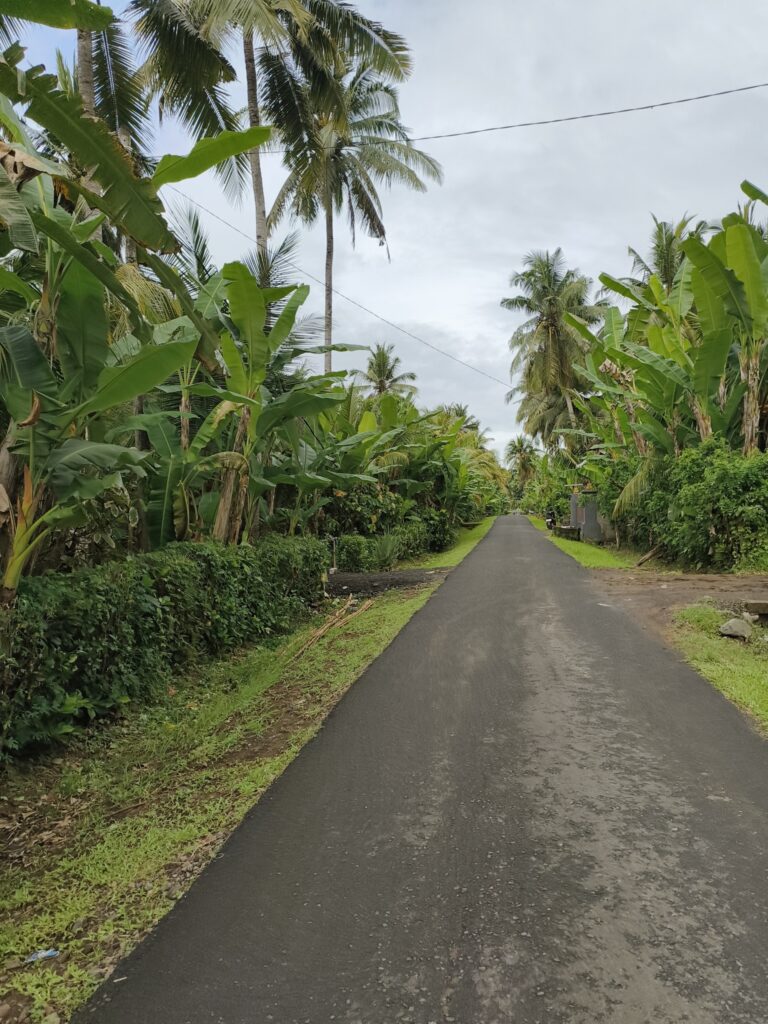
Walking through the village of Pekutatan was like traversing a cultivated jungle with a house here and there. Larger tracts of land with beautiful, inviting houses on them. Each one, equipped with its own house temple.
- Komang, who had picked us up at the airport, told us that every Hindu family has to use 10% of their terrain for a Hindu shrine. If in practice it’s that strict, I don’t know, but the result is beautiful for the passenger.
- Most Hindus in Bali have built a domestic shrine near their house. A place they are taking care of permanently, honoring their many deities with daily flowers, incense, food & other offerings.
Besides these personal shrines, you’ll also spot – in between the residential areas – temples which belong to the whole community. The so-called Pura Desa.


Oleh Oleh
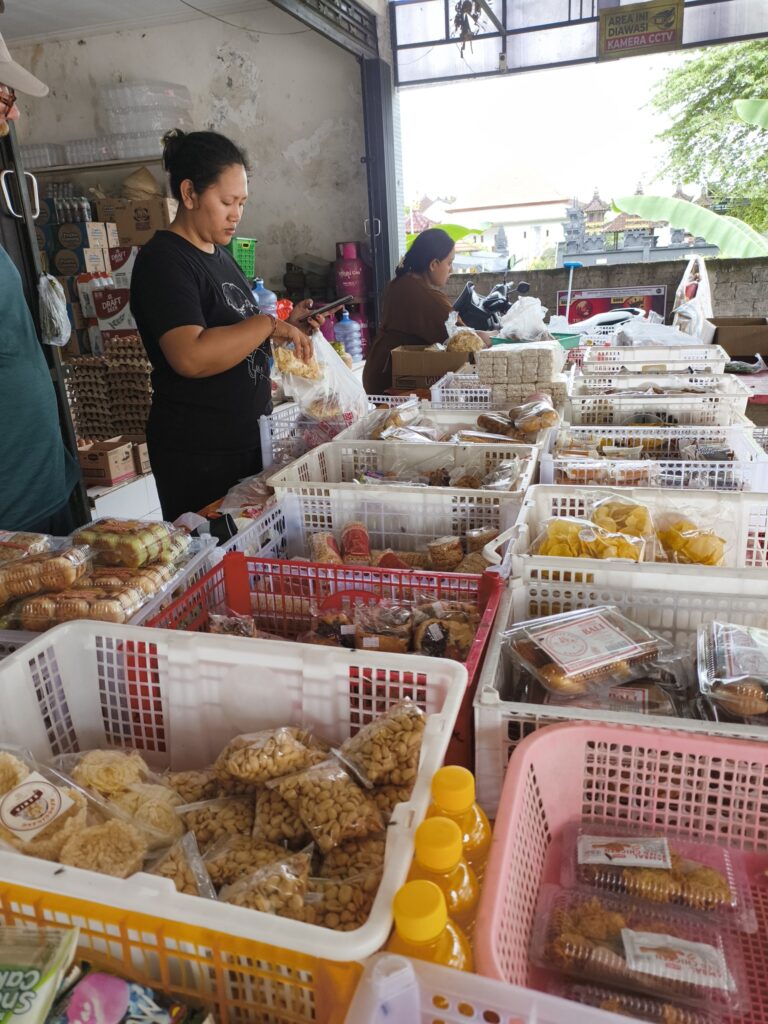
On our way to the local “supermarket” or food store – generally an Indomaret or Alfamart – we passed another typical store in Indonesia. A so-called Oleh Oleh.
These stores usually sell local & regional “souvenir gifts”. Things to take home for your family, friends or colleagues. Not only small handmade items, but mainly homemade delicacies.
We concentrated on the snacks. Bought way too much, but loved them one by one. Whether they were sweet, salty or spicy.
Galungan & Kuningan
All along the way we noticed inhabitants putting up large bamboo poles hung with all kinds of smaller, colorful decorations (foodstuff, coconut leaves, flags, smaller hand made decorations & others).
That’s when we heard about the upcoming festivities around two major Hindu celebrations in Indonesia: Galungan & Kuningan. Festivities to thank the gods for life & the bounty of the earth.
- Galungan marks the beginning of the festivities. It’s believed that during this time, the ancestral spirits descend from heaven to visit their former homes.
- Kuningan takes place 10 days later & marks the end of the festival period. The day also when the spirits leave the earthly realm & return to the heavens.
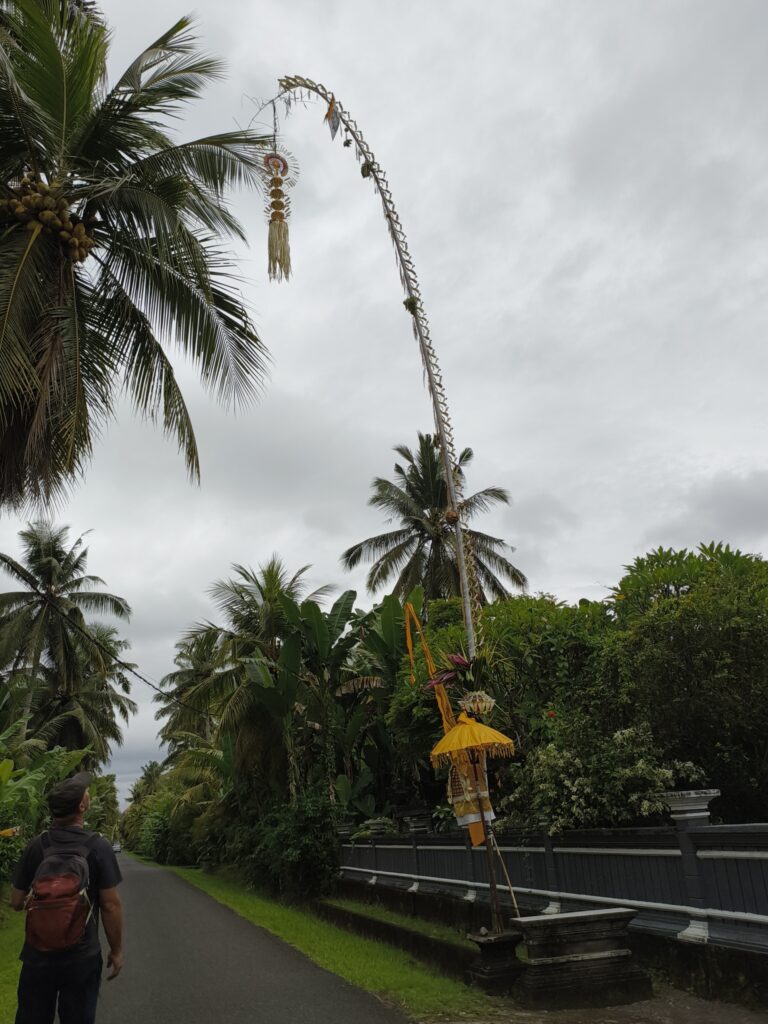
We wouldn’t witness the beginning of these festivities in Pekutatan itself, but we did in other parts of Bali.
Besides that, the moment we asked Komang to bring us to our next destination, he said OK but on one condition. To give him time to be with his family in the morning, as it was the first day of the festivities (Galungan).
- Underlining for us the importance of the family gathering, but also confirming something we heard earlier on from a guide in Java. The fact that the Hindus have so many festivities & ceremonies during the year.
Pura Rambut Siwi
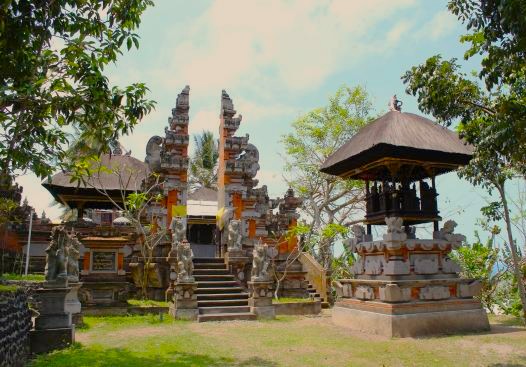
Besides the easy-going activities around the “house”, not too far from Pekutatan you can visit a beautiful Hindu temple, Pura Rambut Siwi.
- This 16th century so-called sea temple was on the instructions of the locally legendary Javanese Hindu priest Dang Hyang Nirartha.
The temple is located west of the village of Pekutatan. A 20 minute drive along the coast.
Visited by few people during weekdays. Certainly in comparison with the more famous Tanah Lot temple which gets lots of tourists who stay at the popular beaches in South Bali.
Tours
There are several interesting walking tours in Pekutatan.
The Pak Sudana Pink Buffalo Tour
This popular walking tour is unique for Bali. An authentic cultural experience & typical for Pekutatan.
The use of the buffalo in agriculture is a tradition which Komang’s family & especially his father Pak Sudana is trying to preserve. Not only as a living tool to till the rice paddies & other fields, but also as a deep cultural & religious custom.
In that sense, the buffalo is a holy animal for the Hindus of Bali. Especially the Pink buffalo which is rare & for that reason given a higher spiritual status.
- Komang told us his family ensures the reproduction of the buffalo & every newborn is a reason to celebrate. Certainly when it’s a pink one, which also economically is more profitable.
- To underline the importance of the bond between farmer & animal, in the second half of every year there are regular buffalo chariot races (makepung) in the Jembrana Regency.
All in all, doing the Pink Buffalo Tour provides you with good insights into traditional Balinese farming life in the rice paddies.

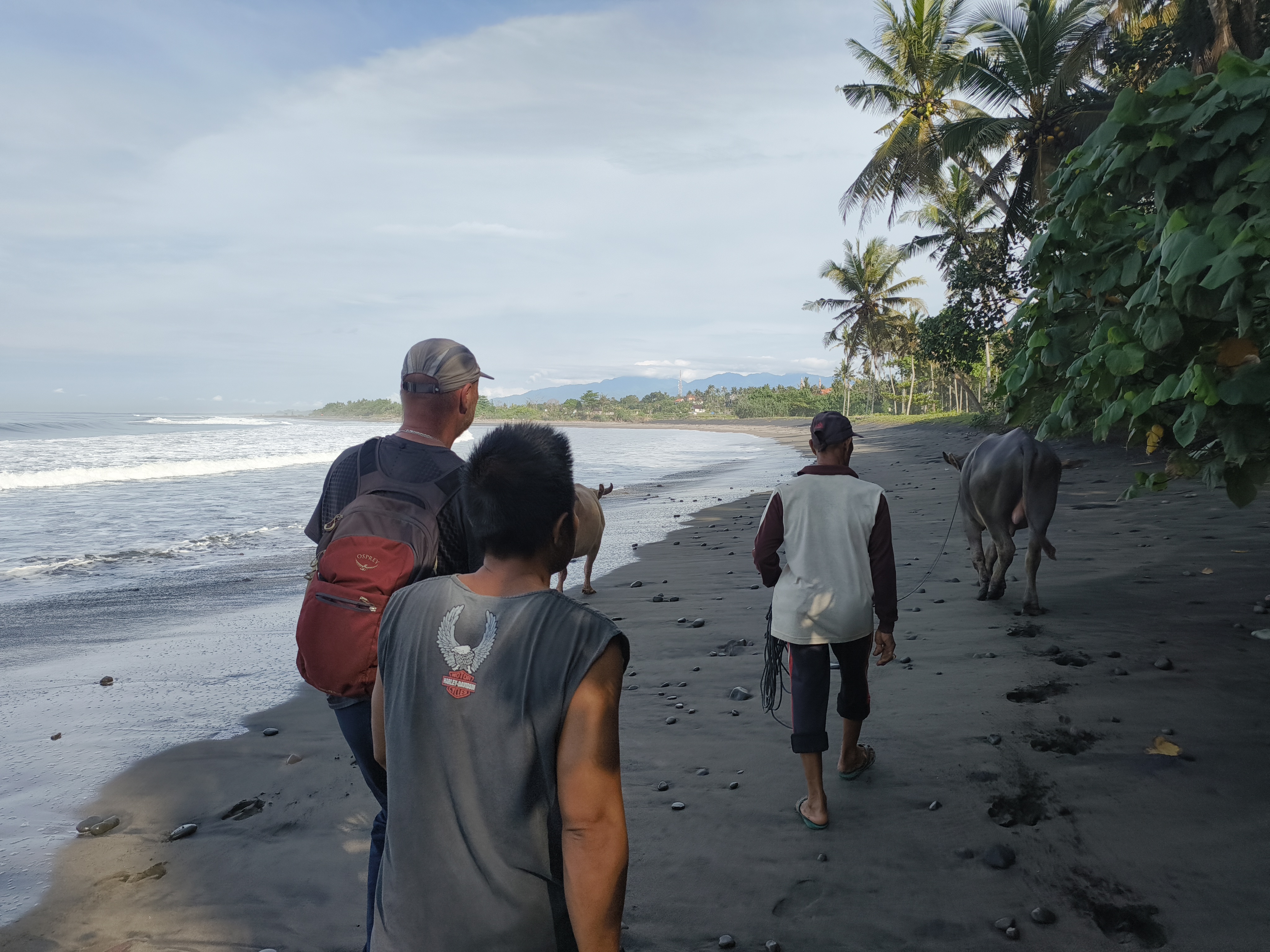


It’s usually Pak Sudana himself who leads the tour. Accompanied by his son Komang, who acts as host & translator. However, when we did the tour his older brother Kadek accompanied us, who also speaks English.
The tour initially takes you along the beach to the river, where the buffalos take their daily bath. Followed by a visit to the neighboring rice paddy, where we got a short introduction to the traditional way of farming (Subak).
- The Subak system is a sophisticated irrigation network deeply rooted in Balinese Hinduism & communal life. Unfortunately also – literally – rapidly losing terrain in Bali. Extra reason for Pak Sudana to defend & promote it.
In the end, the Pink Buffalo Tour took a few hours & was very relaxed. For us, it felt primarily like an honor to be – although shortly – part of the experience & get a better idea of the farmer’s life on Bali.
Also because we ended the tour at the family’s home where they presented us with coffee & some local snacks.
In short, I highly recommend you to do this tour with Pak Sudana & his family.
The Magical Plant Tour
This tour involves a walk through the fertile, upland areas above Pekutatan, where you will encounter trees & plants producing: Rubber, Coffee, Clove, Palm Sugar, Cacao & all kinds of Tropical fruits.
Besides that, you’ll get to know many sacred & medicinal plants. Including the famous Bunut Bolong. A massive, holy fig tree with a big “hole” in its base – actually more a natural tunnel. Big enough to walk or even drive through.
- The story goes that the Dutch – instead of tearing the Holy tree down – enlarged the hole so cars could pass through. Being the only practical road connecting the south to the north of West Bali.
TravelTips: Although marked as a Walking tour you first have to drive up to the hills north of Pekutatan. The mentioned Bunut Bolong tree is a 15-20 minute drive.
Be aware there aren’t official agencies to book this tour in Pekutatan. Ask your hotel or host about it & they soon enough will find someone prepared to guide you.
There is no fixed entrance fee for the Bunut Bolong tree, but you may be asked to sign a guest book & make a voluntary donation.
Hotel Resorts
Maybe a strange activity to incorporate here, but for us visiting the local resorts soon became one of the main activities during our stay in Pekutatan.
That is, after our morning activities we daily ended up at the following resorts to relax by the pool, have a good bite & a drink.
Kelapa Retreat & Spa
The first full day we ended up at the Kelapa Retreat & Spa. Mainly because – after our stroll along the beach & a walk to the village’s center – we yearned for relaxation.
Beforehand we learned the Kelapa was close to our Airbnb, had several pools & a restaurant overlooking the beach. And I have to say. It was a good spot to unwind a little & also an excellent place to enjoy a delicious meal.
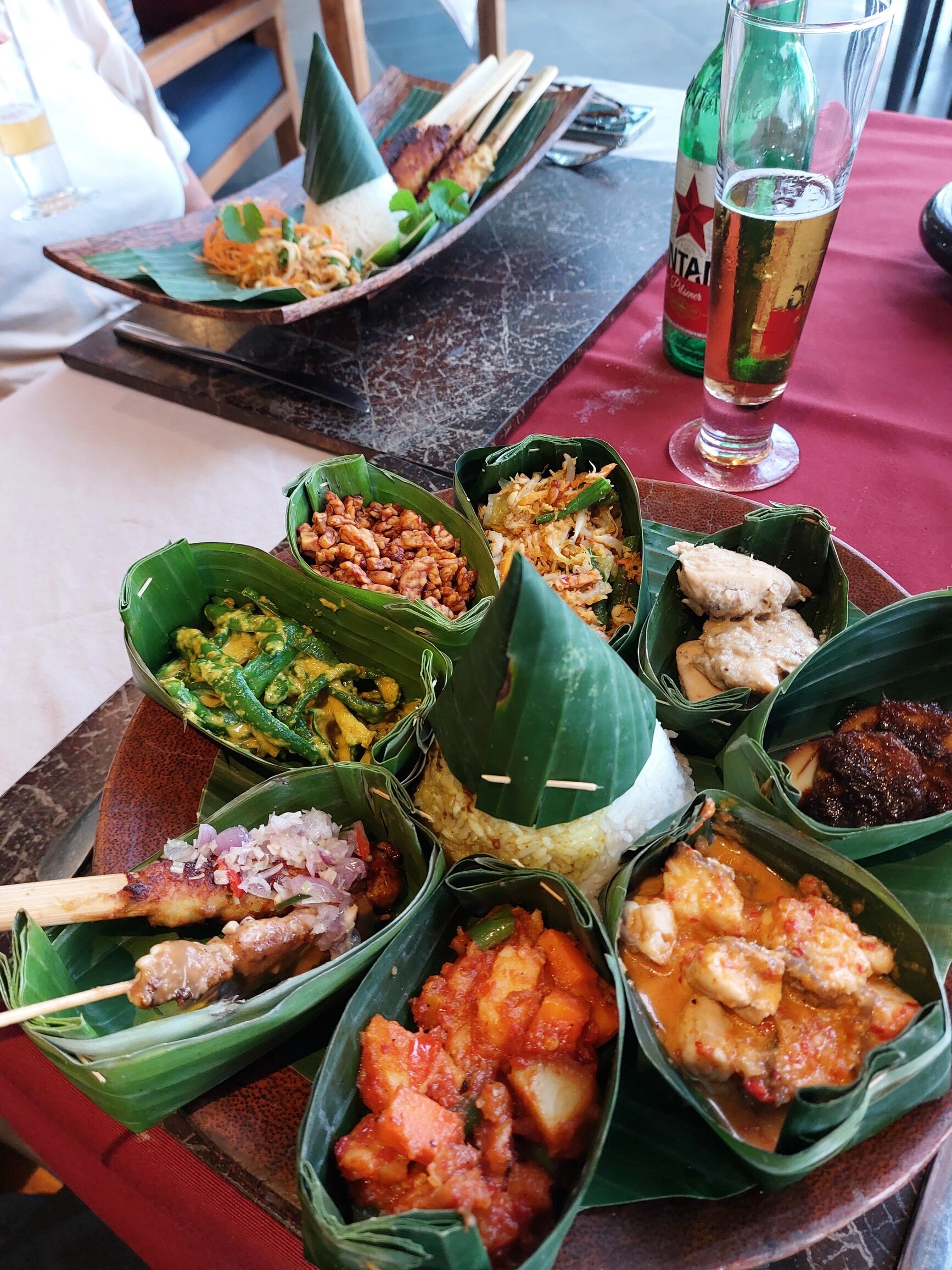
We both were very content with our culinary choice from the menu, but I feel obliged to promote the dish I ordered. A so-called “Balinese Rijsttafel“.
A “Rijsttafel” is a well known Dutch word – literally meaning “Rice Table” – featuring a selection of a diversity of several side dishes, presented with white rice. Meat, fish, vegetables, sweet, sour, spicy…
- I personally was lucky enough to enjoy a “Rijsttafel” every time we visited Wendy’s grandmother. Or when my father-in-law prepared one. In the Netherlands & as a tradition every time he visited Ecuador.
A Balinese version this time & super delicious.
TravelTip: To get in we had to pay an entrance fee (a day pass) of around $10 (a little steep for Bali even), which we & you – if you like – can partially recuperate when ordering a meal in the restaurant.
Puri Dajuma Beach Resort
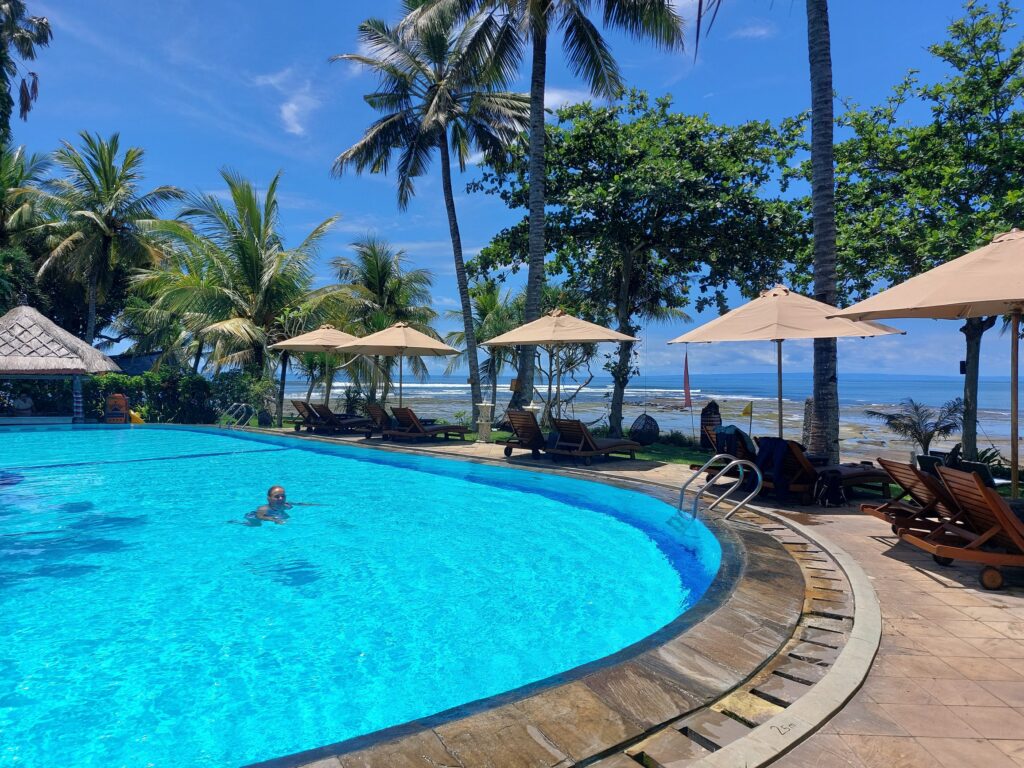
On our second day we visited the Puri Dajuma Beach Resort. Also blessed with several inviting swimming pools & an excellent restaurant.
Although the distance to the Airbnb was somewhat larger (45-50 minutes), we enjoyed the walk along the beach to this resort.
Located at a beautiful curving spot on the beach, connecting to the village center. As well as the place where the fishermen gather & the starting point of the earlier mentioned Pink Buffalo Tour.
In short, a perfect spot to relax and end the day with an early dinner & a Bintang while the sun is setting.
TravelTip: No entrance fee here. After mentioning we’d order a meal after using the pool, they let us in.
Besides that, they offered us a free shuttle service back to our Airbnb & even told us they could pick us up the next day, if we liked.
- Although we ended up there again the next day, we didn’t use the shuttle. However, we loved the gesture & for you it may be good to know when you decide to stay at Mark & Narina’s “Hidden Well” (see below).
Personal note: Although we loved the food at the Kelapa Retreat, we preferred our visit to the Dajuma Beach Resort. First of all, because of the general setting, but also because of a more personal & friendly vibe. And the food here is delicious too.
No surprise we returned the next day – our last day in Pekutatan – but also decided to change our plans & visit the inland branch (see next segment).
To learn more about this beautiful place, go to: Puri Dajuma Beach Resort
Puri Dajuma Terrace Resort
Although we could spare only one night, we had an unforgettable stay at the sister lodge, the Puri Dajuma Terrace Resort. Located in Tabanan, Pupuan – still part of West Bali.
A perfect inland oasis, this spot trades the coastline for a picturesque rice field. An unforgettable view you can enjoy from the poolside, as well as their restaurant & bar.
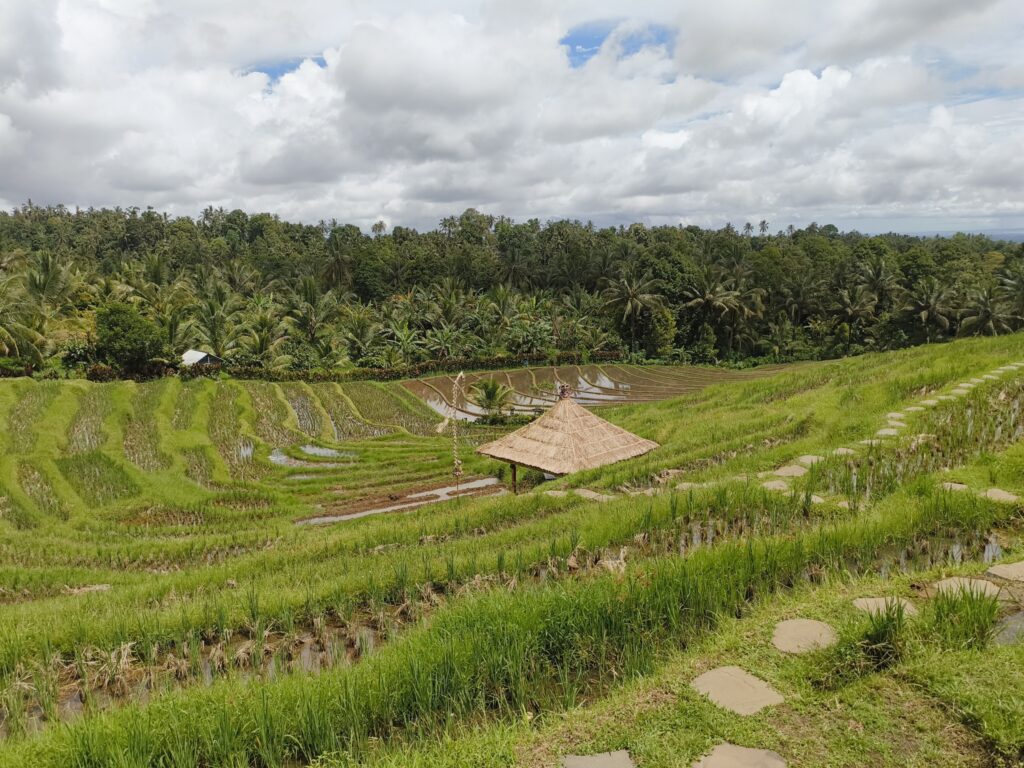
To learn more about this beautiful place, go to: Puri Dajuma Terrace Resort
Visit Pekutatan: Day-trips inland
Besides the attractions nearby, there are several inland tours you can make in West Bali. We didn’t in the end – have to come back, for a longer stay(!) – but I’ll mention two day-trips of the beaten track that may inspire you.
The first one to arrange a guided tour along the inland roads to the northern coast. A tour that may include the earlier mentioned Holy tree, the Bunut Bolong.
And secondly, a full day-trip to the West Bali National Park/Taman Nasional Bali Barat. A perfect place for hiking, birdwatching & other wildlife. As well as, snorkeling/diving when crossing over to the nearby Menjangan Island.
If interested in one of these tours or other options, I’d highly recommend you to buy/read a book Mark Eveleigh wrote about West Bali. An interesting book I’ve read myself in preparation of our trip, full of background info, tips & ideas on the whole region.
- Booktip: Eveleigh, Mark, The real Bali guidebook – The “Wild West”, 2024, Kura Kura Books/www.WestBali.net (Available in HC, paperback or kindle).
Visit Pekutatan: Getting Around
Besides walking – which we did a lot – it’s possible to hire a bike. Or more common, a scooter to get around. Highly recommended when you plan to stay in the area for a while.
A good alternative is hiring a driver. Which – besides relatively cheap in Indonesia – generally is the fastest way to get you from/to the airport & to the attractions you want to visit in the western part of Bali.
If you prefer a professional, trustworthy driver I’d highly recommend the earlier mentioned Komang.
Not only because he’s a good driver – importantly a patient one on a busy island like Bali – but also because his English is perfect. He really knows a lot & is prepared to tell you everything you want to know about his country & his life. A friendly, interesting guide really.
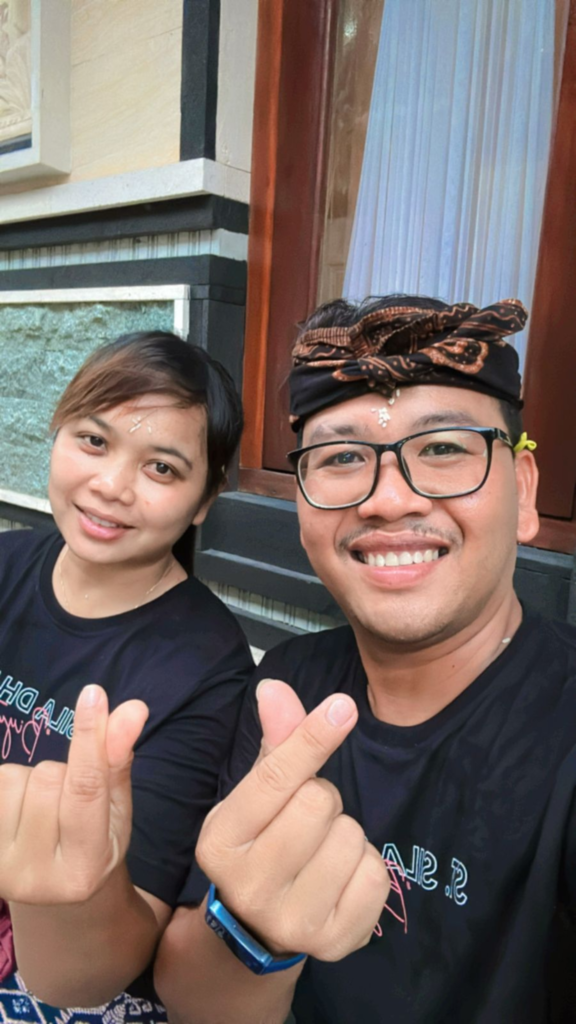
- Asking about the hand gesture they’re making in the picture – which I didn’t know – I learned it’s a “finger heart”. Comparable to a 🫶, expressing love, affection, friendliness or gratitude.
- A sign which – apparently – originated in South Korean pop culture (K-pop) & is now widely used across Asia – including Indonesia – as well as in the West.
How to contact Komang?
To contact Komang, you can send a message (in English) through WhatsApp. Telling him of your plans & needs.
- If you want, you can mention the TravelArtWay blog post or my name (Arthur) so he knows how you found his number.
I can assure you, you’ll enjoy the ride & experience. You can either use the button below to send a message or phone Komang dialing: +62 859-3121-3933
Visit Pekutatan: Where to Stay
If you plan to stay just a few days I’d highly recommend you to stay at the Puri Dajuma Beach Resort. Somewhat more expensive than other hotels on Bali in Pekutatan, but very relaxing. The best & most friendly resort in West Bali.
To learn more about this special place, go to: Puri Dajuma Beach Resort
Eventually combining it with their sister place on the way to Central Java (as we did): The Puri Dajuma Terrace Resort
However, If you plan to stay longer – let’s say 3, 4 or more nights or even weeks – I highly recommend you to stay at one of two Airbnbs Mark & Narina built in Pekutatan.
Either the Hidden Well (a little distant from the Village’s center), where we stayed. Or else, the Writer’s Tree House. Small paradises built in the green & near the beach. Both built with a heart in them & completely private
- Additionally, as you could learn from reading this post, if you book with them they will provide you with all the information you need for a perfect stay.
- As well as, meet a friendly local family who – besides a warm welcome – can help you out with transport, tours & more. In short, everything you wish for. (they don’t live on the premises, but nearby).
To learn more, click on: The Hidden Well and/or The Writer’s Treehouse
Visit Pekutatan: Conclusion
We had a perfect time in Pekutatan. Very relaxed, but in the meantime also learning a lot about Bali & the Balinese-Hindu way of life.
For us, a perfect transition from busy Java to an authentic part of Bali. Staying in a beautiful Airbnb in the middle of the jungle & very close to the beach.
Many people nowadays may think Bali is overrun by tourists, but that isn’t true. There are many parts where you can still see & feel the beauty of this unique island. West Bali is certainly one of them.
Overview Indonesia Posts:
Other travel posts written about destinations within Indonesia:
JAVA
- Bogor
- Jakarta
- Yogyakarta
- Surakarta/Solo (under construction)
- Semarang (under construction)
BALI
- Ubud
- Sidemen (under construction)
For an overview of all travel posts of my blog, go to: My Home Page