After Bogor & Jakarta we decided for a visit to Yogyakarta. A destination we reached after a relaxing train ride from the capital through the green interior of Java. Our first glimpse of the world famous rice fields of Indonesia.
- !!! As this is a very extensive post, I’d like to recommend looking at the Index first. This way, you can select the topics that are most interesting to you.
Visit Yogyakarta: Introduction
After the hectic, but interesting capital, our visit to Yogyakarta felt different. Although also a big & busy city, we soon felt the vibe had changed. Yogyakarta is the proud heart of Central Java.
- Most locals call the city Yogya, or better “Jogja”.
For many visitors Yogyakarta forms the perfect base for visits to the temples of Borobudur & Prambanan.
For us, it wasn’t very different. However, beforehand we decided to make a stopover in, or better, near the Borobudur temples. A relaxing break I’ll tell you all about in this post.
IMPORTANT MESSAGE: Throughout this post you’ll find affiliated links & ads provided by the travel platforms like Trip.com & GetYourGuide. Links & ads that may help you plan & fill in your next trip to Indonesia.
If you click on them & buy a ticket for a museum or a tour, I’ll receive a small commission.(Paid by the provider, without any extra cost to you!).
If you first want to learn a little bit more about me, the blog writer, please click on: Better call me Art.
Short history of Yogyakarta
Although we know of early human presence in Central Java, Yogyakarta’s eventful history really picks up in the 8th century.
- !!! Before visiting a certain place, it’s good to learn about its history. However, if you already know enough about its past. Or aren’t that interested for the moment, click on the next segment: Things to do in Yogyakarta.
The Mataram Kingdom (716-1016 AD)
In the 8th century the city was known as “Mataram”. The capital of the so-called Mataram or Medang Kingdom. A Hindu-Buddhist kingdom which would flourish until the early 11th century.
An era in which two royal families lived peacefully together within the region. Namely, the Hindu Sanjaya & the Buddhist Shailendra dynasties.
- The Sanjayas were responsible for the construction of Prambanan & other temples. While the Shailendras started building their own, including the Borobudur. Both constructions started in the 8th century.
Despite the fact that most inhabitants in the area later on converted to Islam, you can still visit many of these old temples (candi) in the area in & around Yogyakarta today.
- To the northwest of Yogyakarta most temples are Buddhist. While to the east you’ll find most Hindu temples. In this case, mixed with Buddhist ones, like Sewu temple which is located very close to Prambanan (see below).
Majapahit Empire (1293–1527)
From the end of the 13th century, until well into the 16th century Yogyakarta was part of the Majapahit Empire.
- At its peak in the 14th century, Majapahit ruled the major islands of modern Indonesia & exerted primary economic influence over the present-day Malaysia, Singapore and southern parts of Thailand & the Philippines.
The city & surrounding area during this time was still known as Mataram. Likewise, the Hindus & the Buddhists continued to live peacefully together.
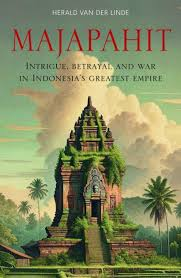
- Booktip: If you want to know more about the Majapahit Empire I highly recommend you to read: Van der Linde, Herald, Majapahit – Intrigue, betrayal and war in Indonesia’s greatest Empire, 2024, Monsoon (Burrough on the Hill, UK).
Mataram Sultanate (1587-1755)
During the 16th century Muslims invaded Central Java, converting Yogyakarta temporarily into the capital of the Mataram Sultanate (1587-1613).
- Actually, this short-lived capital was located in Kotagede, just southeast of the actual city center of Yogyakarta. The remains of which you can still visit today.
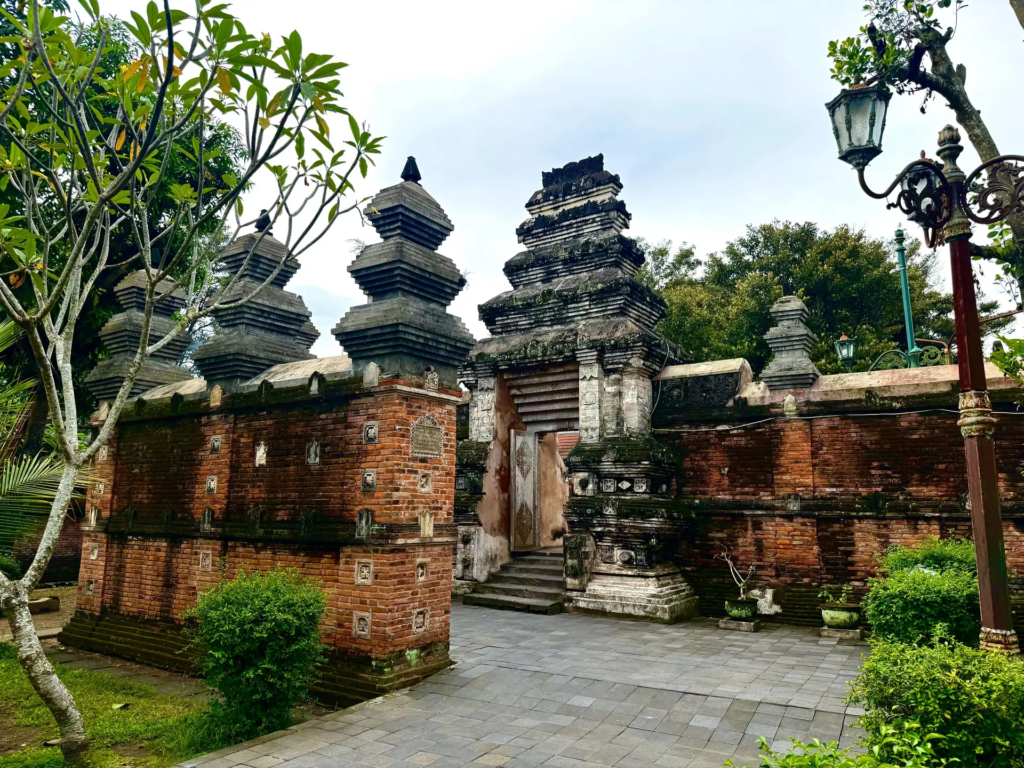
The new rulers would soon expand their influence over almost the entire Javanese island. Fortunately without destroying the many beautiful, unique Hindu-Buddhist temples & other monuments in the area.
Yogyakarta Sultanate (1755-now) & Dutch dominance
In 1755, as a consequence of internal conflicts within the sultanate, the central area of Java was divided into two “Princely States”: Yogyakarta & Surakarta.
The Dutch East India Company was heavily involved in this settlement – the so-called Treaty of Giyanti. Cleverly unleashing upon the two local powers a “divide and rule” strategy.
- In many ways the Royal family of the Surakarta Sunanate were more cooperative with the Dutch than the rulers of the Yogyakarta Sultanate.
- Which didn’t mean there was resistance in both areas against the Dutch dominance. Enough, to obtain a certain autonomy which other regions would never attain. Not even Jakarta & other major port cities.
Sultan Hamengkubuwono I became the first ruler of Yogyakarta. He founded the Kraton, the Sultan’s City Palace. The Royal residence which nowadays still forms the heart of Yogyakarta.
- Also, the Royal House of Hamengkubuwono is still the ruling house of Yogyakarta today.
The Second World War & War of Independence
The Japanese invaded Java in March 1942 & occupied the island until August 1945. Generally treating the native population better than the Dutch colonists & their often mixed families.
Soon after the ending of the war the struggle for independence started, in which Yogyakarta played a crucial role.
While the Dutch managed to retake Jakarta, Yogyakarta temporarily became the capital of the independent Republic of Indonesia (1946-1948).
Though the Dutch eventually reconquered Yogyakarta, they didn’t dare to move against the Sultan. A man who was regarded as a demigod by the locals. This way he remained defiant & safely locked away inside his palace.
- While they didn’t touch Sultan Hamengkubuwono IX, the Dutch captured & exiled the leaders of the Republic. The later President Sukarno, Vice-President Mohammad Hatta & others, who they saw as the leading rebels.
Because of the city’s resistance, Yogyakarta – after independence was reached in 1949 – was granted a special region status.
A hereditary monarchy, with the Hamengkubuwono Royal family X serving as both the political, as well as the cultural leaders.
- To this day, Yogyakarta remains the only province in Indonesia where the ancient monarchy still holds real political power. With Sultan Hamengkubuwono X (since 1989) serving by law as its governor.
Yogyakarta, nowadays
Yogyakarta nowadays is known as the “Soul of Java“. Something you’ll notice soon enough when you walk its streets. A modern city, but with a continuing focus on its past & its many cultural traditions.
While most foreign tourists concentrate their attention on the Borobudur & Prambanan temples, the city has much more to offer. As you will see!
- In addition to its historic landmarks & parks, Yogyakarta serves as a major hub for collectors of fine art, authentic antiques & traditional batik.
Visit Yogyakarta: Things to Do
The inner city of Yogyakarta has several attractions worth your visit.
Kraton/ The Walled City Palace
This beautiful palace forms the heart of the city. It occupies a large portion of its center. An absolute MUST visit when staying in Yogyakarta.
- Construction of the palace started in 1755 when the Sultanate of Yogyakarta was born (see Short History above).
More than a palace, the Kraton is actually a small city within the city, with over 25 000 inhabitants.
Beside the Sultan’s quarters, you can also visit the Kampungs. The communities within the Kraton grounds where most of the Sultan’s servants live.
- A Kampung is a close-knit communal settlement of narrow alleys, interconnected family dwellings, small stores, food stalls (warungs), schools & mosques. In fact, most Indonesians live in these vibrant neighborhoods.
The entire community – comprising both the palace grounds & the servants’ quarters – is enclosed by high walls, resembling a modern-day fortress or citadel (Benteng).
Yogyakarta´s Kraton actually feels like a living museum. Especially when you spot the beautifully dressed servants, found throughout the grounds. Greeting and welcoming all visitors, but silently, dignified & serene.
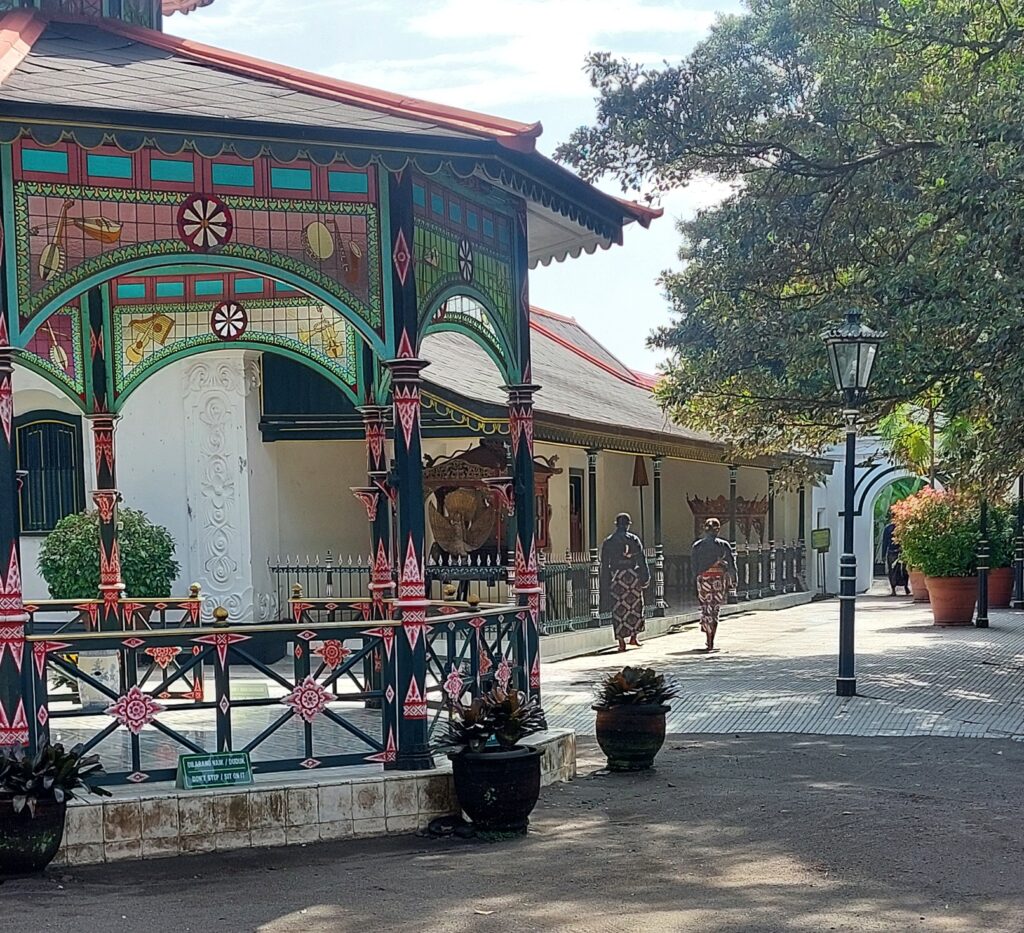
Visitor’s info for the Kraton
The palace is only partially open to the public. Logical as the Kraton is the main residence of the Sultan & his family,
If you’re not on a tour, you have to buy your ticket at the main gate.
Passing the entrance, you’ll immediately feel as though you’ve stepped back in time. Into a peaceful environment filled with stunning royal quarters, elegant pavilions & a series of beautiful courtyards
Throughout the premises, you’ll encounter beautiful artwork and can also visit several small museums:
- The Hamengku Buwono IX Museum is dedicated to the late Sultan who played an important role during Indonesia’s independence. It contains his personal belongings, medals & many photographs.
- At the Museum Wahanarata – located just outside the main entrance (!) – you can get an idea of Sultan’s carriages. Some of which were imported from Europe & are still used for major ceremonies.
- In other pavilions on the palace grounds you can admire Royal regalia, traditional weaponry – like sacred daggers/kris & an extensive collection of Batik fabrics with patterns exclusive to the Royal family.
Besides the museums, there are regular art performances in the morning, which all take place in the inner pavilion. Think about traditional music (gamalan), dance, puppetry (wayang) & poetry.


The neighboring Kampungs
Around the palace grounds you’ll find several small communities where the servants live. Historical places that were once divided by the functions their inhabitants fulfilled for the Sultan & his family, but not anymore.
- One Kampung was historically the home of the royal coachmen & chariot makers. Another was where the royal court musicians lived. Others housed the high-ranking court officials, the gardeners, et cetera.
We visited Kampung Magangan, located directly behind the palace. In former times, this was where the servants lived who prepared the many palace ceremonies.
Nowadays many of its inhabitants still work in the palace, but some of them or their families are also deployed in other activities.
Kopi Luwak
That said, in this Kampung we passed several small family shops. In one of them, we had our first Kopi Luwak – an authentic one (!) – which was surprisingly tasteful.
- Kopi Luwak is a unique coffee made from beans partially digested & excreted by the Asian palm civet/Luwak – a cat-like species.
- Origen: Dutch plantation owners in Central Java forbade their laborers from picking coffee beans for their own use. However, some workers noticed that the Luwaks would eat the ripest coffee cherries but could not digest the beans & began collecting them to make their own cup of coffee.
- Eventually, the plantation owners tried the brew & realized the civet’s digestive enzymes actually reduced the bitterness, making a smoother cup of coffee. Nowadays it’s one of the most expensive coffees in the world.
Visiting this Kampung gave us a renewed sense of how people live in most parts of Indonesia. We’d visit many more of these well-defined, close-knit communities on our journey through Java & Bali. An experience in itself!


Impressions of the inner city kampungs of Yogyakarta.
You can easily visit the Palace on your own, but if you prefer a well organized tour I highly recommend the: Yogyakarta Palace & Water Castle Tour.
A guided tour (3 hours) which also includes a visit to the neighboring Water Park/Taman Sari (see below). And, if selected, may also include transport from & to the hotel you’re staying.
To learn more, go to: The Yogyakarta Palace & Water Castle Guided Tour.
Taman Sari
This nearby park was originally the Sultan’s family playground. A water park with several pools, waterways & some unique monumental buildings.
- The original park was much larger, but severely destroyed by a heavy earthquake in 1867. Soon thereafter restoration started, but within a much smaller area.
Besides the waterpark itself, you can visit the underground mosque. As well as the Kampung Taman which also belongs to the Royal compound.


Impressions of the Taman Sari of the Kraton of Yogyakarta.
For a guided tour, click on: The Kraton & Water Castle Tour.
Pasar Ngasem
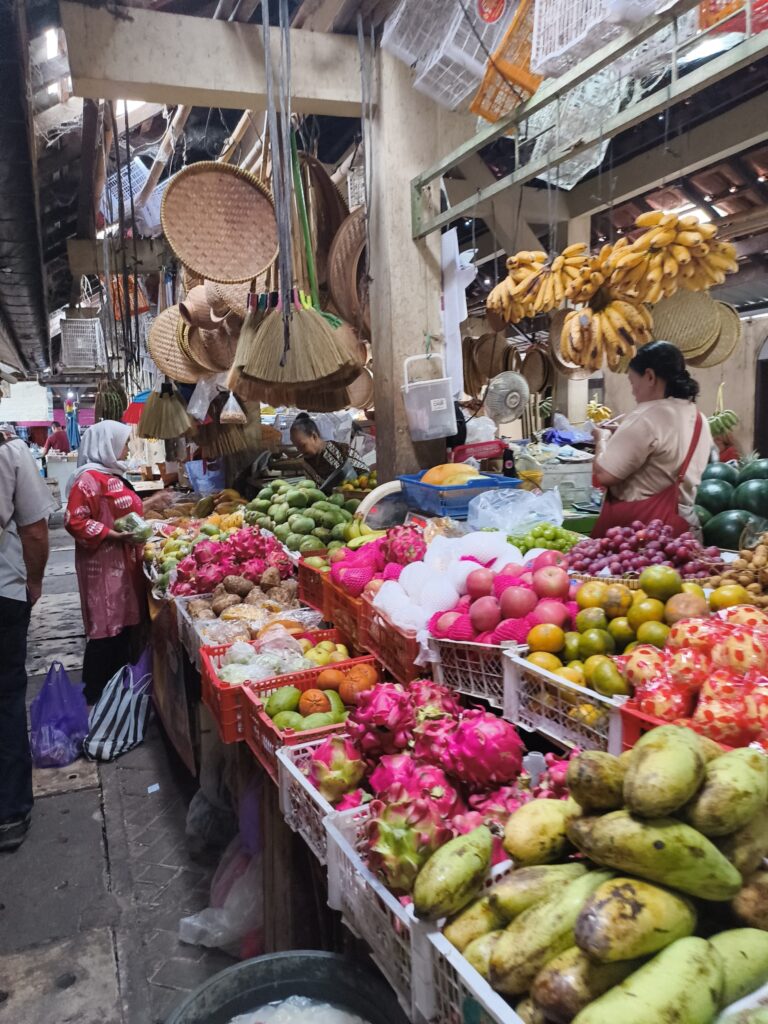
On our way back to the city center & still very close to the Taman Sari we passed a small, lively market – the Pasar Ngasem. A place full of daily necessities, including – as always – many local delicacies: spicy & sweet.
- Historically, this market area was part of an artificial lake that surrounded the water castle.
Museums
In Yogyakarta there are several interesting museums to visit.
Museum Sonobudoyo Unit I
Located on the north square in Central Yogyakarta – very near the Kraton – you can visit the Museum Sonobudoyo Unit I.
A museum that houses one of the most complete collections of Javanese artifacts in Indonesia, including ancient ceramics, masks & wayang puppets.
Be aware: this museum & many others in Indonesia are closed Mondays.
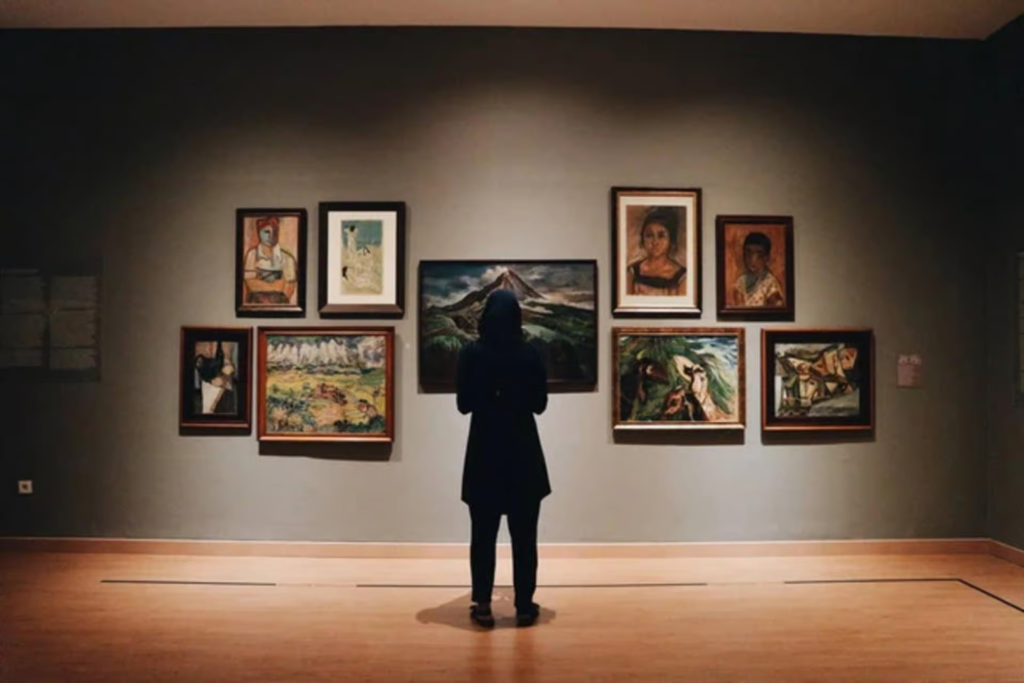
Museum Benteng Vredeburg
The Vredeburg Fort Museum is located at the end of Malioboro Street, the main shopping street of Yogyakarta (see below).
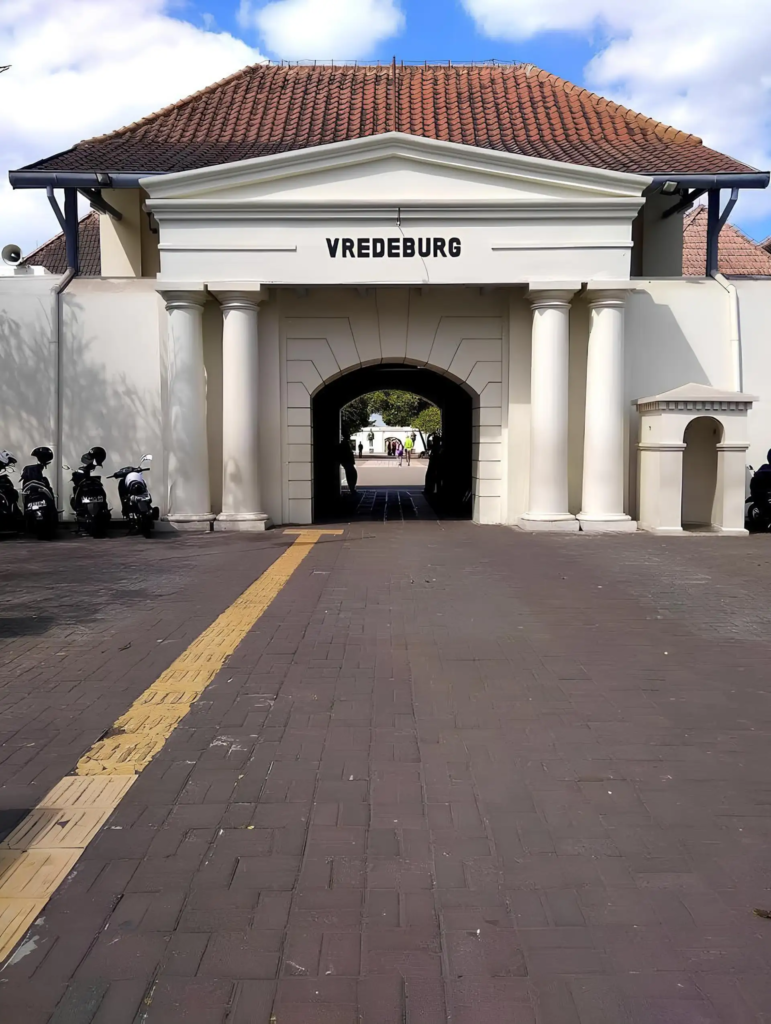
A former Dutch fort showcasing – in chronological order – Indonesia’s hard struggle for independence, depicted through artful historical dioramas.
Traveltip: Although many museums are closed Mondays, Benteng Vredeburg opens its gates daily!
History of Java Museum
This museum gives the visitor a broad idea of Java’s long, eventful past.
- From the Prehistoric times
- To the Hindu-Buddhist era, including the kingdoms of Tarumanegara & Majapahit
- Followed by the Islamic Period & first resistance against the European invasions.
Beyond many beautiful artifacts, this museum uses a so-called “Museum 4.0” technology, featuring an augmented reality app, 3D animations & interactive photography-friendly dioramas.
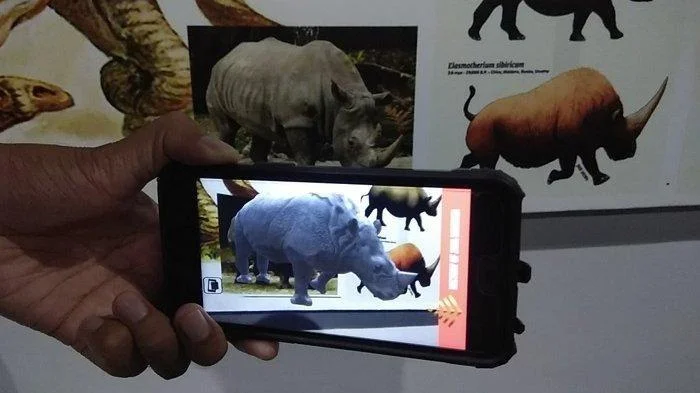
TravelTip: This museum opens daily.
Three Art museums
Yogyakarta is known as the artistic capital of Java. Its reputation stemming from both its royal heritage, as well as the presence of several prestigious public & private art academies.
The most prominent Indonesian art forms which are concentrated in Yogyakarta include: painting, batik, puppetry (wayang), gamelan music & dance.
Consequently, there are many galleries & famous art museums, of which I’ll present three:
Affandi Museum
This museum is dedicated to one of the most famous painters of Yogyakarta & Indonesia, Affandi Koesoema (1907-1990). It’s located in his former house & atelier 6 km/3.7 mi. northeast of the Kraton.
TravelTip: Opening hours 9am – 3pm, closed Sundays
Museum Ullen Sentalu
An interesting museum for two reasons. For its unique collection of historical royal artwork, but also because these artworks are located in an unique setting. A monumental stone building & mysteriously beautiful garden.
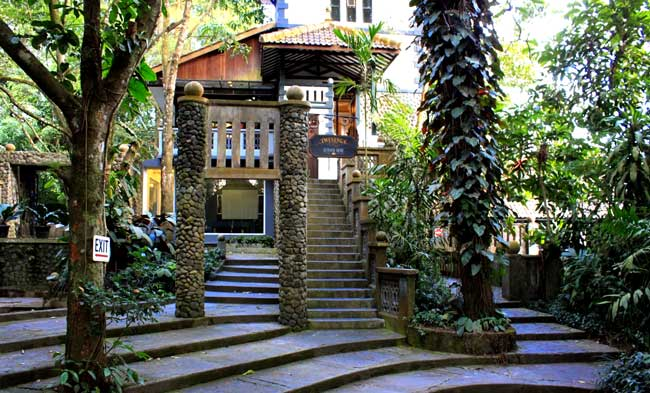
Absolutely worth your visit, but you have to be aware this museum is located 27km/17mi. north of the city center (a 45-60 minute drive). Besides that, all tours are guided & it’s prohibited to take pictures inside.
TravelTip: Opening hours 9am – 4:00pm, closed Mondays
Jogja National Museum
For those who are into modern art, the Jogja National Museum is a MUST visit. Besides a permanent collection of artwork, they regularly organize temporary exhibitions.
This museum is centrally located. A 20 minute walk from the City Palace or Kraton.
TravelTip: Opening hours 9am – 4:30pm, closed Sundays.
Kota Gede
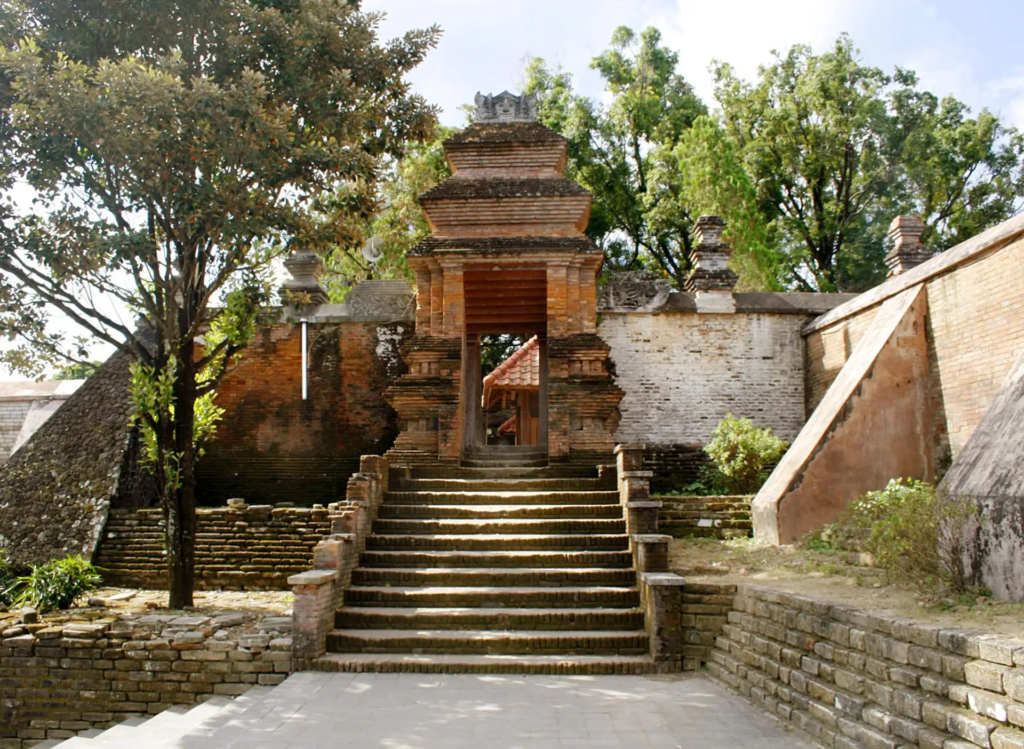
Just southeast of the modern city center of Yogyakarta lies Kotagede. The site where the Mataram Sultanate was founded in 1587. The moment when Yogyakarta became its first capital.
Here, you’ll find the remains of the former palace grounds. The original entrance gate leads to a peaceful, shaded courtyard, a historic mosque & the royal cemetery.
- Several royals lay buried in this cemetery, but the most important tomb belongs to the founder of the Mataram Sultanate, Panembahan Senopati.
TravelTip: There’s a special dress code if you want to visit the royal cemetery. That is, traditional Javanese dress, which can be rented on-site.
The Malioboro shopping street
For those who like to shop, the Malioboro street is the place to be. A lively place right in the heart of the city. Always buzzing with people & energy.
When we visited Yogyakarta’s most famous street, we felt like the only foreign tourists there. However, we simultaneously felt we walked amongst many national visitors.
Besides the many shops, you’ll also find several art galleries in this area. As well as, the not to miss Pasar Beringharjo – where we got happily lost twice – and the earlier mentioned Museum Benteng Vredeburg.
- Concerning the types of businesses along Malioboro Street, think about batik & clothing shops, souvenirs stalls, (silver) jewelry, but also some restaurants, food stalls & cafes for a good cup of coffee (Kopi).


Visit Yogyakarta: Tours & classes
There are several interesting, fun tours & classes in Yogyakarta you may consider:
Just click on their names to learn more:
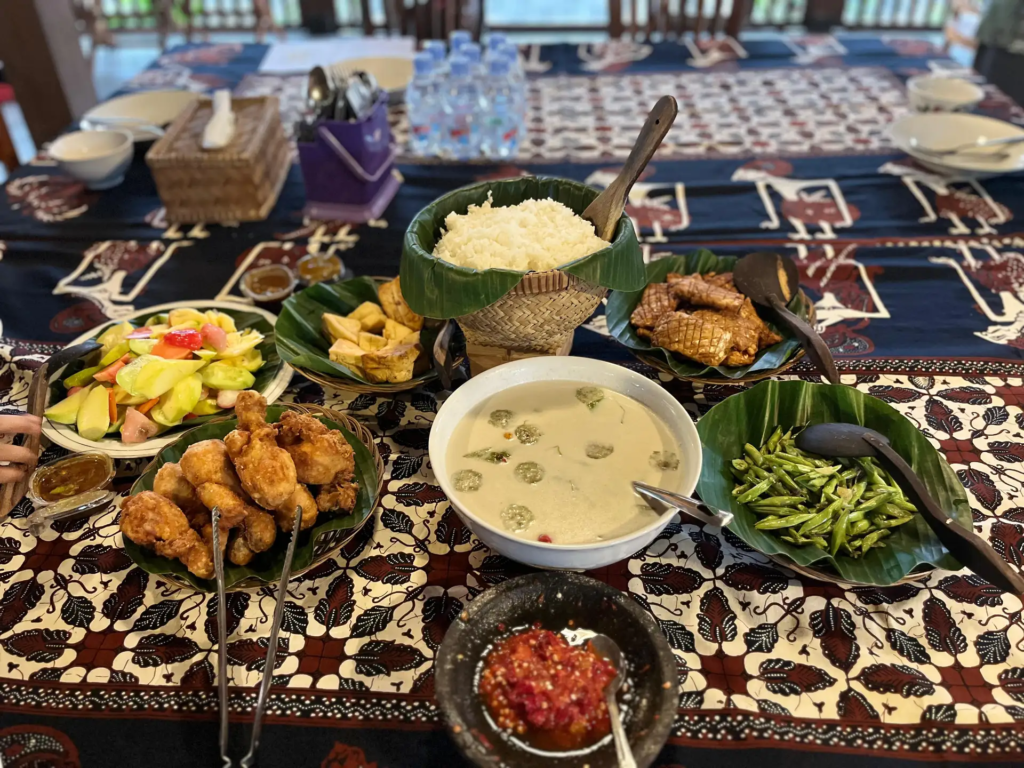
- Food Tour Yogyakarta (2-3.5 hours)
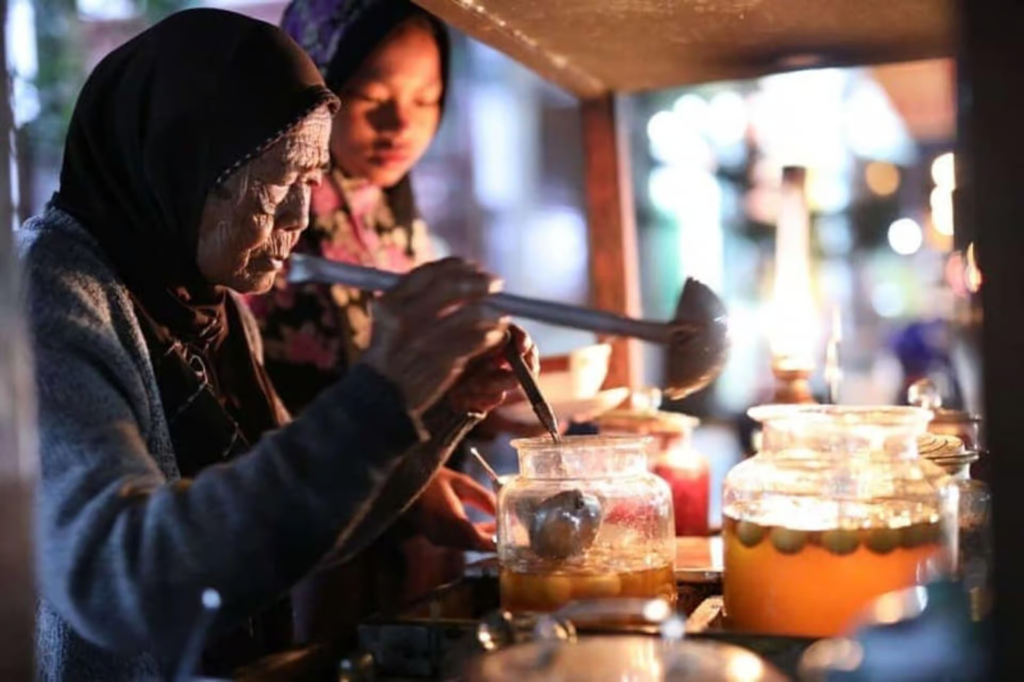
- Cooking Class + Market Tour (3 hours)
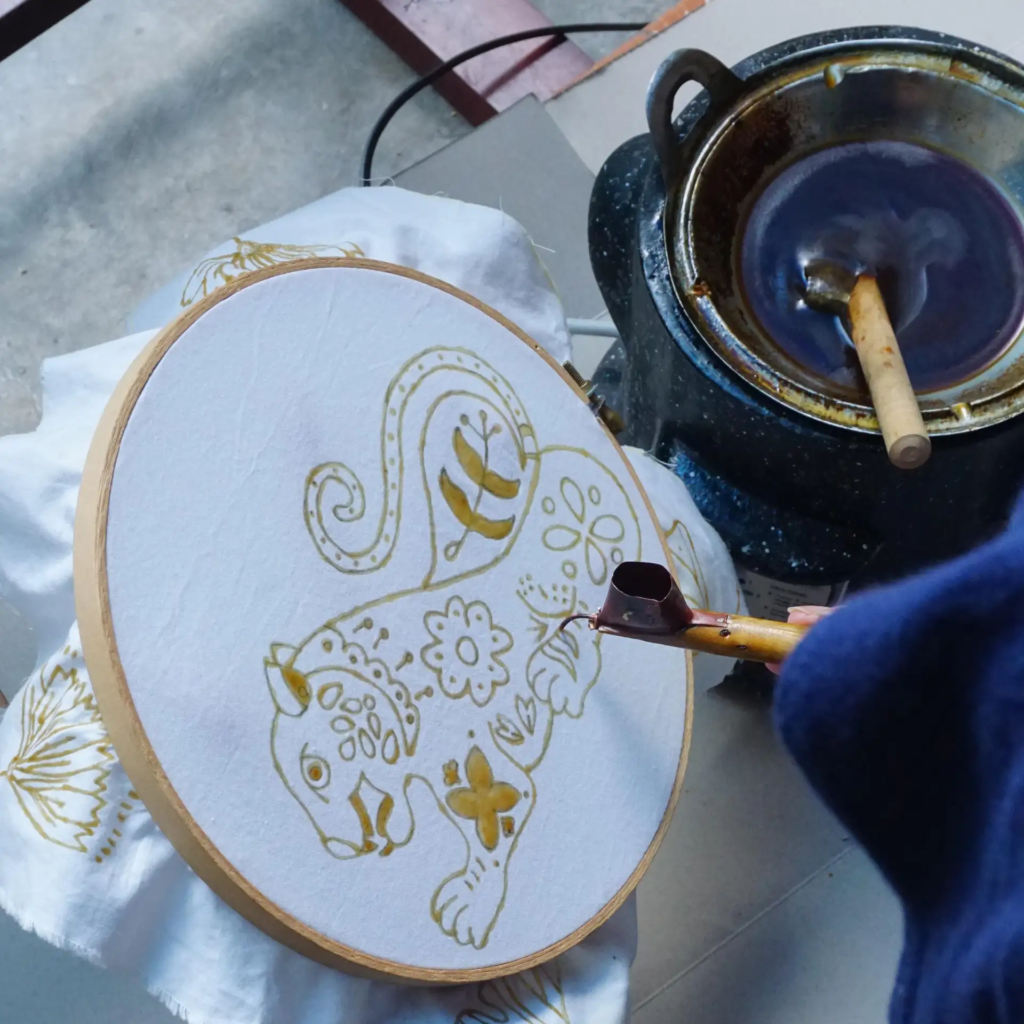
- Batik Making Class (2-5 hours)
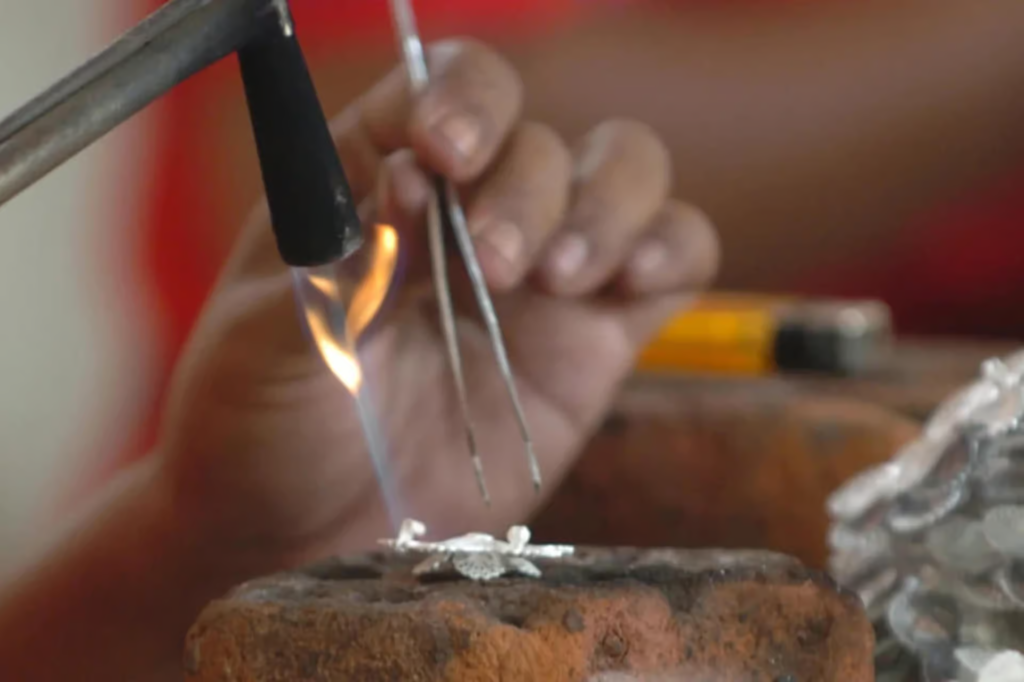
- Silver Jewelry Making Class (2 hours)
Visit Yogyakarta: Where to Stay
We ourselves stayed at the Midrange Adhisthana Hotel, which was a perfect choice for us (see below).
However, there are also good options for Budget-travelers. As well as for visitors who prefer a more luxurious High-End hotel in Yogyakarta.
Budget: Grand Malioboro Yogyakarta
The Grand Malioboro is located very near the famous shopping street of the same name. A good, friendly place. Ideal if you want to stay in the heart of the city without overspending.


Basic, but modern with bright light, spacious, clean rooms. A popular choice for its balance of location & price.
To learn more about this budget option, go to: Grand Malioboro Yogyakarta
Mid-range: The Adhisthana Hotel
We stayed at te Adhisthana Hotel. It’s a great mid-range option located just a short, but still walkable distance from the city center.
We liked this hotel. First of all for its relaxed, friendly vibe in a tranquil bohemian style neighborhood full of restaurants, cafes & art galleries.
Besides that, we enjoyed the courtyard pool, the breakfast buffet (which was included in the price). As well as, as the excellent neighboring restaurant – the Warung Lawas – which occupies a corner of the hotel.
Besides there were other great options nearby for a coffee, ice cream, a bite or a drink (including a beer, which isn’t for sale in many eateries).


To learn more about this hotel, go to: Adhisthana Hotel, Yogyakarta
High-End: Hotel Tentrem Yogyakarta
For a “really special” stay in Yogyakarta, I’d recommend the Hotel Tentrem. It is one of the city’s most prestigious 5-star hotels. Offering luxury in a quiet neighborhood just north of Malioboro Street.
Modern, but at the same time traditional Javanese. Providing spacious, elegant rooms, a world-class spa & an excellent first class restaurant. In a few words, an attraction in itself.


To learn more about this High End option, go to: Hotel Tentrem Yogyakarta
Visit Yogyakarta: Getting Around
In & around the city
There are many ways to get around. Like public buses, a pedicab (becak). Or else, to rent a car or bike.
A really convenient way though – all over Indonesia – is to use apps like Grab, Bluebird or Gojek.
- Bluebird only offers car rides, but Grab & Gojek also offer motorbike rides (for one passenger, of course). The fastest way to get from A to B in the inner city.
Your own English speaking driver
Besides walking a lot within the city center, we regularly hired a professional driver. A friendly, knowledgeable English speaking driver who was highly recommended by a befriended writer-traveler & resident of Indonesia.
The Driver’s name: Mujari.
How to contact Mujari?
To contact Mujari, you can send a message (in English) through WhatsApp. Telling him of your plans & needs.
- During our visit to Yogyakarta Mujari dropped us off & picked us up at Pramabanan, Borobudur, the Selogriyo temple & surrounding rice fields (see below).
I can assure you, you’ll enjoy the ride & experience. You can either use the button below to send a message or phone Mujari dialing: +62 859-3121-3933
- If you want, you can mention the TravelArtWay blog post or my name (Arthur) so he knows how you found his number.
To get in or out of the City
For larger distances within Java or Indonesia at large – if you haven’t rented a car or hired a driver – you can choose between an Internal Flight or a Train Ride.
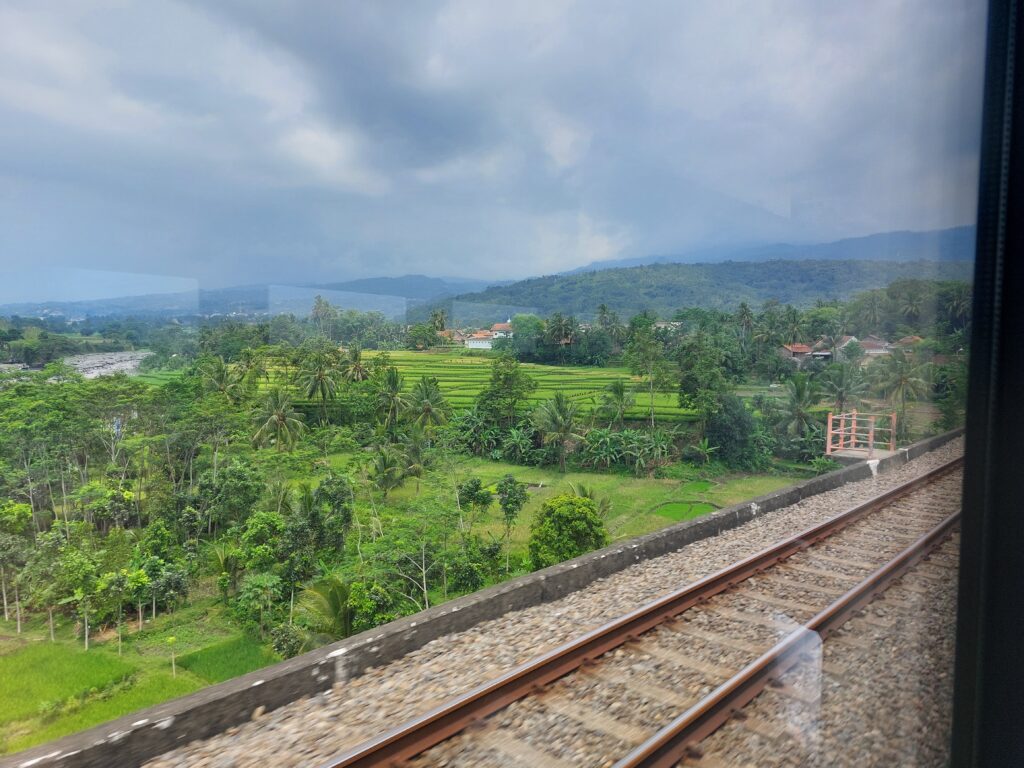
- We arrived in Yogyakarta by train from Jakarta, followed later by train rides to Surakarta & Semarang on the north coast. All in all, truly positive experiences. Well organized & very relaxed, through beautiful landscapes.
To learn more, either click on: Trip Flight or Trip Train rides
Things to Do around Yogyakarta
Many visitors use Yogyakarta primarily as a base to visit the world famous temples of Borobudur & Prambanan. With reason, but there are other attractions worthwhile in the area around. As you will see!
First though, let’s start with the mentioned temples. Or better, temple complexes.
The Borobudur temple complex
As this is one of the main attractions in Central Java, I’ll provide you with all the essential information you need before you visit these beautiful Buddhist temples.
Visit Borobudur: Background information
When it comes to day-trips from Yogyakarta, a trip to Borobudur is a MUST.
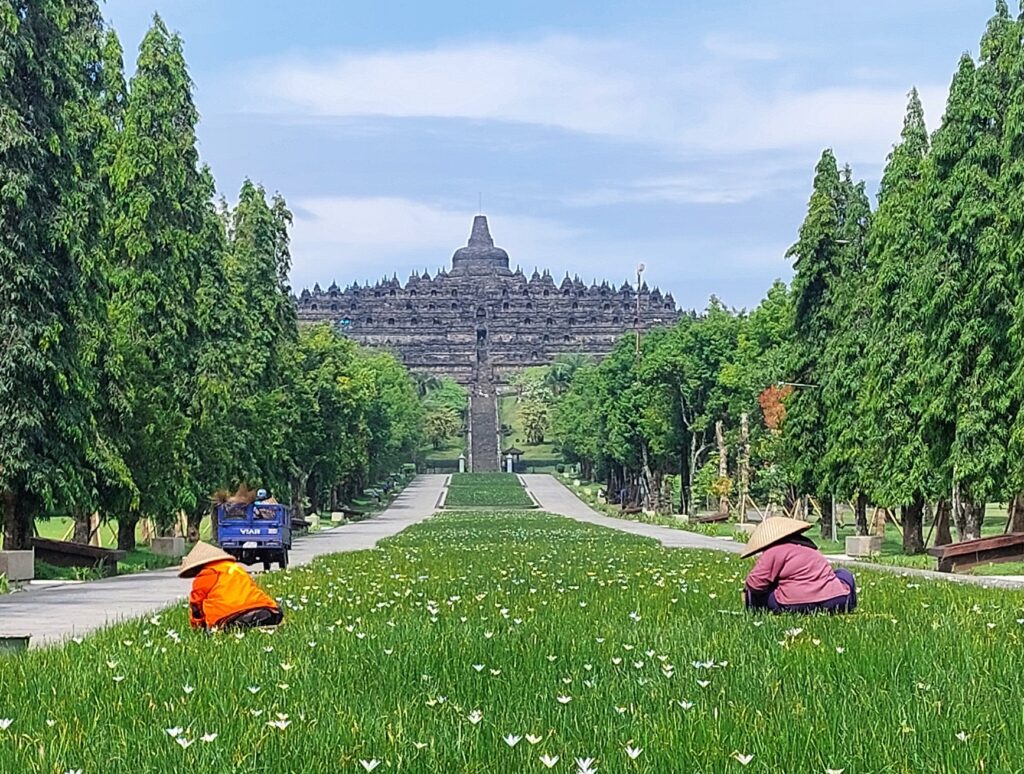
Actually, it’s a visit to several temples. Besides the main temple, there are two smaller ones nearby. All dedicated to Buddha. Therefore, it’s more accurate to refer to it as the Borobudur Temple Complex.
- The Borobudur temple is the main structure. The world’s largest Buddhist monument. A masterpiece of architecture & spiritual symbolism.
- Besides this gigantic main temple there’s the much smaller Pawon temple. Situated on a straight axis eastwards – a 10-15 minute walk. A little further in the same direction – 20-30 minutes – you’ll find the Mendut temple.
The Borobudur temple complex was constructed during the 8th & 9th centuries AD. A time when the Buddhist & Hindu kingdoms were flourishing in Central Java.
- The Borobudur was commissioned by the Shailendra Dynasty (see the Short History of Yogyakarta above).
As you’ll notice soon enough when walking up to the main temple, the entire structure was built upon a natural hill. For its construction approximately two million blocks of local volcanic stone were used.
Abandonment & rediscovery
Despite this superhuman effort, during the first half of the 10th century the temple was already abandoned.
The primary reason likely being a massive eruption of nearby Mount Merapi, coupled with a local power struggle. Factors which prompted the ruler of the Mataram Kingdom, Mpu Sindok, to move the capital to East Java (929 AD).
Overgrown by jungle & buried under volcanic ash, the temples remained hidden for the outside world until 1814. They were rediscovered by the British Governor of Java, Thomas Stamford Raffles.
Thereupon Raffles ordered the Dutch engineer Hermann Cornelius to clear & investigate the temples. He did so, but the site had to wait until the 1970s & 1980s to get seriously researched & restored.
- Given that the project was funded by UNESCO, it’s no surprise the Borobudur Temple Complex is officially designated as a World Heritage site (since 1991).


Visit Borobudur: Travel Information
The Borobudur temple complex opens daily from 6:00 AM until 5:00 PM.
When you buy the general entrance “Temple Ground Ticket“, you can walk the grounds in between the temples & only admire them from below.
However, for a guided tour of the main temple you have to purchase the “Temple Structure Ticket“. With this ticket you have to book a time slot.
Before the tour starts you have to gather at the Visitor Waiting Lounge within the park. There you receive a pair of special sandals to wear – included in the ticket -and are also assigned a guide.
- Access to the main temple is limited to 1200 people/day.
- Most guides speak Bahasa and/or English, but sometimes also other languages like Spanish, French, German, Dutch, Chinese or Japanese.
Sunrise experience from Borobudur’s main temple
If you want to experience the sun coming up early in the morning from the top of the main temple, you have to purchase the “Borobudur Sunrise Ticket“.
As this is a very popular activity, it’s highly recommended to purchase your ticket well in advance. Also because the early morning entrance (4:30AM) is restricted to 100 people per day.
BE AWARE though to book the right tour. That is, a tour that actually brings you to the top of the main Borobudur temple.
To learn more, go to: Inside Borobudur sunrise visit
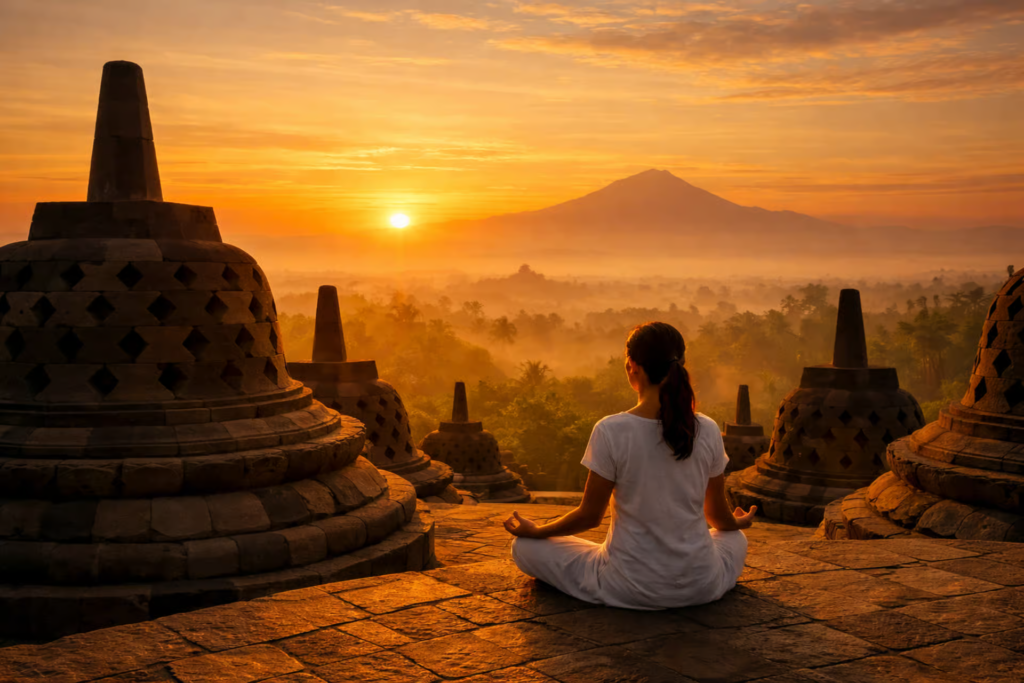
All the sunrise visitors have to enter through a special gate, which is part of a neighboring Cultural Center. A place you can stay the night, if you prefer to spend an extra hour in bed & be close to the temples.
To learn more, go to: Manohara Borobudur Cultural Center’s Guest House
Alternatively, you can witness the sunrise over the Borobudur from the nearby Setumbu Hill, located 4km/2.5 mi. distant from the temples.
This perfect lookout point opens at 4AM. From this spot, you get an unforgettable early morning view of the temple & surrounding area (including Mt. Merapi). Besides, it’s a lot cheaper than the early Borobudur climb.
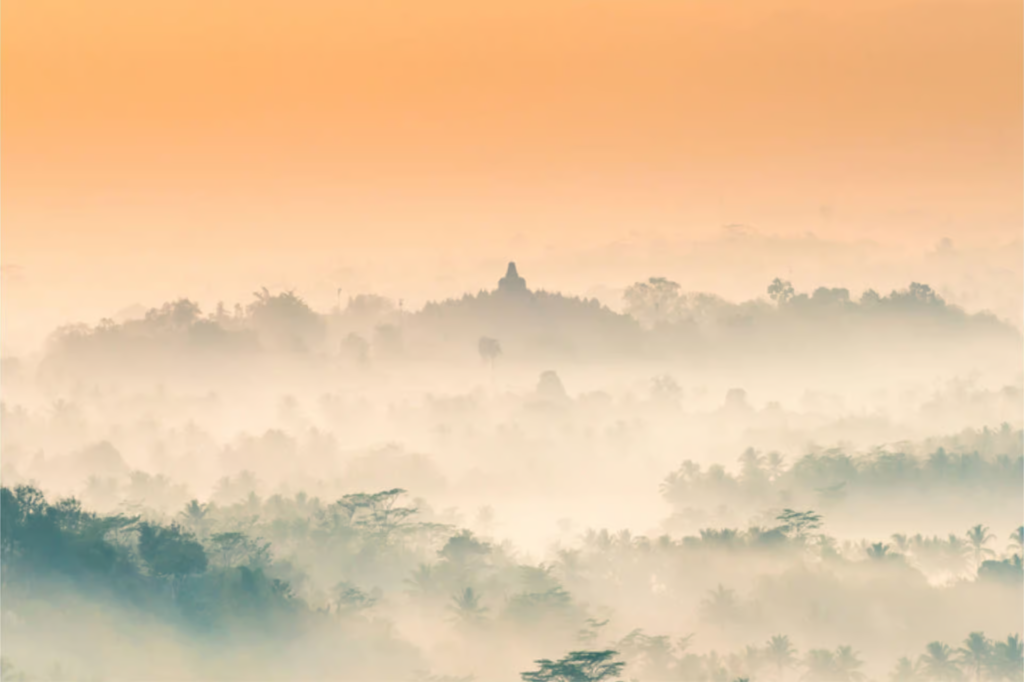
As with the Inside Borobudur sunrise tour, it’s highly recommended to buy this tour well in advance.
To learn more, click on: Borobudur Sunrise view from Setumbu Hill
Museums at the Borobudur
Don’t forget to visit the two museums near the exit of the Borobudur Temple Complex.
Foremost, the Karmawibhangga Museum, which houses many interesting archaeological artifacts. Amongst them various disassembled Borobudur stones, as well as documentos related to the temple’s restoration.
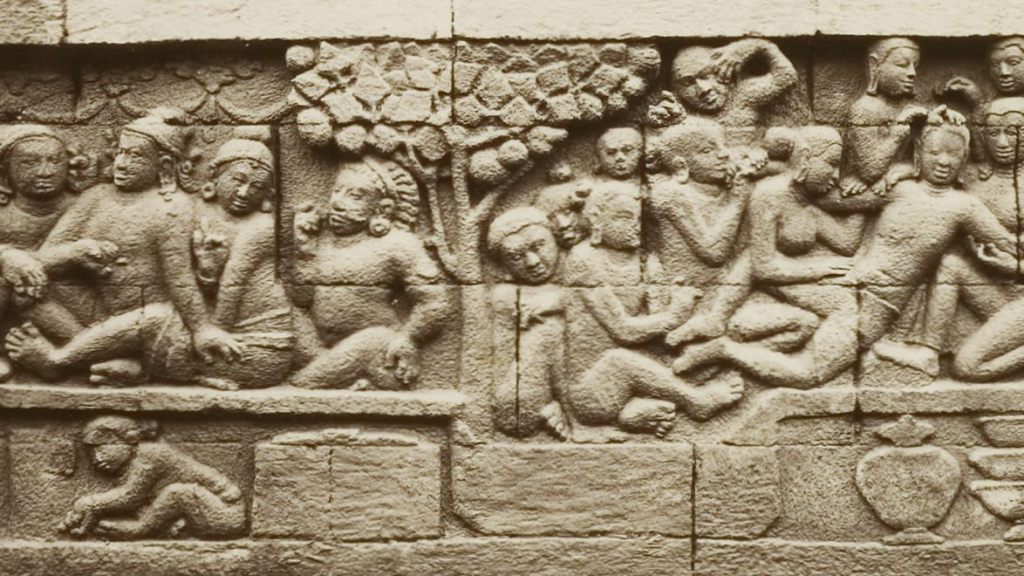
Besides that, this museum displays a remarkable series of photographs of carvings rediscovered in the 1880s at the base of the temple.
Bas-reliefs which are deliberately hidden from sight for all visitors, because of their explicit sexual content.
Another highlight in this museum is the so-called Unfinished Buddha. A statue which was found in the main central stupa or stone bell & in the museum for protection.
- So far, nobody knows why this statue was left unfinished. Was it on purpose? Or was it just a mistake by its sculptor?
The Museum Kapal Samudraraska or Borobudur Ship Museum is also near the exit gate. This one is dedicated to the country’s maritime history.
Its highlight is a full-scale replica of an 18m/59ft wooden outrigger vessel. A beautiful ship which is depicted on several of the temple’s bas-reliefs & was used as a trading vessel at the time the Borobudur temple was built & in use.
- In 2003/04 a replica of this ship sailed from Indonesia to Madagascar & around Cape, all the way to Ghana. Recreating a historical trade route to Africa over a thousand years ago – the so-called Cinnamon Route.
TravelTip: If you only have time for one of the two museums, pick the first one. But if you have time & the energy, visit both.
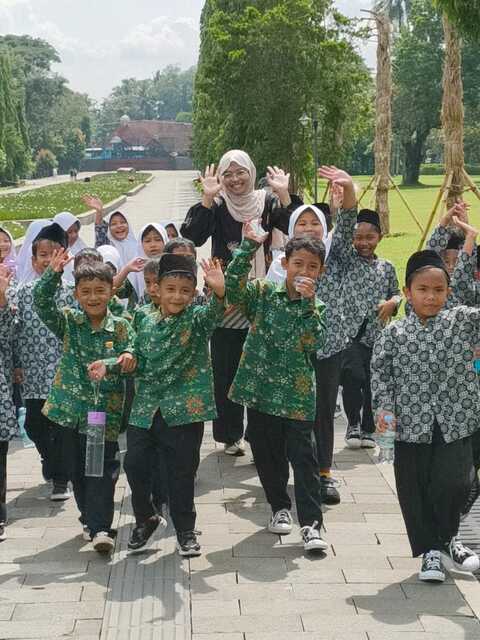
Our own visit to the Borobudur area
Beforehand we decided to stay a few days near the Borobudur temples.
First of all to escape the urban destinations we had chosen before & after our visit to this world famous temple.
Secondly, when planning our trip through Java we discovered a luxurious, but still affordable resort overlooking the temples & surrounding area: the Villa Borobudur Resort.
So instead of a day trip to Borobudur from Yogyakarta – what most people do – we visited the temples from the hotel.
- Besides breakfast, FREE transport was included in the room price. Not only to & from the temples, but also from other locations nearby. Like the nice, friendly Desa Majaksingi we explored on foot the last day there.
- Also, they provide all kinds of other services. From a relaxing massage to day trips to Borobudur & others like Selogriyo or the Dieng Plateau (see below). Also, transportation from & to Yogyakarta or elsewhere.


Impression of our stay at Villa Borobudur Resort + the view over the surrounding area, including the eye-catching Mt. Merapi.
For more info on the mentioned resort, go to: Villa Borobudur Resort
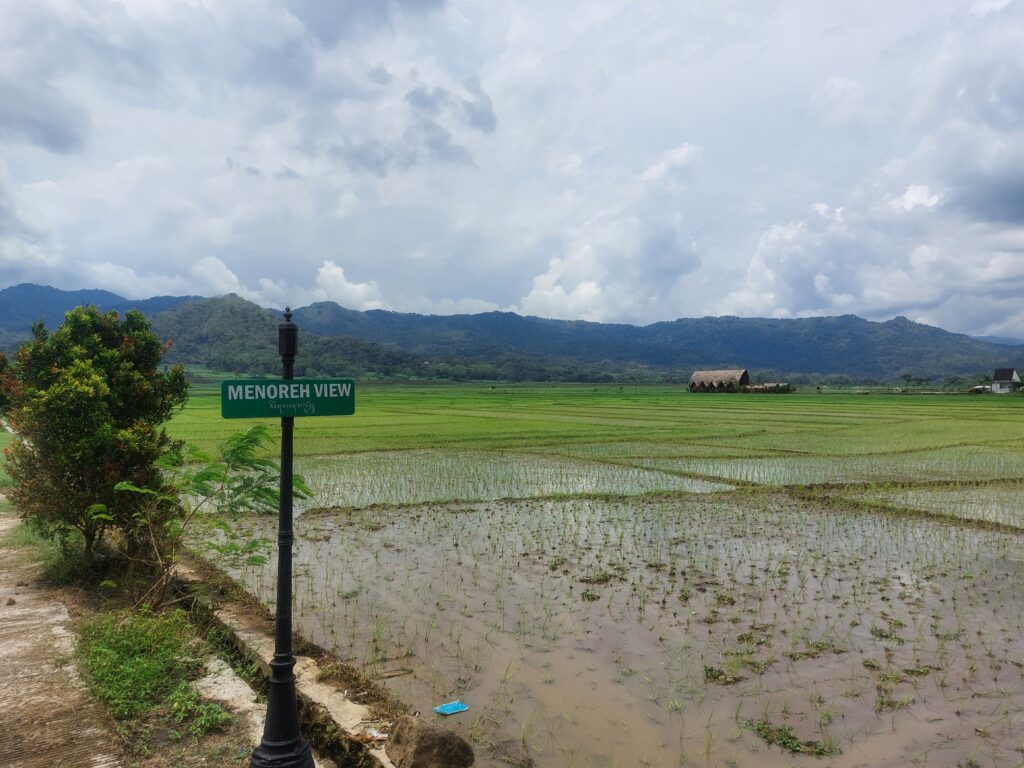
TravelTip: On our way to Borobudur, our driver Mujari (see above), surprised us with a stop at the beautiful Menoreh Rice Fields.
Not only to enjoy the spectacular views around, but also to have a real break & to order the best Pisang Goreng in Java. Delicious & freshly prepared.
The Prambanan temple complex
Another highly popular tour from Yogyakarta – and actually much closer – is a visit to the Prambanan Temple Complex.
Visit Prambanan: Background information
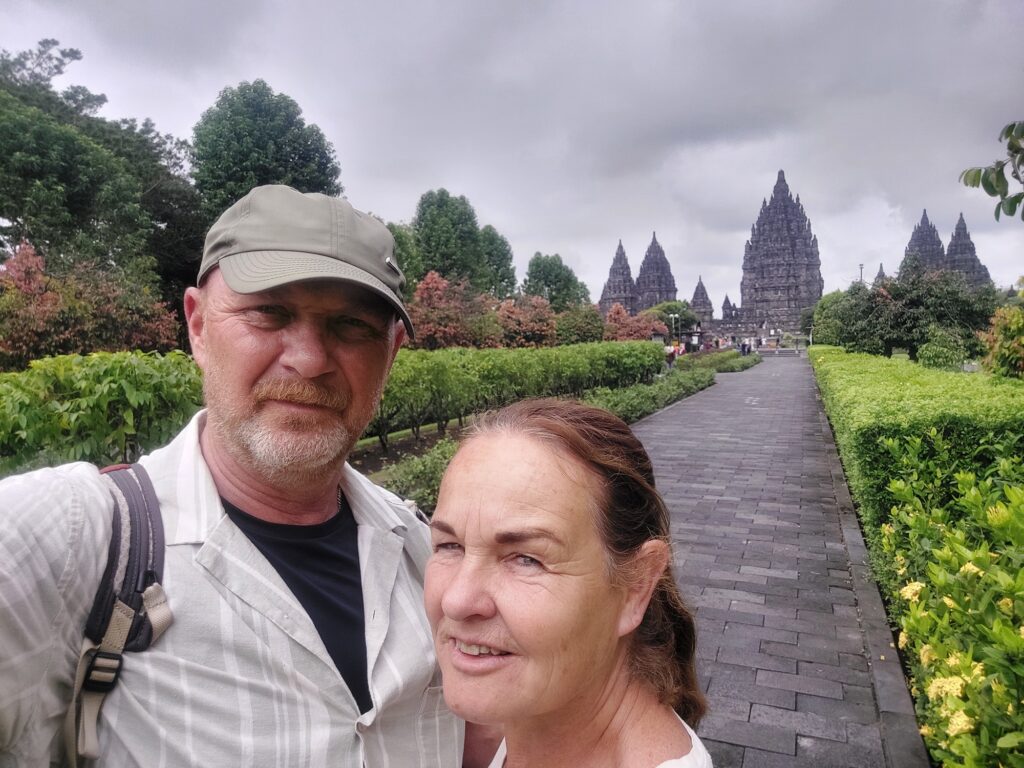
As in the case of Borobudur, within the Prambanan Archaeological Park you’ll encounter more than one temple. Actually, at Prambanan there are several compounds & hundreds of temples – big & small.
The first compound you’ll see after entering, is the main temple complex – the imposing Loro Jonggrang. The largest Hindu temple structure in Indonesia, dedicated to the Hindu trinity: Brahmā (Creator), Viṣṇu (Preserver) & Śiva (Destroyer).
- Like Borobudur, these temples were built during the 9th century. This time by the Sanjaya Dynasty. They were also abandoned during the next century. Soon overgrown by jungle, damaged by regular earthquakes & volcanic eruptions.
- After the temples were rediscovered in the 18th century, research started & later on its restoration. Ending in being named a UNESCO World Heritage Site in 1991. The same year as Borobudur.


Impressions of Prambanan’s main temple complex, Loro Jonggrang.
Instead of having a closer look at these amazing temples, we first visited another compound within the park. A 20 minute walk further on, the Buddhist Sewu Temples.
- Importantly, the proximity of Hindu & Buddhist temple complexes demonstrates the religious harmony of the area in the past.
TravelTip: Since most visitors start with the main temple & only later (maybe) visit the other ones, we decided to do the opposite. This way ending up at the still almost completely human-free Sewu temples. A magical visit!
- Candi Sewu was built in the late 8th century. Which means these temples are actually older than the main Hindu temple at Prambanan. Besides that, the whole complex is also bigger than the Loro Jonggrang temple group.


Impressions of the Buddhist Sewu temples.
On our way back to the main temple we passed two smaller Buddhist temple complexes, namely Lumbung & Bubrah.
- Both these temple groups were built slightly later. Possibly as satellite temples to the Sewu group
Prambanan Temple Museum
Within the Park you can visit the relatively small Site Museum. Exhibiting all kinds of archaeological finds.
As well as, displays providing you with a historical background to the temple complex. Its construction, but also its rediscovery & restoration. Absolutely worth a quick visit.
On your way out, you can visit the so-called Outdoor Museum. This museum mainly offers an idea of the thousands upon thousands of relief stones, stelas & other finds found at the site. Pieces of a life size jigsaw puzzle.
Visit Prambanan: Travel Information
The Prambanan temple complex opens daily from 6:30 AM until 5:00 PM. The distances between the temples are relatively short. Making it easy to visit them all within a few hours on foot.
However when you don’t feel like walking – mainly because of the tropical heat – there are several alternatives. At the entrance you can either take the tourist train/tram – which ends up at Sewu – rent a bike or a golf cart.
TravelTip: If you can’t get enough of these mysterious temples, you can find more of them outside the park, but nearby. Like Candi Sojiwan, Candi Sari & Candi Kalasan. Best reached by taxi, as they are all located along a busy road.
For lack of time, many visitors combine a visit to Prambanan with a visit to Borobudur.
To learn more, go to: Borobudur & Prambanan one day visit
Others combine it with the famous Ramayana Ballet (see below).
For more info on this option, go to: Sunset visit Prambanan temples & ballet.
However, if you prefer an exclusive guided walking tour of the Prambanan temples, you can consider taking the following tour: Prambanan guided tour.
The Ramayana Ballet
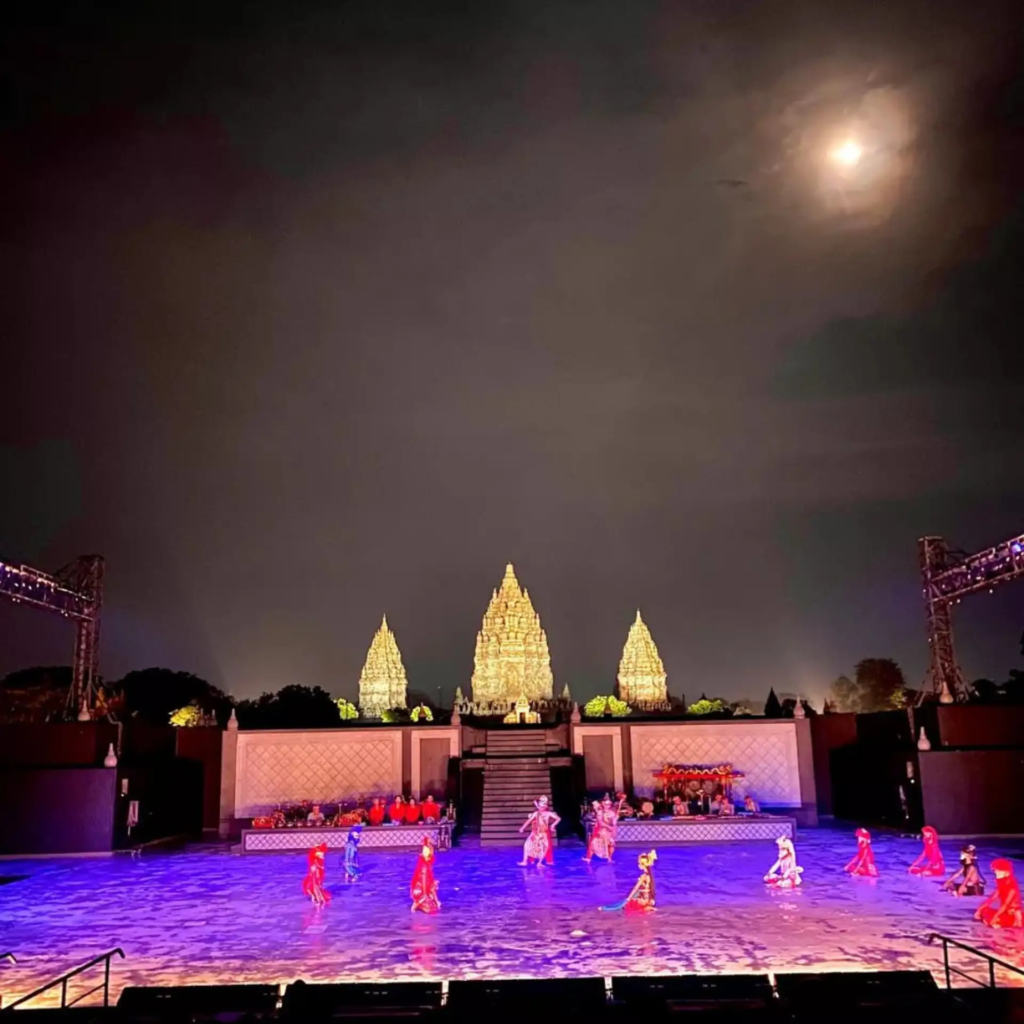
Another major reason to visit Prambanan is to enjoy a performance of the spectacular Ramayana Ballet – accompanied by a live gamelan orchestra.
A traditional Javanese dance drama, telling the epic story – “Ramayana” – of Prince Rama’s quest to rescue his beloved wife Sita. After she’s been abducted by the demon king Rahwana.
- The Ramayana story is literally carved into the architecture of the main temple of Prambanan.


During the dry season (May-October) the performance is presented at the open-air theater, while the illuminated main temples serve as a dramatic backdrop. When the rainy season starts, the company moves inside.
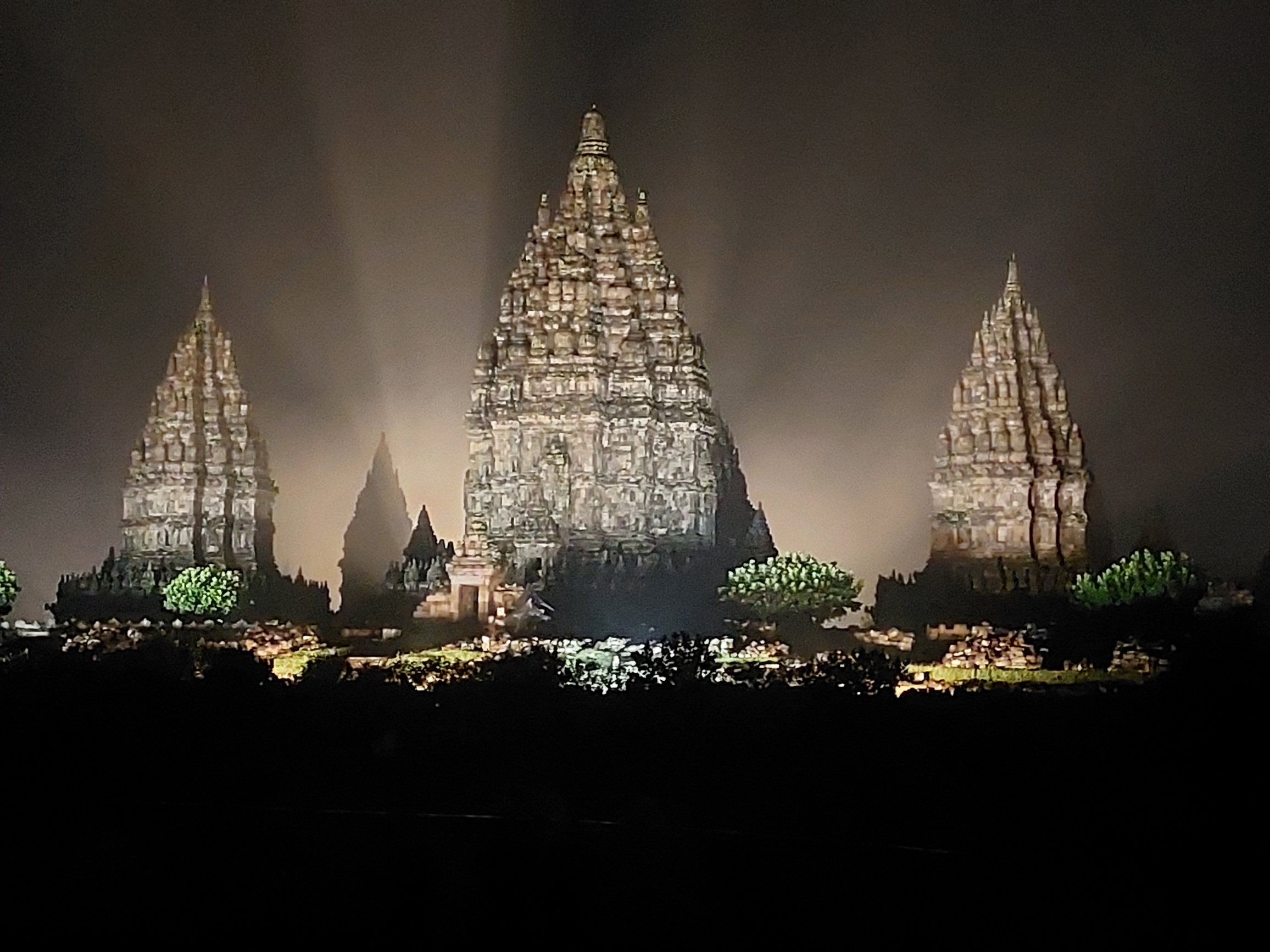
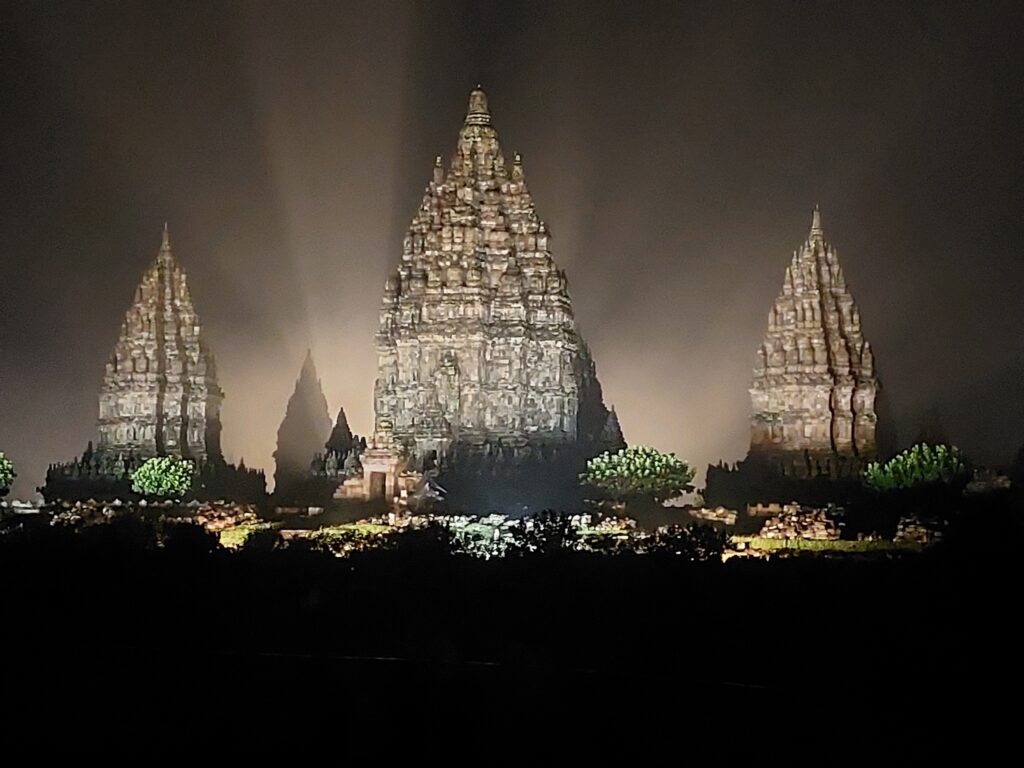
TravelTip: When we visited (October) the company had just moved inside. Too bad, but luckily after the show we could “behold” a spectacular view of the brightly lit temples to the left of the theater.
An unforgettable, almost surreal view, we’ll never forget.
IMPORTANT: The ballet doesn’t perform on Sundays, nor Mondays. On Tuesdays, Thursdays & Saturdays the performance is held at the temples. On Wednesday & Fridays at the Purawisata theater in the city center of Yogyakarta. Both start at 7:30 PM. Duration: 1,5-2 hours.
It’s possible to combine an afternoon visit to the temples with a ticket to the ballet (at both venues).
For more info, go to: Sunset visit Prambanan temples & ballet.
Our own experience at Prambanan
We loved the Ramayana ballet, but were flabbergasted by the beauty of the Prambanan temples. The Sewu complex, as well as the main Loro Jonggrang.
To be honest, in the end we were more impressed by Prambanan as the more famous & also beautiful Borobudur.
Also, because our visit to Prambanan felt more authentic. The visit to Borobudur felt somewhat over-organised. Understandably so, but it led to an altogether other experience.
In the end though, I highly recommend you to visit both!!
Selogriyo Temple & Rice Field Tour
Another unforgettable day-trip from Yogyakarta is a visit to the Selogriyo Temple. A much less visited temple, but for that reason all the more attractive.
It’s a small temple, but located at the end of a beautiful hike along a rice field valley. A world in itself!


Impressions of our visit to the Selogriyo temple & surrounding rice fields.
As we stayed in the Borobudur area, we visited the temple from there. If however, you’re staying in Yogyakarta it’s best to arrange a driver.
Or else, book the following which brings you through the rice fields to the temple, but also includes a visit to the spectacular Kedung Kayang Waterfall.
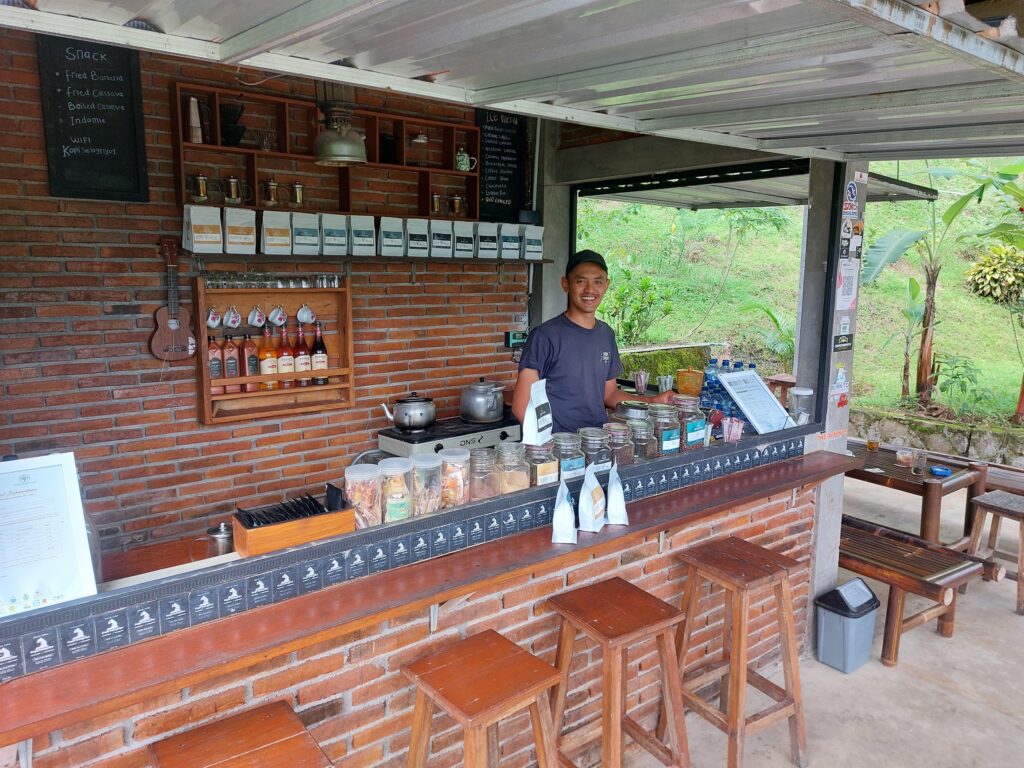
TravelTip: On your way to or from the temple you’ll encounter a small, but welcoming coffee bar. Perfect for a short break & included in every organised tour from Yogyakarta.
To learn more, click on:
Dieng Plateau
From Yogyakarta you can also make a day trip to the Dieng Plateau – “the Abode of the Gods“. A volcanic complex which provides visitors with unforgettable early morning sights of Central Java.
It’s a long day – 3.5 hours drive to the Sikunir viewpoint – but you won’t regret the effort. Also because on route you can visit other beautiful attractions, like several volcanic lakes & historic Hindu temples.
Again, you can hire your personal driver from Yogyakarta. Or opt for an organised Dieng Plateau Tour.
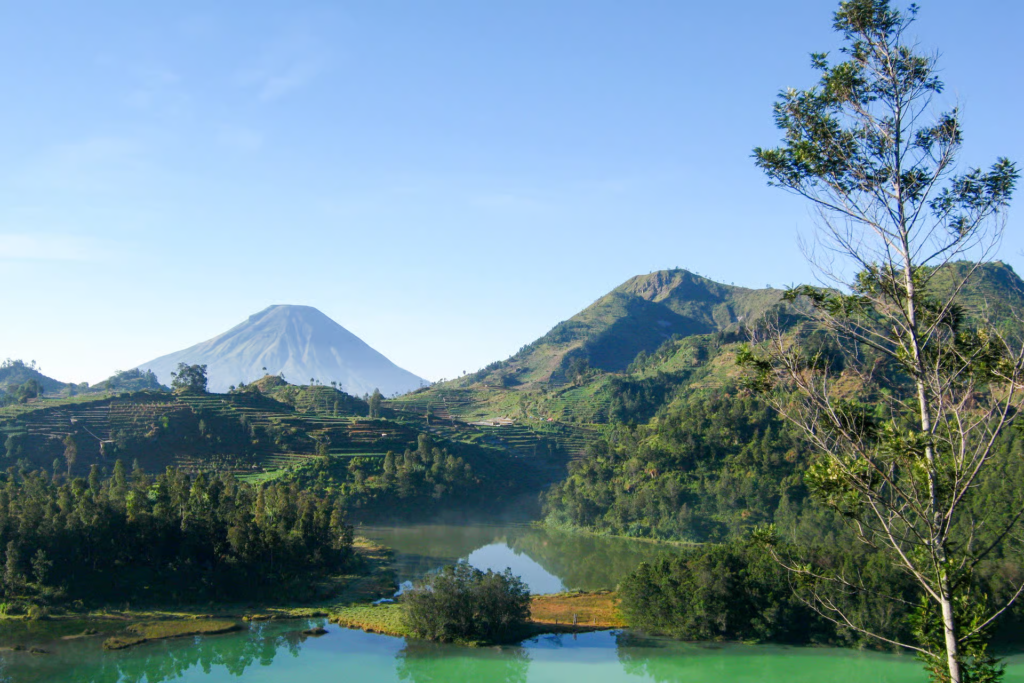
WARNING: It can be surprisingly cold up the plateau! To be sure, take some warmer clothes with you.
To learn more, click on: Sunrise visit to Dieng Plateau from Yogyakarta
Merapi Volcano Jeep Tour
From many angles in Central Java you’ll spot the majestic Mount Merapi. (2930m/ 9613ft). A volcano with a very strong historical & spiritual significance for its inhabitants.
- Merapi is a highly active stratovolcano that experienced a major eruption just recently (that is, 2010). The event lowered its summit by about 38m/ 125ft).
Mt. Merapi is located 1 hour distant (28km/ 17mi.) from Yogyakarta.
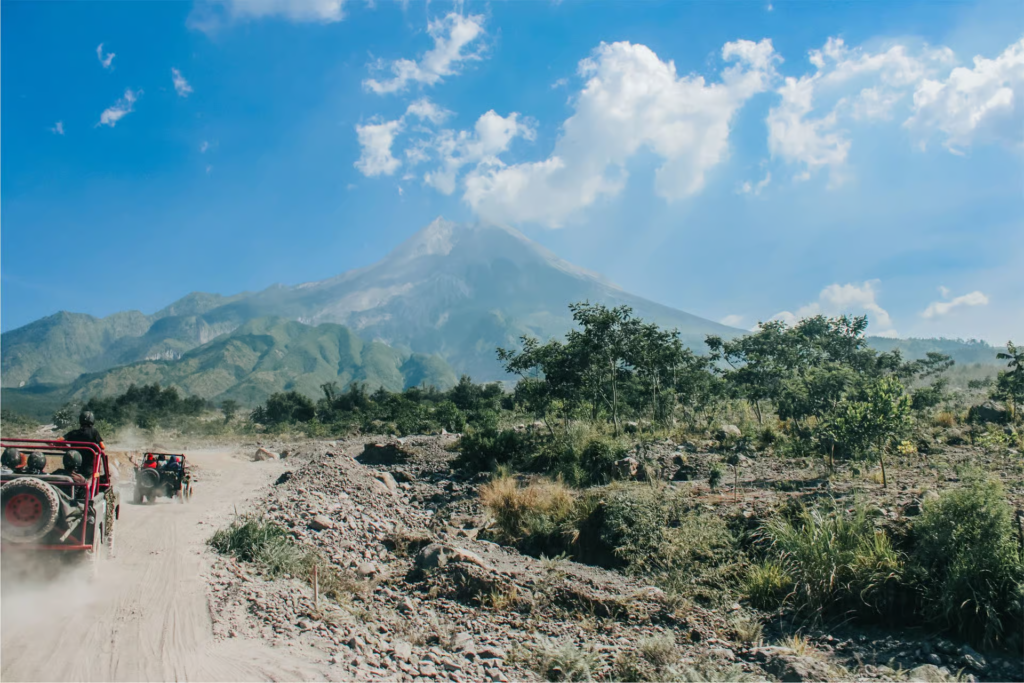
There are several tours to visit the active volcano:
Click on their names, if interested:
- A Hiking Tour of Mt. Merapi (5-6 hours).
- Or, an Morning Jeep Merapi Tour (3 hours).
Jomblang & Pindul Caves
Finally, for the adventure seekers there’s a highly popular tour to the spectacular caves of Jomblang & Pindul.
A trip that takes around 10 hours from Yogyakarta. Partially hiking, partially tubing into the inner worlds of planet Earth.
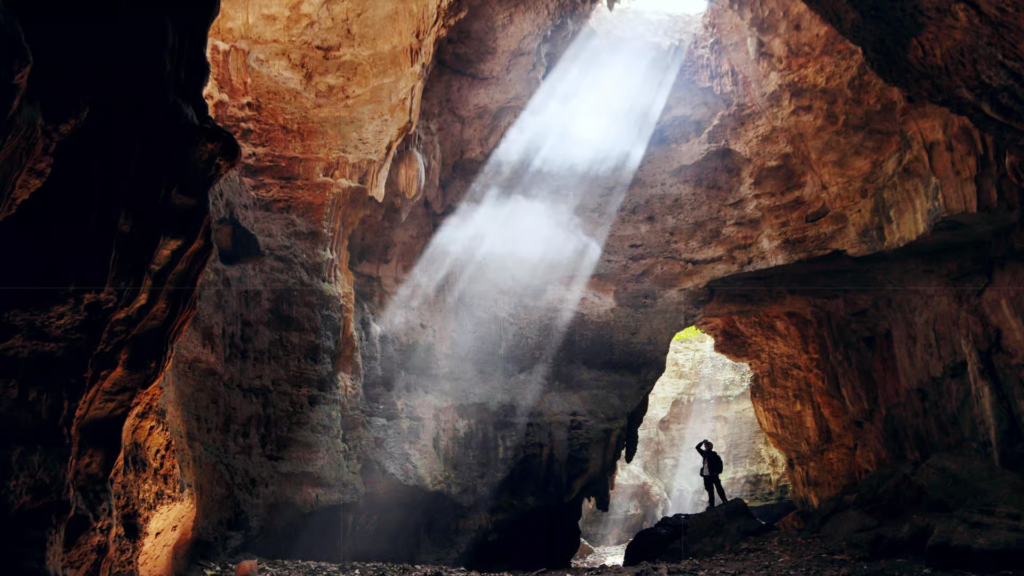
To learn more, go to: Jomblang & Pindul Cave Adventure Tour
Visit Yogyakarta: Conclusion
We had a wonderful time in Yogyakarta. A welcome respite from the megacity of Jakarta.
Personal highlights were the city center & Prambanan temple nearby. As well as some day trips around.
Although most travelers also include a visit to Borobudur from Yogyakarta, we decided beforehand to stay a few days in the rural area around this world famous temple complex.
Ending up at the small & friendly village of Majaksingi, located right beneath the unforgettable Villa Borobudur Resort, where we stayed a few happy, relaxed nights.
Overview Indonesia Posts:
Other travel posts written about destinations within Indonesia:
JAVA
BALI
For an overview of all travel posts of my blog, go to: My Home Page