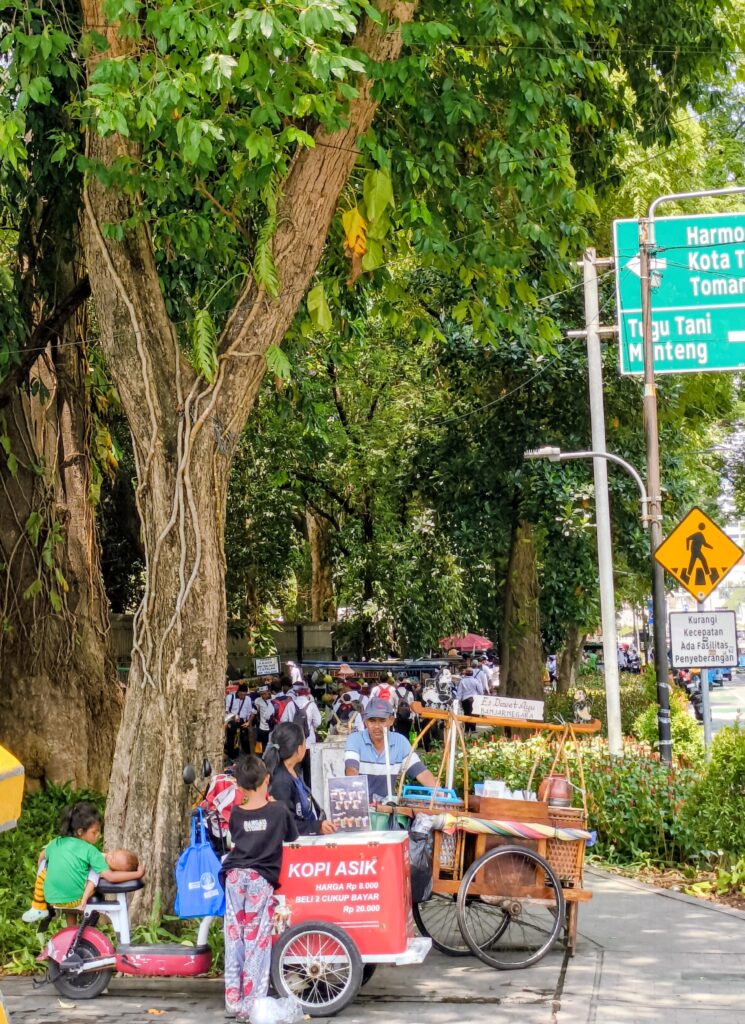
When planning to visit Indonesia, I highly recommend to include a few days in its capital, Jakarta.
Although some people may recommend you to avoid this mega city, I personally consider it a MUST when you want to get a good introduction to the past & present of this country.
Jakarta shares its eventful past in various ways. Amongst them several interesting museums, as well as many eye-catching, historical monuments.
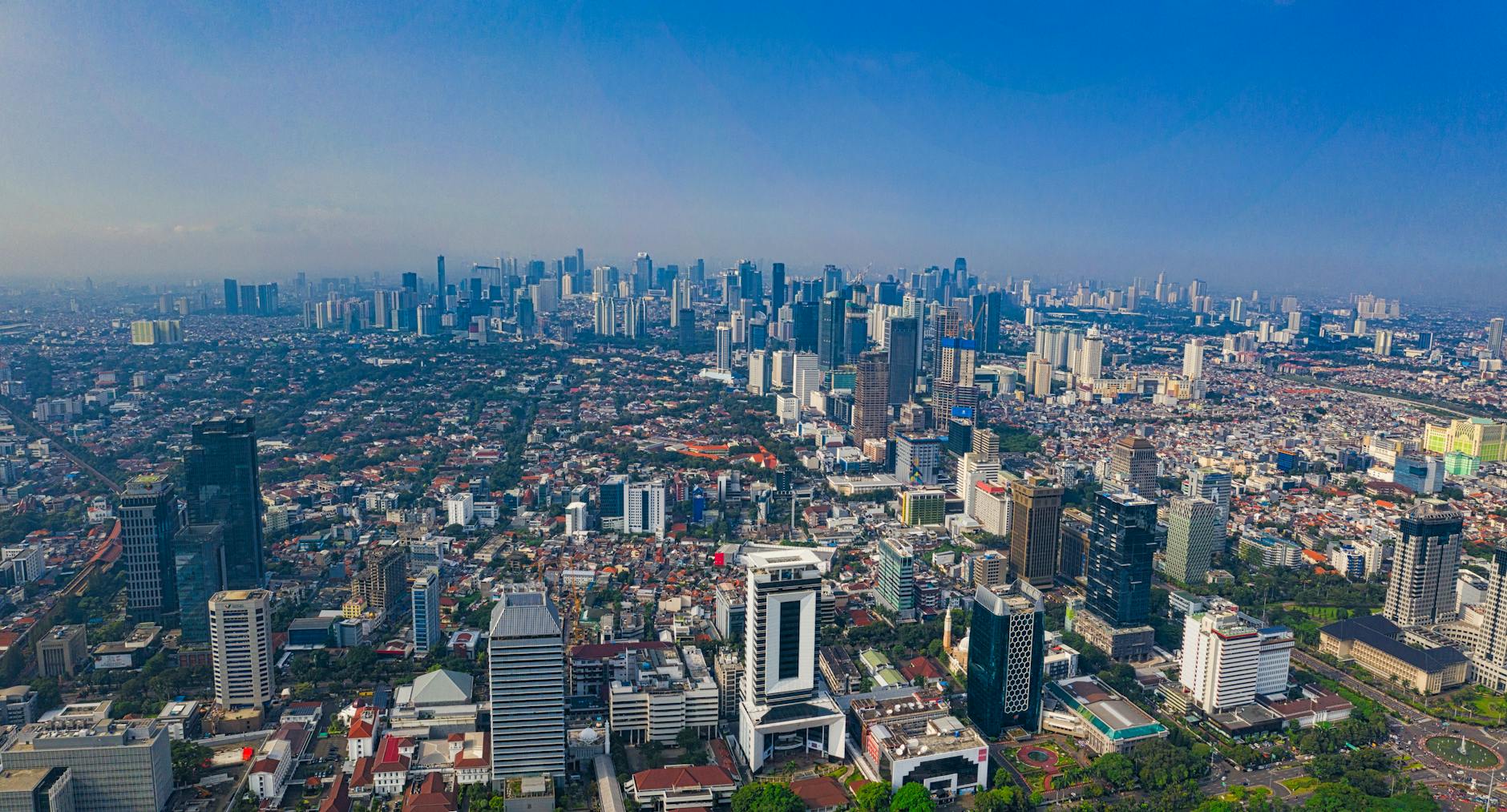
Jakarta is simultaneously a living example of a modern metropolis. A vast city barely holding its own. A city of contrasts. Rich & poor, traditional & modern, ugly & beautiful, stressful & relaxing.
- !!! As this is an extensive blog post, I’d like to recommend you to have a look at the Index first. This way, selecting the topics that are of interest to you.
Our Visit to Jakarta: Introduction
Me and my wife Wendy visited Java & Bali in October & November of 2025. An old wish. Especially as Wen’s father was born on Java (1935) & had regularly inspired her in the past – and later me also – with his youthful memories.
- I will refer to this personal history whenever we tread in the family’s footsteps.
Beforehand I made a study of all the Things to Do in & around the city. As there are so many, we picked the ones which attracted us most. We managed to visit many attractions, skipping just a few.
In this post I will present the most interesting ones to you. Things to do in, as well as around Jakarta.
By the way, we consciously began our trip in nearby Bogor. Before heading to the absorbing capital. We considered it best to acclimatize a little first. Adjusting to the culture, the pace of life & the tropical climate. A perfect start!
- The distance between Bogor & Central Jakarta (Merdeka Square) is 60km/ 37mi. In the inner part of this megacity live almost 11 million people, while in the wider Metropolitan area live around 42 million. An area which nowadays includes Bogor.
- IMPORTANT MESSAGE: Throughout this post you’ll find affiliated links & ads provided by travel platforms like Expedia & GetYourGuide. Links & ads that may help you plan & fill in your next trip to Indonesia.
- If you click on them & buy a ticket for a museum or a tour a small commission of your purchase will go to me (Paid by the provider, without any extra cost to you!).
- If you first want to learn a little bit more about me, the blog writer, please click on: Better call me Art.
Short History of Jakarta
Jakarta has a long history. An interesting, eventful past you may want to learn about before you explore its visible & invisible remains.
- !!! Before visiting a certain place, it’s good to learn about its history. However, if you already know about Jakarta’s past, or aren’t that interested for the moment, click on the next segment: Things to do in Jakarta.
Early history of Jakarta
While the 19th-century discovery of “Java Man” proves that hominids inhabited the island over a million years ago, the specific origins of settlement in the Jakarta area can only be traced back to the Buni Culture around the 4th century BC.
- The Buni Culture was a prehistoric community which roughly flourished in Northwest Java from 400 BC until 100 AD.
Around 400 AD the territory fell under the influence of neighboring Hindu realms. First the Rajasingha dynasty of Tarumanagara, and later the Sunda Kingdom. Converting the local inhabitants little by little to the Hindu faith.
- The latest rulers named the small, but important trading port on the northern coast of Java, Sunda Kelapa.
- During the 14th century the port officially was part of the Majapahit Empire – which had its seat in East Java – but with a high degree of autonomy compared to other regions on the island.
Islamic Period
The first Islamic traders reached Jakarta & other coastal towns in the 7th century.
- At that time, Sunda Kelapa was already frequented by traders from neighboring countries for centuries. Foremost merchants from China & India. The last ones primarily responsible for the conversion of the Javanese to Hinduism and also Buddhism.
At first, trade was the main goal of these Islamic newcomers. However between the 13th & 16th century their presence would result in a massive conversion of the local inhabitants to Islam.
- This way Islam became the dominant religion in Jakarta, Java & across most of the Indonesian archipelago. Bali being the biggest exception, which is still predominantly Hindu.
Arrival of European traders
In the first half of the 16th century the first European traders arrived before the coast of Jakarta. In this case, the Portuguese.
Although the Iberians initially established an alliance with the Sundanese, they lost it as soon as the neighboring Banten Sultanate conquered the area. The Banten rulers renamed the port city Jayakarta (1527).
At the same time other European countries were trying to get a hold on the so-called Spice Islands. Amongst them, the English & the Dutch.
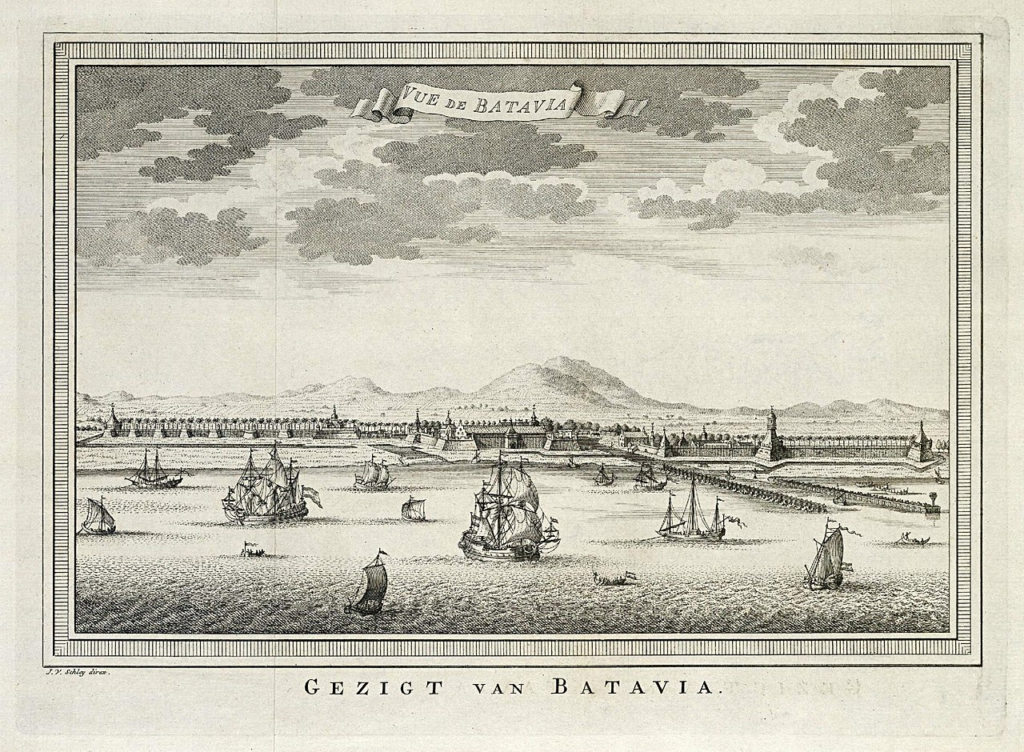
It was the latter who captured Jakarta in 1619. Establishing a trading post for their East India Company (VOC), renaming the place anew – Batavia.
Dutch trading post
The main goal of the Dutch initially was to obtain exotic spices like nutmeg, mace, cloves & others. Goods which in Europe at the time were worth more than gold.
Soon enough the Dutch started rebuilding the city. Digging out a network of canals, building a City Hall, churches & warehouses in the typical Dutch architectural style.
Converting Batavia rapidly into a busy harbor & market town, which attracted ever more merchants. Not only from Western Europe, but also new traders from China & the Middle East.
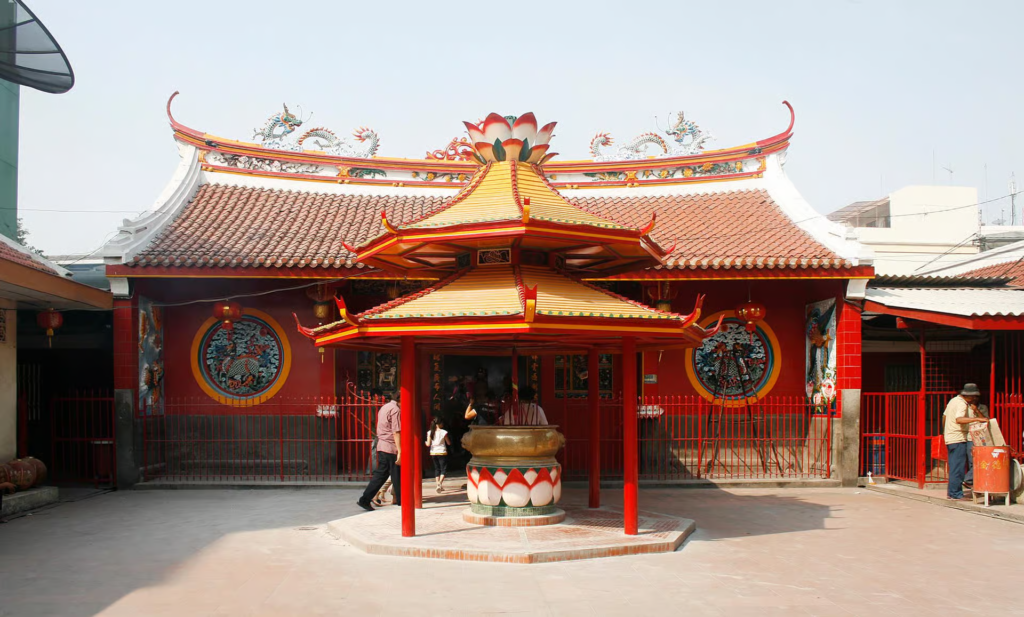
- As the Chinese population grew, tensions with the Dutch merchants increased. Soon leading to confrontations, including a short, but ugly war (1740), in which thousands of Chinese died, besides hundreds of Dutchmen.
- The Chinese who survived were placed in a closed district, just outside the port city. The Glodok neighborhood, where nowadays you’ll still can find Jakarta’s Chinatown.
The trade with the Spice Islands was so profitable, it made the Netherlands at the time one of the richest countries in the world. Financing a period later defined as the Dutch Golden Age.
Dutch colony
This first Dutch period lasted almost two centuries. That’s until 1799, when the East India Company went bust & the Dutch government took over control in Batavia & the Spice Islands.
This was also the moment when the city – instead of being a company’s headquarters – officially became the capital of a Dutch colony.
A situation which would last until the Second World War when the Japanese occupied the Dutch East Indies (1942-1945). Including their capital, which the occupier renamed Jakarta.
War of Independence – Birth of Indonesia
Soon after the war, Indonesian nationalists declared their country independent. Resulting in a war with the Dutch.
A hard fought conflict which in the end resulted in the independent Republic of Indonesia, with Jakarta as its capital.

After independence Jakarta continued to grow & develop rapidly. Becoming in the end one of the world’s largest & most dynamic metropolises.
Meanwhile it – still(!) – is the country’s political & economic center. Exhibiting to every interested visitor its rich history & cultural diversity.
- Despite the brutal War of Independence, Indonesians didn’t bury their colonial past. Keeping its memory alive through the restoration of Dutch colonial buildings & museums. As well as the good & bad memories.
Many former Dutch colonial city centers are important tourist attractions nowadays. Housing museums, but also hotels, restaurants & shops.
In conclusion, I highly recommend you to incorporate a visit to Jakarta when planning a journey to & through Indonesia. The historical capital of the country.
- Sad, but true! Because Jakarta is overpopulated & slowly “sinking away”, the Indonesian government has decided to build a new capital, named Nusantara. Not in Java, but in Kalimantan, on the island of Borneo.
- Its relocation is foreseen for 17 August 2028 (Independence Day). However, the whole project will only be completed in 2045. At least,… that’s the plan.
Visit Jakarta: Things to do
Jakarta’s enormous city center houses almost 11 million inhabitants. No surprise, there are several zones to present when it comes to the city’s main attractions, namely.
- The city’s oldest section is Kota Tua, which borders the Java sea. Formerly Batavia, this area features many colonial buildings (some restored, others waiting for it) & several interesting museums.
- Jakarta Pusat is the central part of the city. Marked by the Merdeka Square & monument. Surrounded by other colonial buildings, museums, a presidential palace, an enormous mosque & neighboring cathedral.
- In the more modern western & southern parts of Jakarta you’ll find fancy hotels & restaurants + shopping malls, but also some worthwhile museums & other attractions.
Visit Jakarta: The Old Town
Taman Fatahillah – Central Square
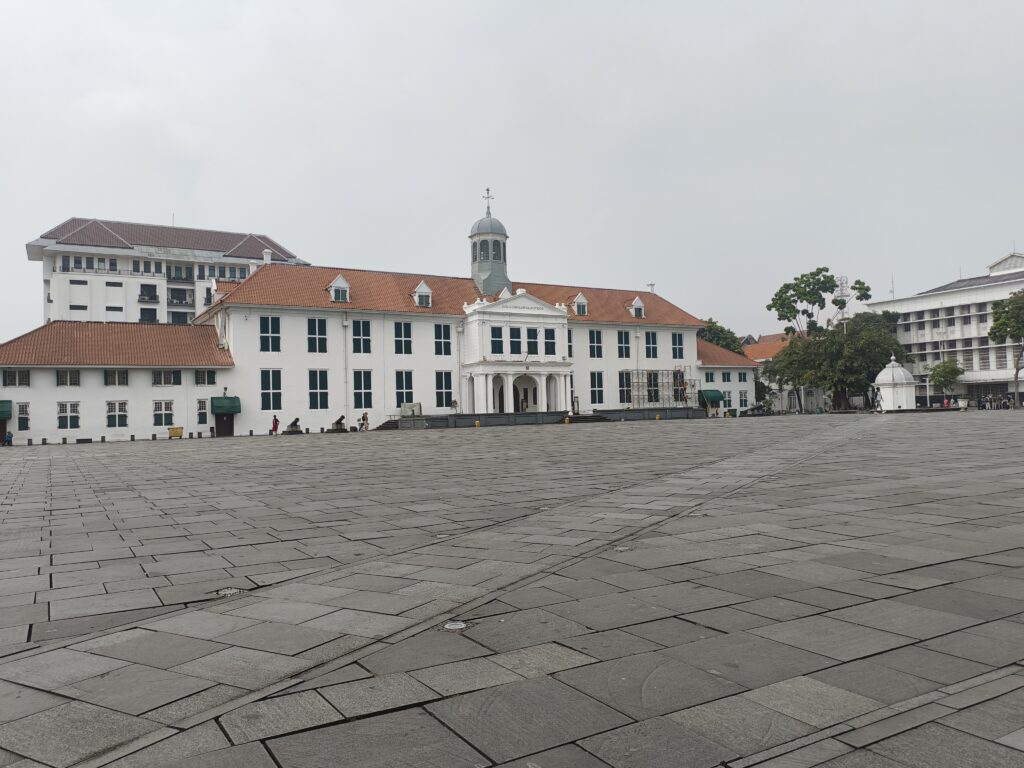
This central square – constructed by the Dutch – is still the heart of Kota Tua, the Old Town.
- The square is named in honor of the national hero Fatahillah. He was responsible for conquering the area (1527), which at the time had sold its soul to the Portuguese. He also renamed the city. Sunda Kelapa became Jayakarta.
The square is an ideal spot to start your visit to Jakarta. A historical area to stroll around & explore at your own pace. Also because this zone – unlike other areas of the city center – is traffic-free!
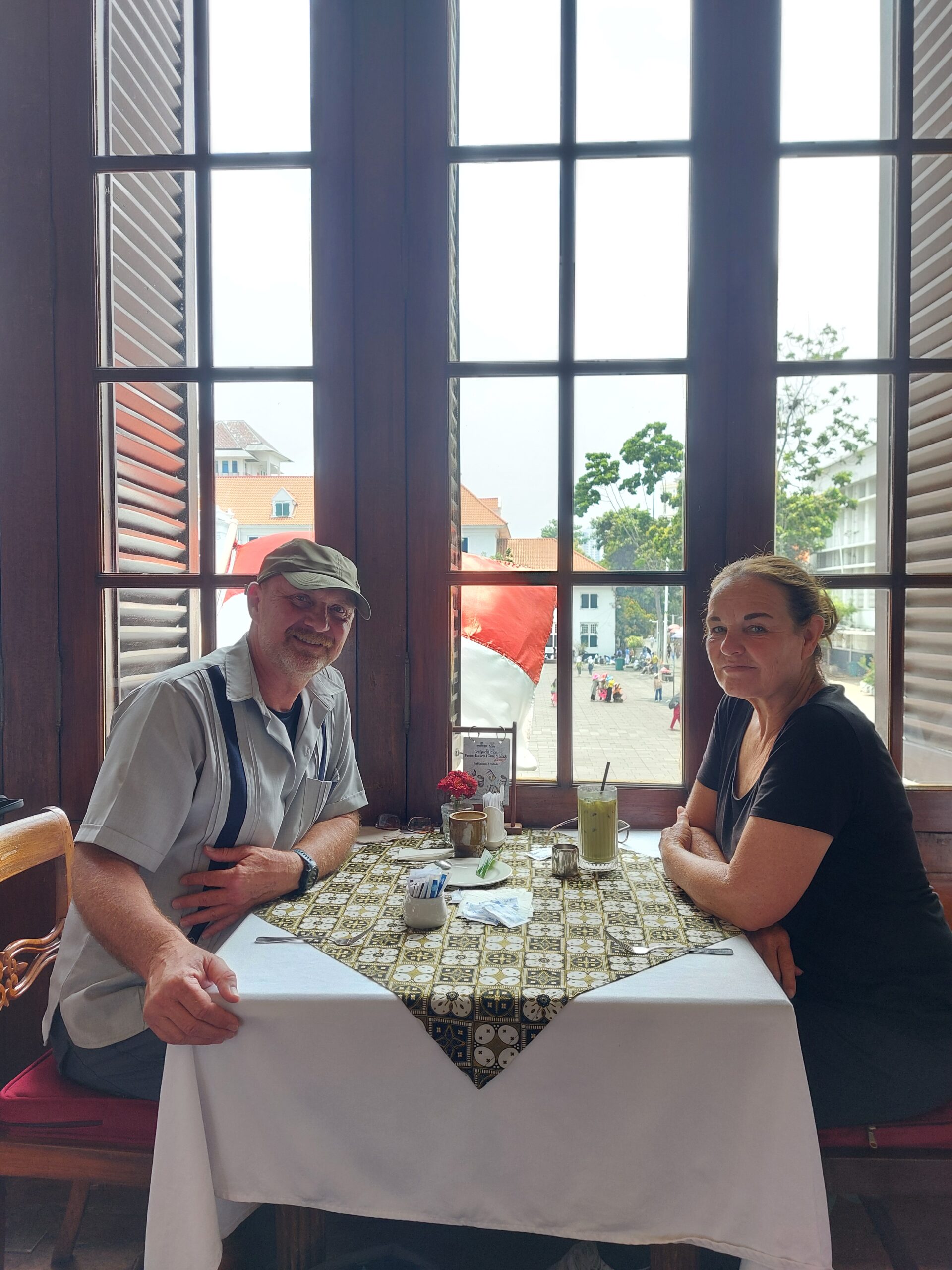
Admiring the beautifully restored colonial buildings. Visiting one of its museums. Having a bite & a drink in one of the cafeteria-restaurants there.
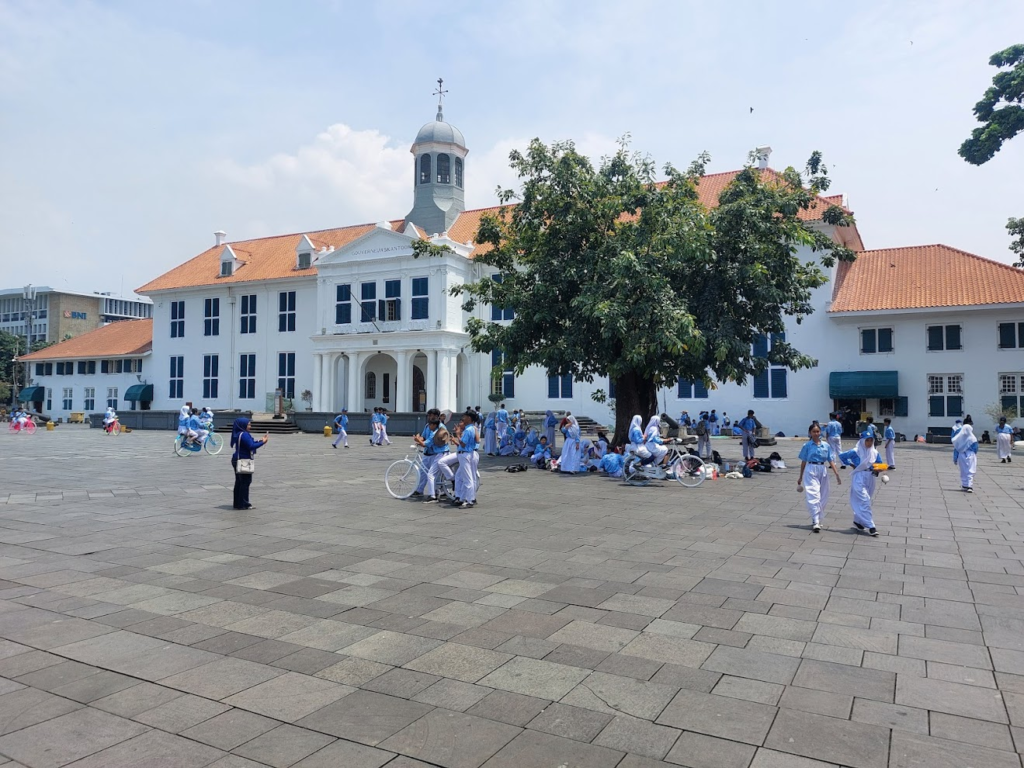
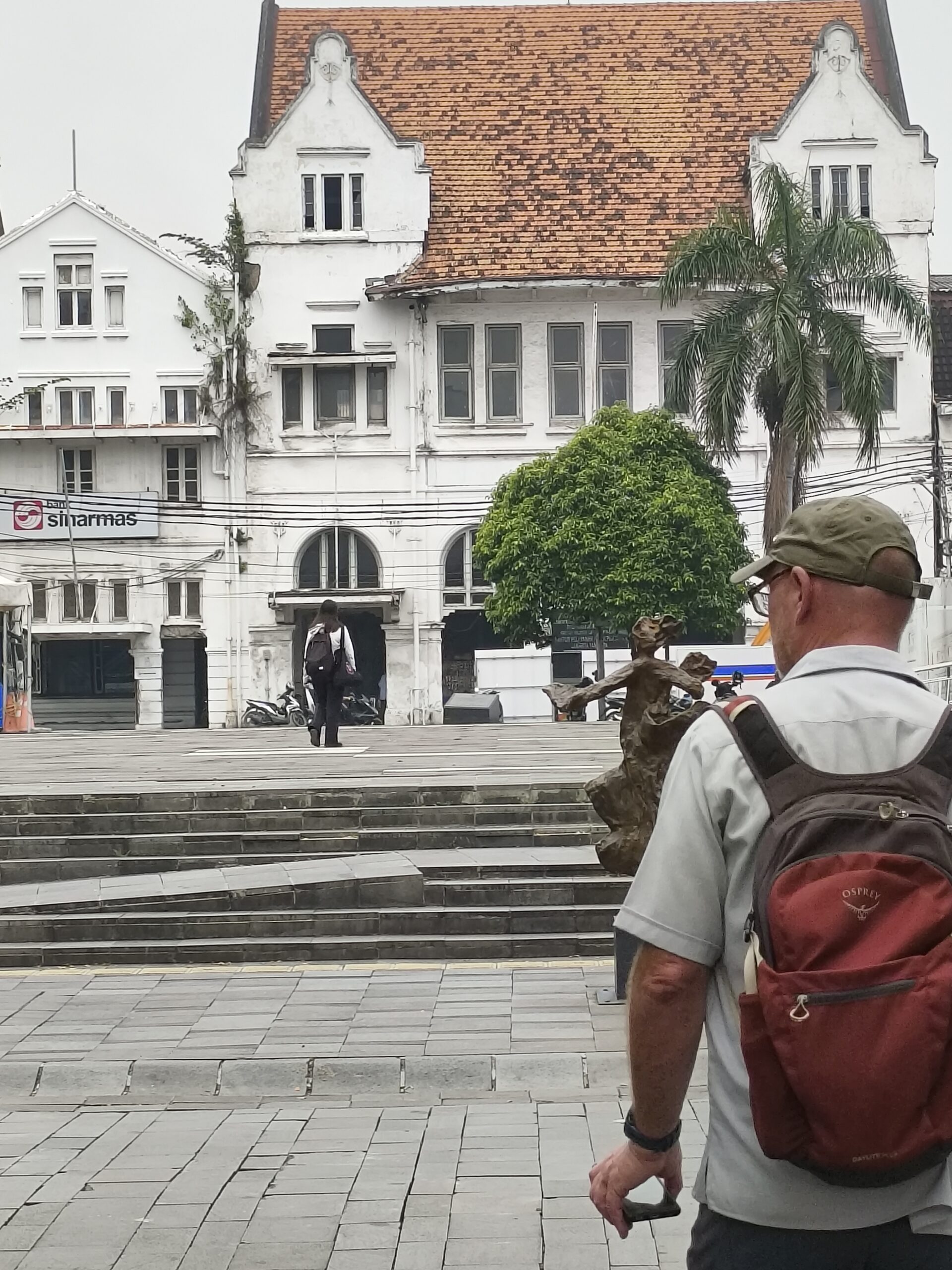
As you can see, when we were there we came across a large group of young students who had a field trip with their school. Something we would experience at almost every attraction we visited in Java.
A pleasant surprise for us, but also for them. Often treating us like movie stars: admiring looks, shaking hands, taking pictures. Always very friendly. Although I honestly have to say, sometimes – after the umpteenth time of taking a photo with us – we considered it was enough.
On the square it’s possible to rent a bike to explore the area. Alternatively, you can book a well organized bike tour (5 hours) along all the major attractions in the Old Town (including the harbor) & around the Merdeka Square as well.
To learn more about this activity, click on: Highlight Bike Tour Jakarta
The Jakarta History Museum
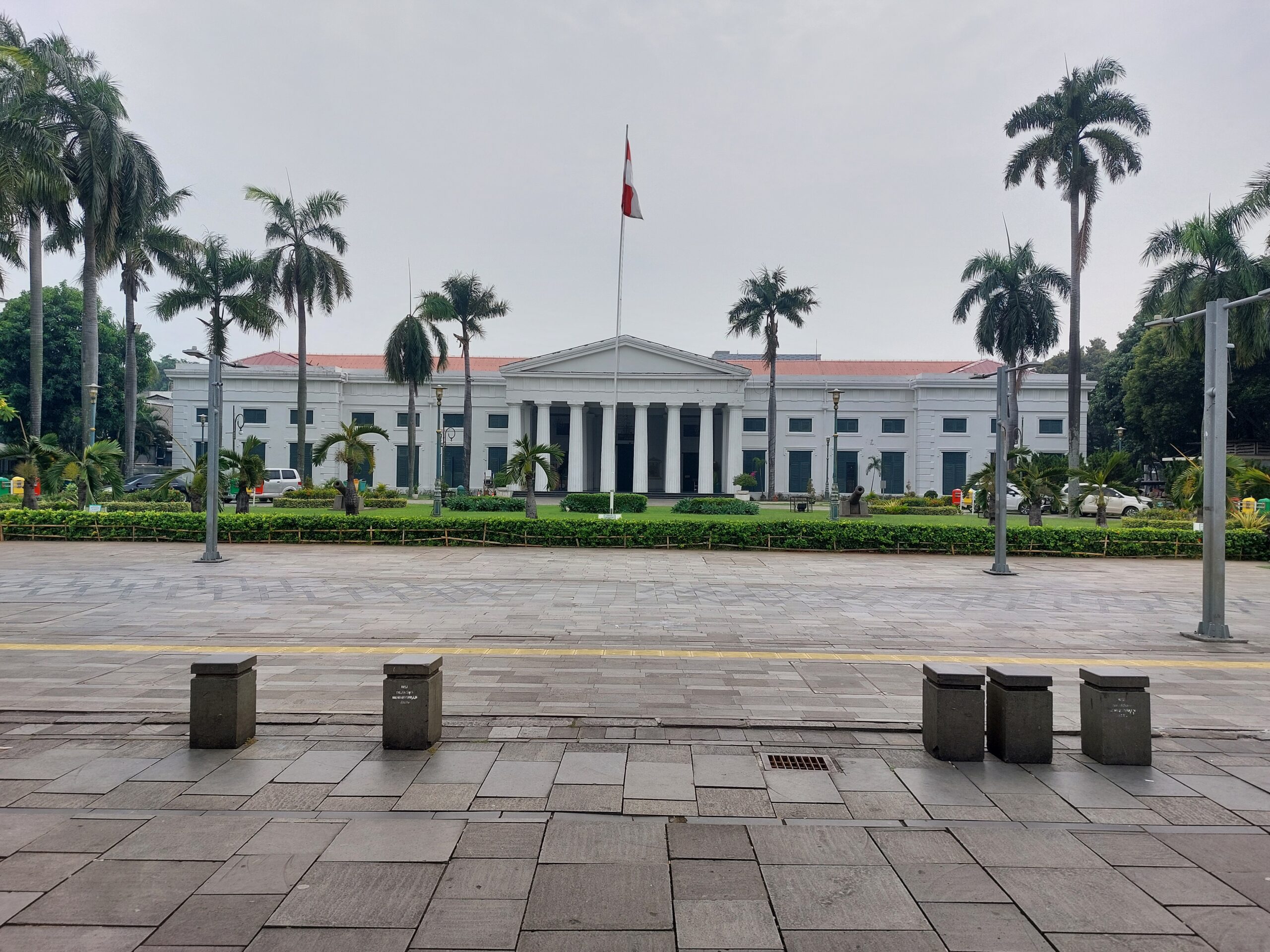
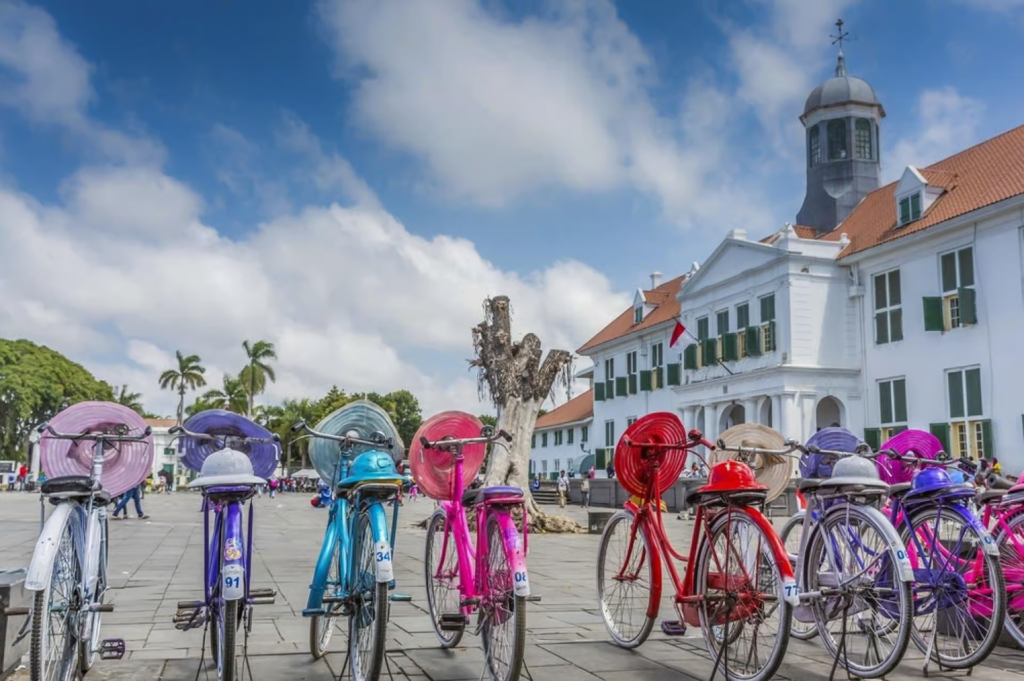
The Jakarta History Museum/Museum Sejarah Jakarta is located along the central square. Housed in the former Dutch Town Hall (see photo above).
A museum which provides a good introduction to Jakarta’s eventful history. From early times until now.
TravelTip: Take into account that most museums in Indonesia are closed Mondays. Like this one.
You can visit the museum on your own, but in this case I’d recommend you to go with a guide. Generally young, English speaking students you’ll find at the entrance. They offer their services for free, but of course a tip is always welcome.
The Wayang Museum
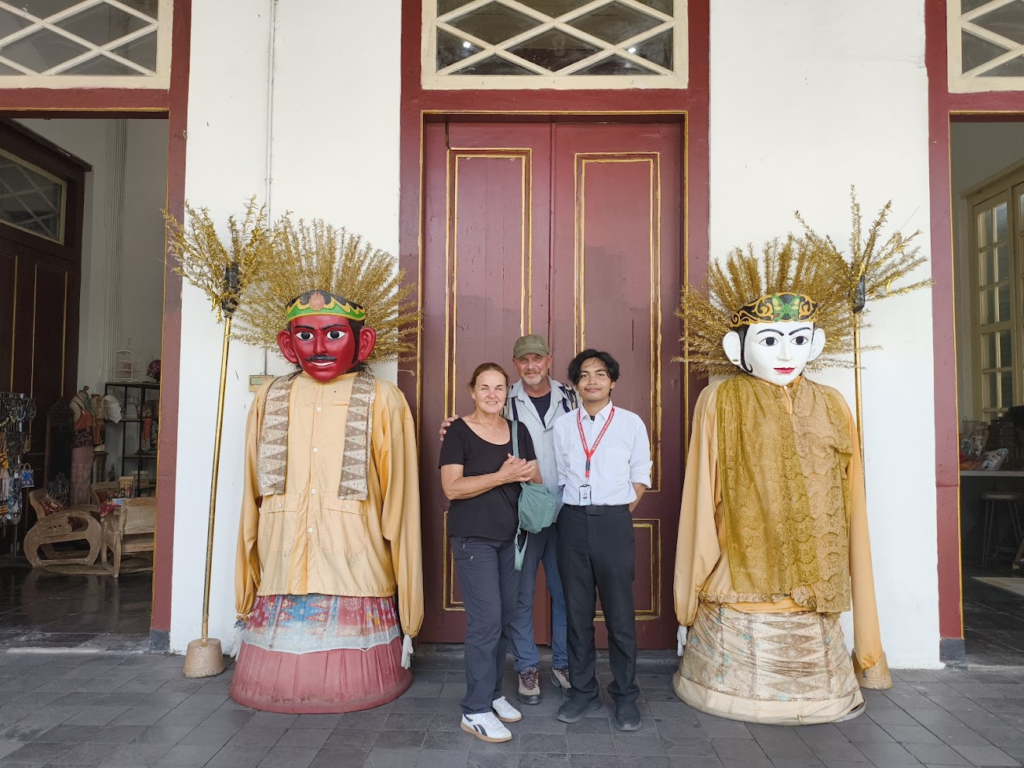
Almost opposite the entrance to the Jakarta History museum, you’ll find a museum dedicated to “Wayang“.
A word that stands for the famous Indonesian puppet , but also refers to its use to tell stories during live performances. Not only a tradition in the capital, but all over the country. Especially Java & Bali.
The museum gives you a good idea of the historical & cultural significance of Wayang. But also presents you with the puppet’s beauty, diversity & significance. Some of which are very old.
Sunda Kelapa – The Old Port
Another area worth your visit when strolling the colonial part of Jakarta is the Old Port, Sunda Kelapa. A fascinating area, located north of the square, a 30-40 minute walk.
- Sunda Kelapa was the former name of the capital, under its first Hindu Rulers (see Short History of Jakarta above).
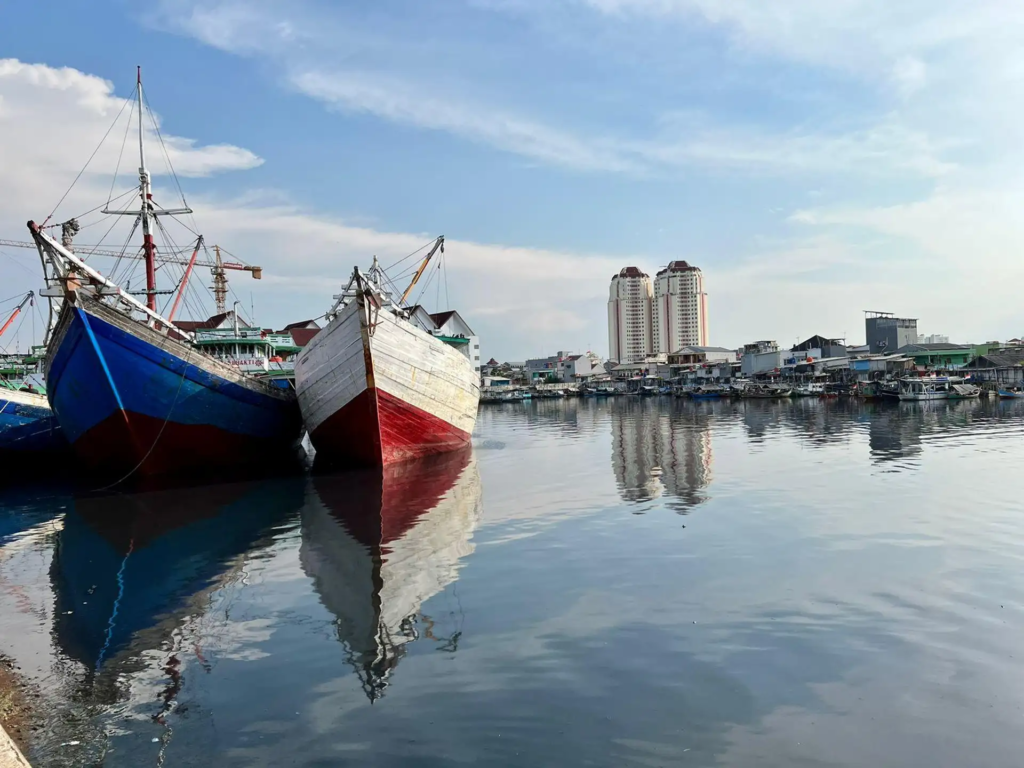
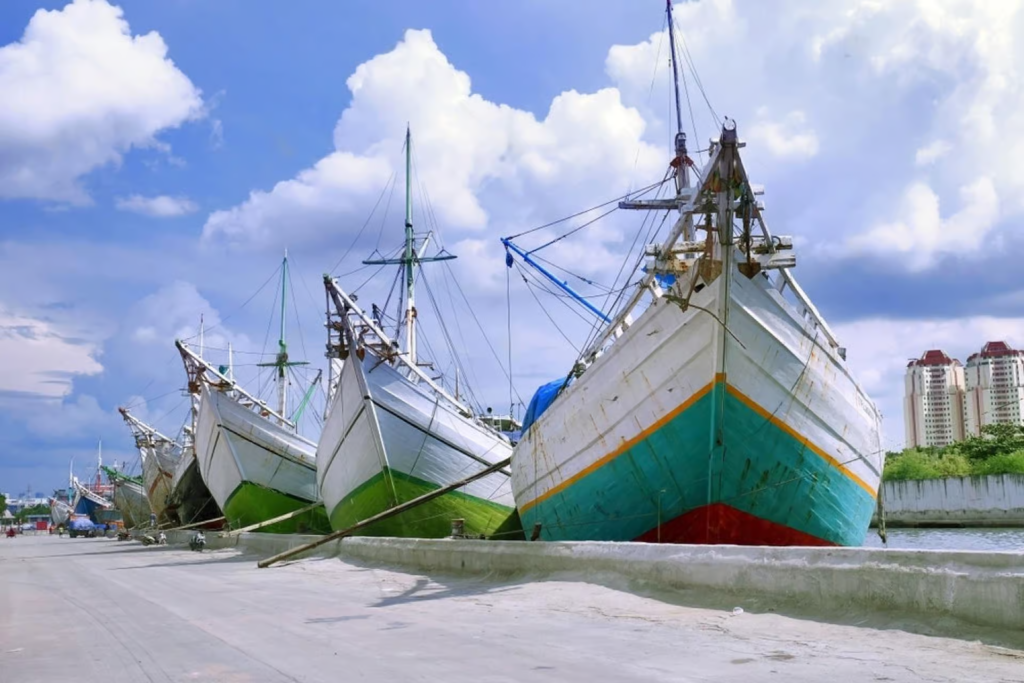
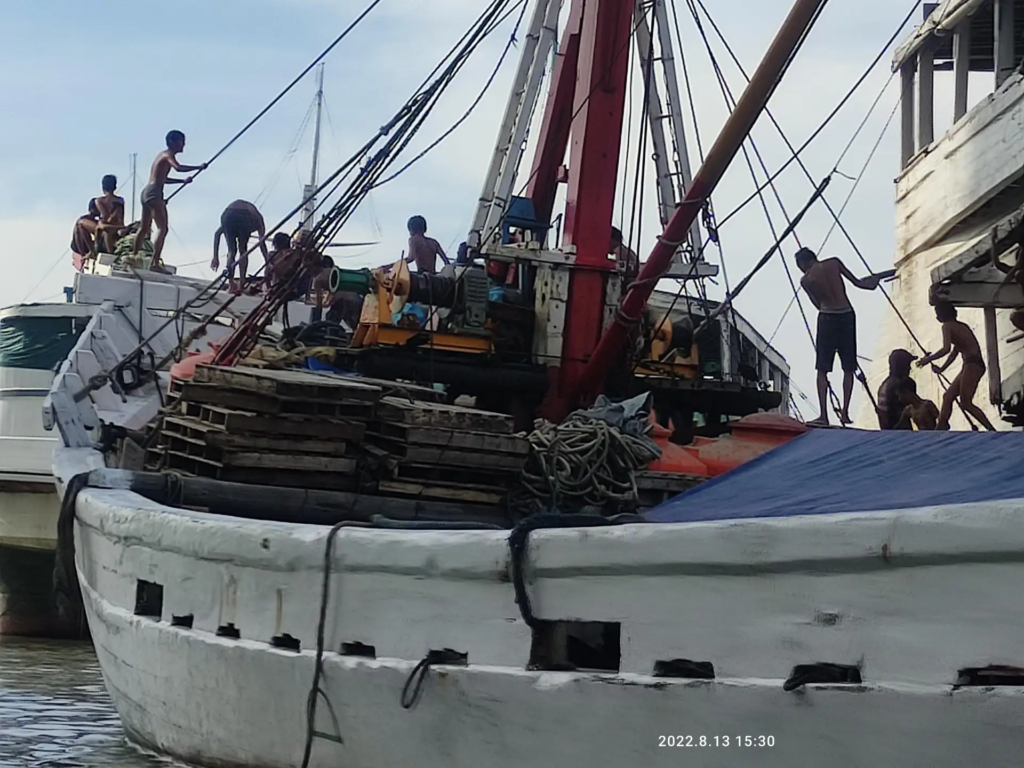
A lively, authentic place to hang around for a while & watch the porters load & unload the beautiful Indonesian sailing ships, the traditional Pinisi.
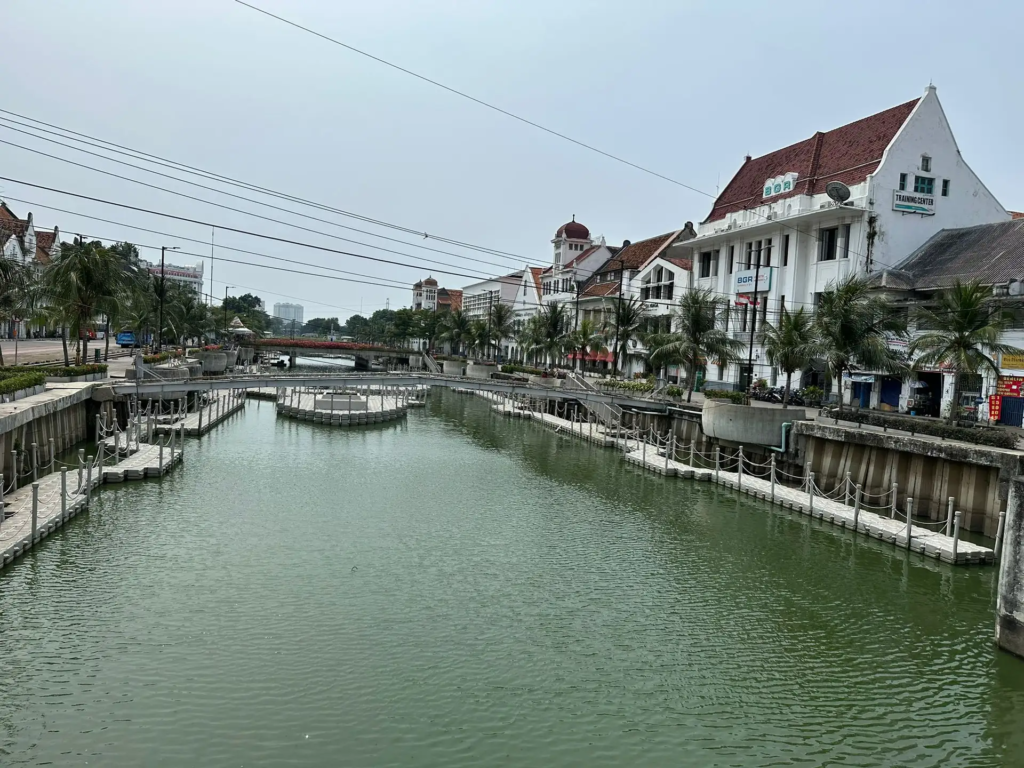
TravelTip: From the Central Square it’s an easy walk to the Old Port. Preferably along the Kali Besar, the 18th century canal built by the Dutch.
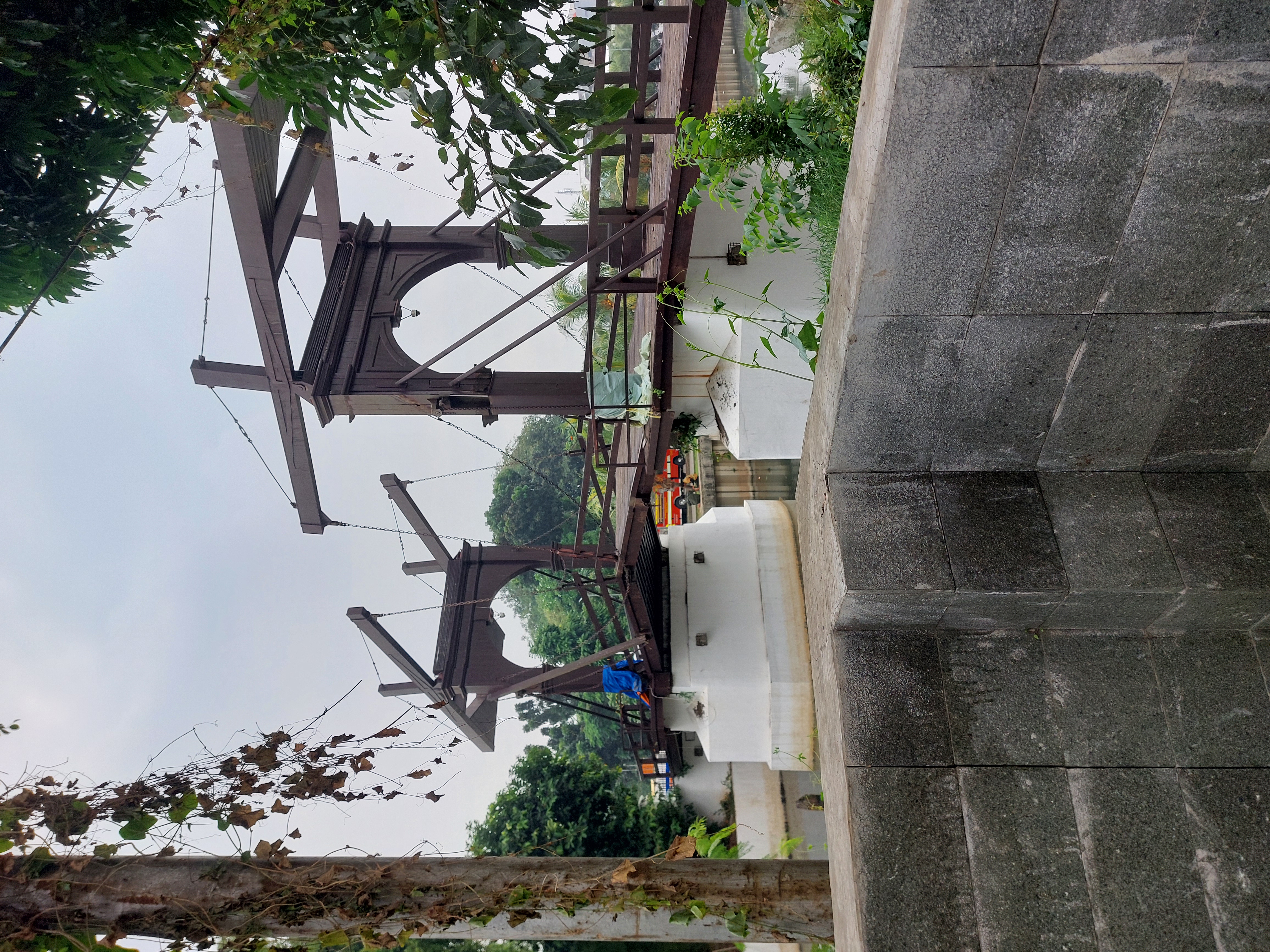
- In the past the canal was the main gateway to Batavia’s city center. Busy with ships sailing in & out. The banks were lined with beautiful colonial houses. Today, some of them are restored to their former beauty. Others, waiting for it.
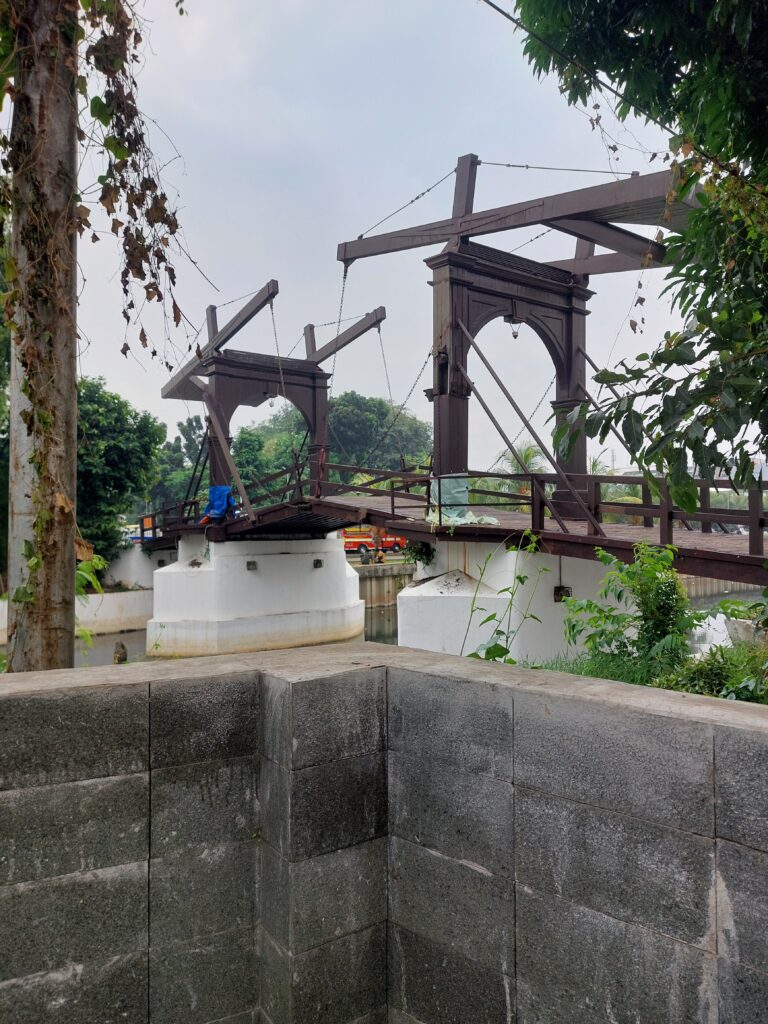
Following the canal, you’ll automatically encounter the eye-catching Kota Intan/ Diamond City Bridge, built by the Dutch in 1628.
Maritime Museum Bahari
Along the way to the harbor you’ll pass the 17th century warehouses of the Dutch East India Company (VOC). These days these monumental buildings are housing an interesting Maritime Museum.
An extensive place showcasing the country’s vast seafaring history through a collection of traditional boats, navigational tools & maps. Explaining visitors the importance of the spice trade, which attracted merchants from all over the world. Famous ones & forgotten ones.
After the visit you can climb the historic watchtower – Syahbandar Menara – near the entrance to the museum. Providing you with an overview of the harbor and part of the inner city.


Chinatown – Glodok
In the opposite direction – that is, south of the Central Square – you’ll find the capital’s Chinatown. Located in the neighborhood of Glodok. Although busy & noisy, it is also a fascinating part of the capital.
A world in itself, like the former colonial part of Batavia. Full of its own history as well.
We visited Chinatown at the end of our trip to the old town. Shortly though. First of all because we were tired after a long, tropical hot day in the Dutch colonial part & also because the first torrent of rain announced itself.
Still though, if you have the time & energy Chinatown lends itself perfectly to lose yourself in another world. Including the Pasar Kemenangan/Petak Sembilan Market. One of the biggest fresh markets in Old Jakarta.
Other attractions in the Old Town
Depending on your interest, you may also visit when strolling the Old Town:
- The Museum Bank Indonesia: Located in an impressive Dutch colonial building, in this museum you get an overview of the country’s history from a financial perspective.
- Museum Bank Mandiri: Although also about the financial history of the country, this museum is more focused on the colonial period. And also located in a beautiful monumental building (Art Deco style this time).
- The Museum Seni Rupa Dan Keramik, located along the Central Square, houses some top pieces for the lover of Fine Arts & Ceramics.
Visit Jakarta: Personal Safety
In general Jakarta is a safe place to get around. As is the country of Indonesia.
However, as in every big city, always be aware of people who try to extort money from you. Or, try to steal something which belongs to you.
You may think about:
- Taxi or tuk-tuk (“Bajaj”) drivers who try to overcharge you. Fix a price beforehand. Or ask for a “taxi meter” (if present).
- Pickpockets in busy areas & in public transport.
- Be extra careful or avoid altogether certain areas in the Old Town after dark.
Just always be aware of your surroundings & the things you do. That’s the best advice I can give you. But again, after our whole trip through Java & Bali we consider Indonesia a safe country to travel to.
Visit Jakarta: Merdeka Square Area
Merdeka Square & Monument
The central area is known as Jakarta Pustat. As Kota Tua, marked by a Central Square.
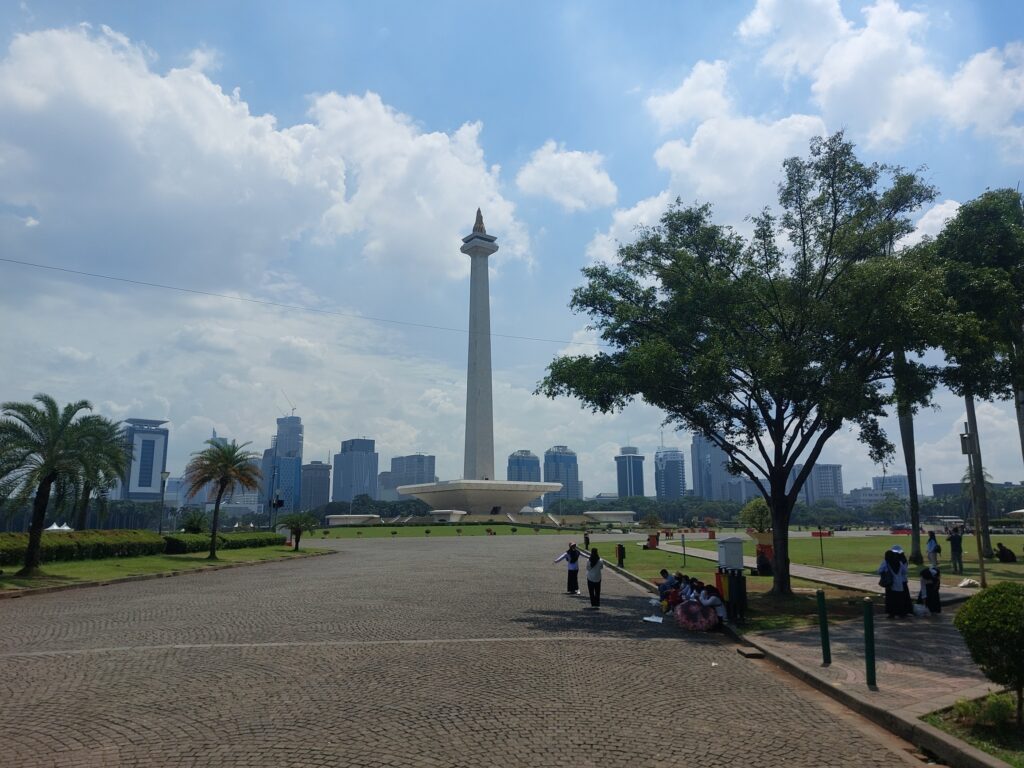
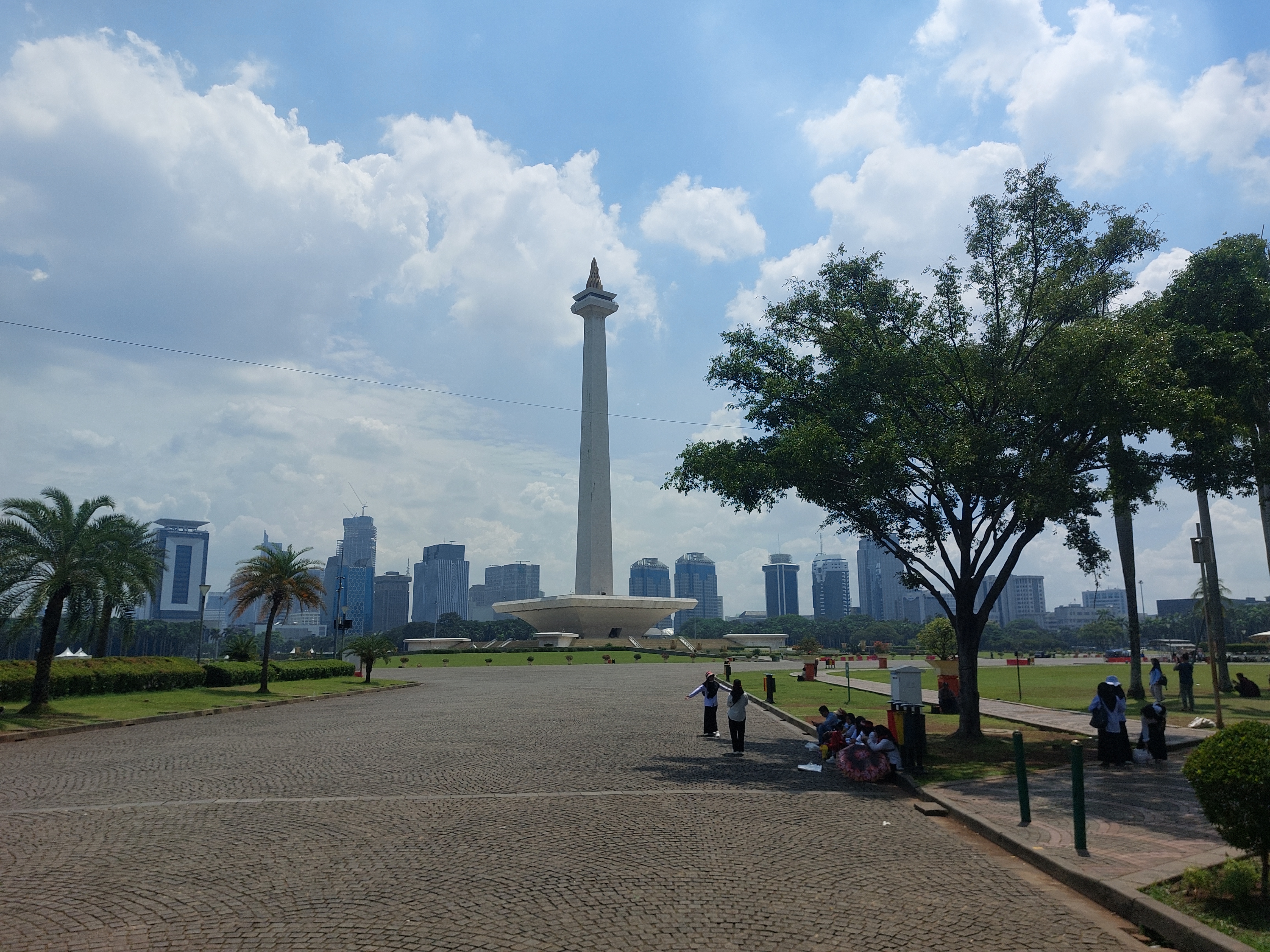
A much bigger square this time, the Lapangan Merdeka or Merdeka Square. An ideal place to escape the busy & noisy traffic around for a while. Certainly, the shady wooded area.
- In colonial times this enormous square was known as “Koningsplein”, the Kings Square.
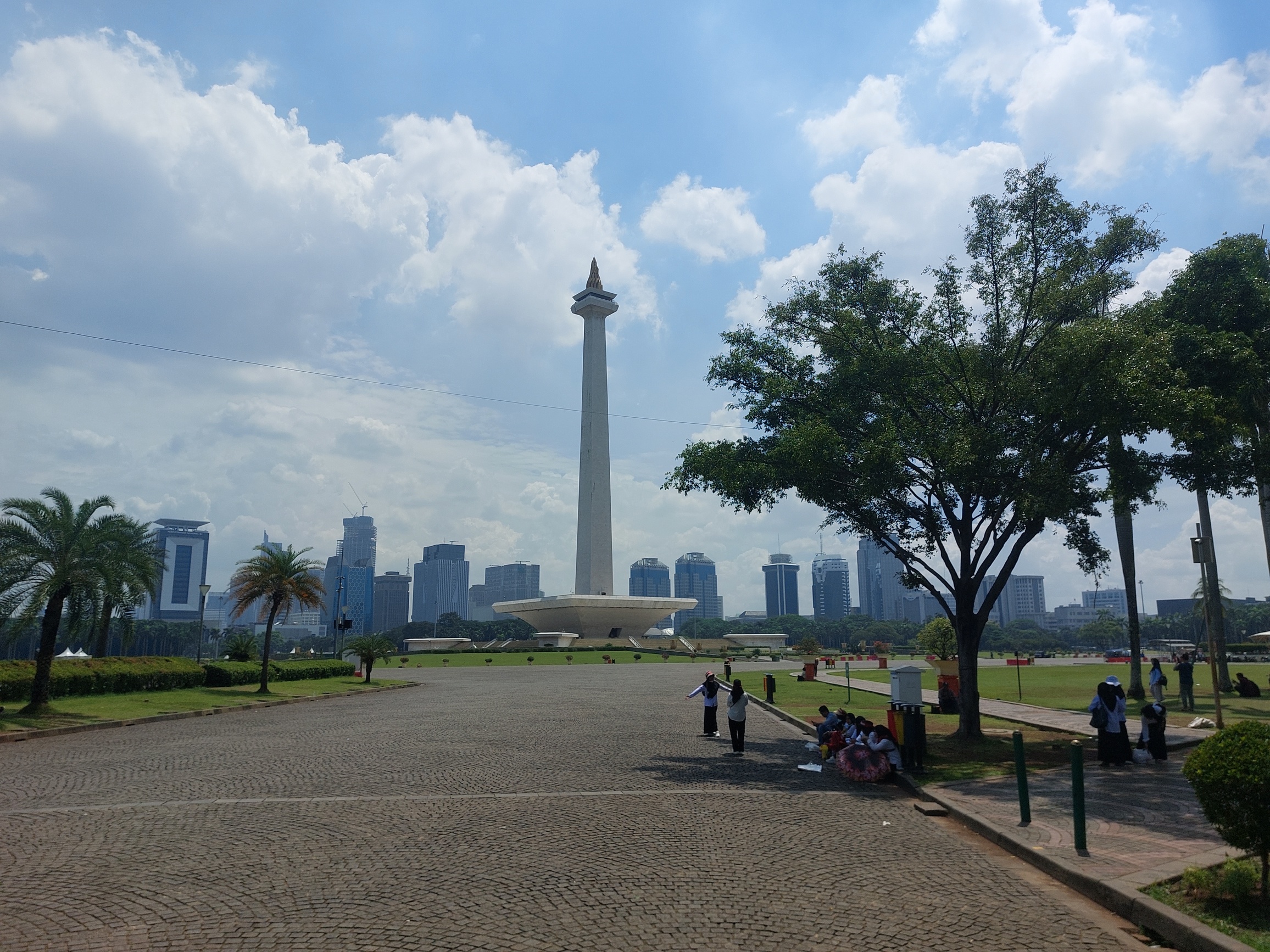
Merdeka means “Independence” & that’s what this square stands for. Underlined by the 132m/433ft tall monument in its center. The “Monumen Nasional“. A sky-high obelisk-like structure, you can visit – almost to the top.
Like its smaller colleague in the old town, Merdeka is surrounded by several interesting attractions. Monumental buildings & some interesting museums.
Museum Nasional/Museum Gajah
Located on the west side of the Merdeka Square, you’ll find the country’s major History Museum. It houses an enormous collection of older antiquities from all over the country. Again, exhibited in an impressive colonial-era building.
Besides the many items & artifacts from the main islands, there’s ample attention for the birth of humankind.
- Remembering the fact that old traces of the first “hominids” are found on several islands of Indonesia, like Java, Flores & East Timor.


If you want to know more about Indonesia’s distant past, its culture & diversity, I highly recommend you to visit this museum.
Also, when you already visit the History Museum in the Old town, which is primarily focused on Jakarta & modern history.
Galeri Nasional
For art lovers there’s a beautiful museum on the opposite side of the Merdeka Square (east side). A collection of thousands of art works – mainly modern art. As well as regular special exhibits. And anew, located in a colonial building.
TravelTip: Take into account that most museums are closed on Mondays. Like this Art Gallery/Museum.
Istiqlal Mosque
In the northeastern corner of Merdeka Square you´ll find the impressive Masjid Istiqlal. The largest mosque in Indonesia & South-East Asia. And even one of the largest in the world. It’s quite modern & opened its gates in 1978.
- Istiqlal is the Arab word for “Independence”.


TravelTip: The Mosque is open to non-muslims, but you have to follow certain rules. Like being respectful & quiet. But also following a dress code: covering legs, arms & shoulders. As well as, taking of your shoes before entering.
Jakarta Cathedral & Immanuel Church
Neighbouring the Istiqlal Mosque, you can visit the neo-gothic Jakarta Cathedral (1901, Catholic).
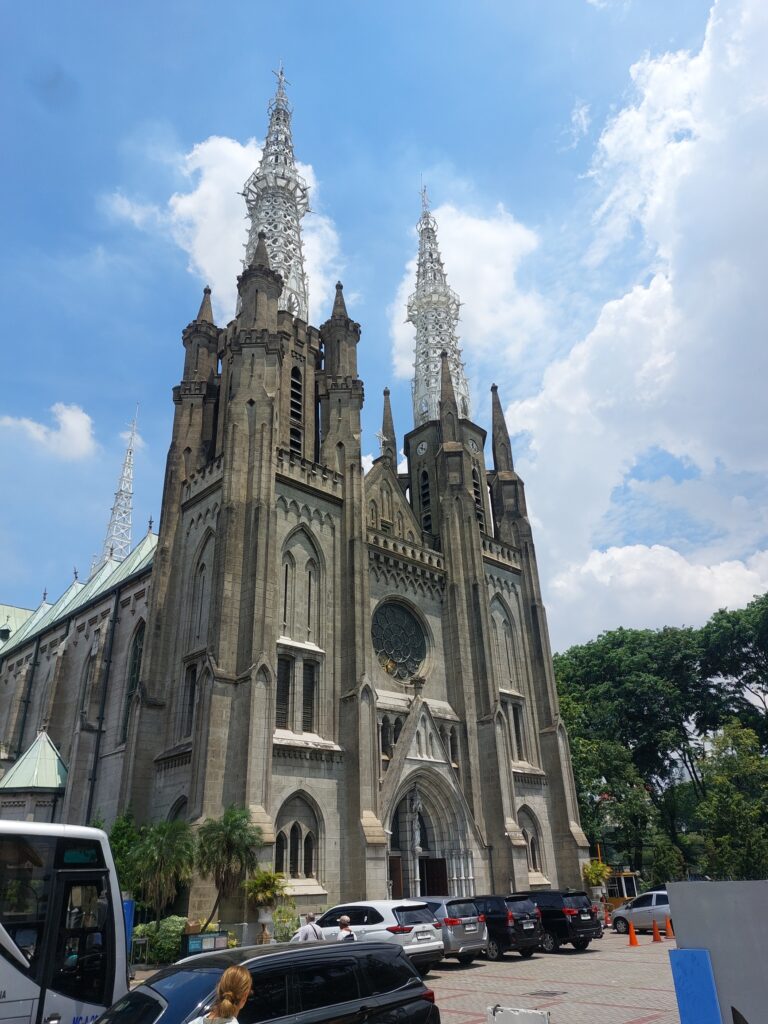
Besides that, a little further away, but on the same side of the Merdeka Square you can find the Immanuel Church (1839, Protestant).
Three impressive buildings, close to each other. Foremost confirming Indonesia’s historic tolerance to religious freedom.
- Around 87% of the Indonesian population is Muslim. 10% Cristian, with a majority being Protestants & 3% Catholic. The remaining 3% include Hindus & Buddhists.
Presidential Palace
North of the square you can have a quick look at the “Istana Merdeka“. One of the six Presidential palaces in the country.
- It’s actually the site of two palaces. Besides the one mentioned, there’s a second one in the back, facing the river – the “Istana Negara“.
- Five palaces are located on Java, one on Bali. And with the birth of the new capital of Kalimantan (see Short History above), a 7th palace is under construction.
- This particular palace was formerly the residence of the Dutch governor. When Indonesia reached independence (1949) thousands of people gathered here to see the Dutch flag being exchanged for the Indonesian one.
TravelTip: Unfortunately, the Palace isn’t open to the public. Main exception is Independence Day (August 17), when visitors are welcome to witness the flag-raising ceremony.
Jakarta Highlight Tours
As we had 4 nights in Jakarta, we did most things on our own. This generally meant getting to a certain area from our hotel by taxi & walking from one attraction to another.
Tiresome in the tropical heat, but also a good way to get to know certain areas.
Alternatively there are well organized tours to the main attractions. Accompanied by professional guides, including transport.
Of all the travel platforms who organize these tours with local agencies & guides I prefer GetYourGuide.
Professional, experienced, trustworthy, affordable & refundable if something unforeseen comes up (that is, until 24 hours before a tour or show)
So, if you don’t have so much time to spend in Jakarta. Or just like things getting arranged beforehand – like transport & tickets – I’d highly recommend you to buy a tour arranged by GetYourGuide.
Concretely there’s a full day tour (7 hours) which included visits to the Old Town, Chinatown & harbor, as well as the Merdeka Square & around.
To learn, more click on: Full Day Highlight Tour of Jakarta
Or else, a half day tour (4.5 hours), which also includes attractions in both areas, Central & the Old Town (but without a visit to Chinatown).
To learn, more click on: Half-a-day tour of Jakarta
Visit Jakarta: Where to Stay
Logically a megacity like Jakarta offers a wide & diverse range of accommodations.
I’d like to limit myself to a few hotel options. Three in every category – budget, mid-range & high end – in the two zones presented so far: The Old Town/Kota Tua & the area around Merdeka Square.
All these hotels get good reviews, feature a swimming pool & offer an excellent breakfast (generally a buffet). Sometimes free, other times optional.
Old Town/Kota Tua
This area is perfect when you want to focus your visit primarily on the historical area & Dutch colonial heritage sites.
IMPORTANT: Not one of the hotels mentioned below is located actually within the boundaries colonial part, but close by. At walking distance.
Budget option: Holiday Inn Express Jakarta
There are several Holiday Inn’s in Jakarta (5), but this one is actually the Holiday Inn Express Jakarta International Expo by IHG.
Besides an affordable option, this 3-star hotel offers clean, spacious rooms. Most of them provide nice city views. Also a modern pool & a breakfast included in the room price.
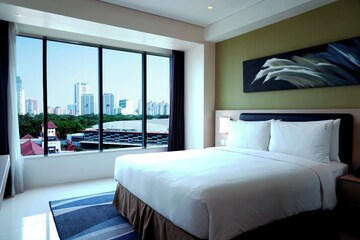
To learn more about this hotel, click on: Holiday Inn Express Jakarta
Mid-Range option: Mercure Jakarta Kota
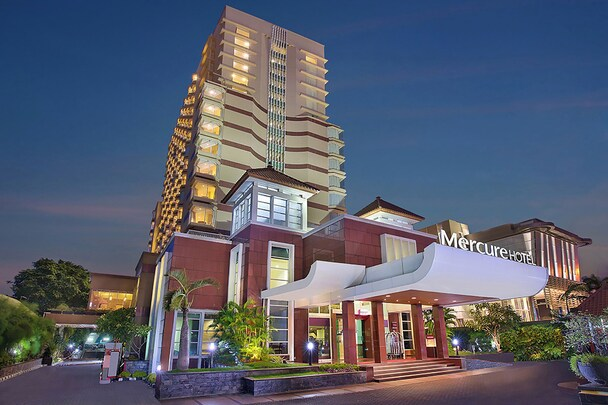
A popular option very near the Old Town is the Mercure Jakarta Kota.
A modern hotel featuring spacious rooms with city views. It has a great outdoor pool, a spa & excellent breakfast buffet (not included in the room price, but optional) .
To learn more about this hotel, click on: Mercure Jakarta Kota
High-End: Santika Premiere Hayam Wuruk
As a somewhat more expensive – but still more than affordable – High-End option I’d like to present to you the Hotel Santika Premiere Hayam Wuruk.
This 4-star hotel is located in the heart of the Glodok district. Home to Jakarta’s Chinatown & close to the Old Town/Kota Tua.
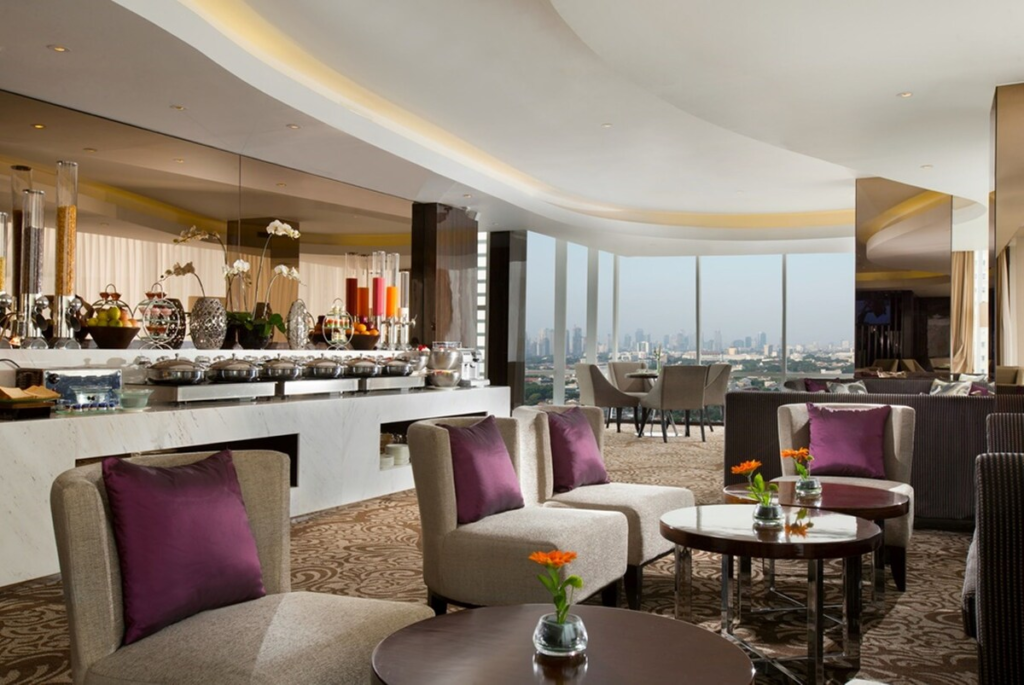
The extras you receive in this luxurious, but also traditional hotel are – besides an outdoor swimming pool – the panoramic Sky Lounge (both on the 22d floor). As well as an exclusive restaurant with many local specialties.
To learn more about this hotel, go to: Hotel Santika Premiere Hayam Wuruk
Around Merdeka Square / Central Jakarta
Hotel options in Central Jakarta, the heart of the city.
Budget: YELLO Hotel Harmoni Jakarta
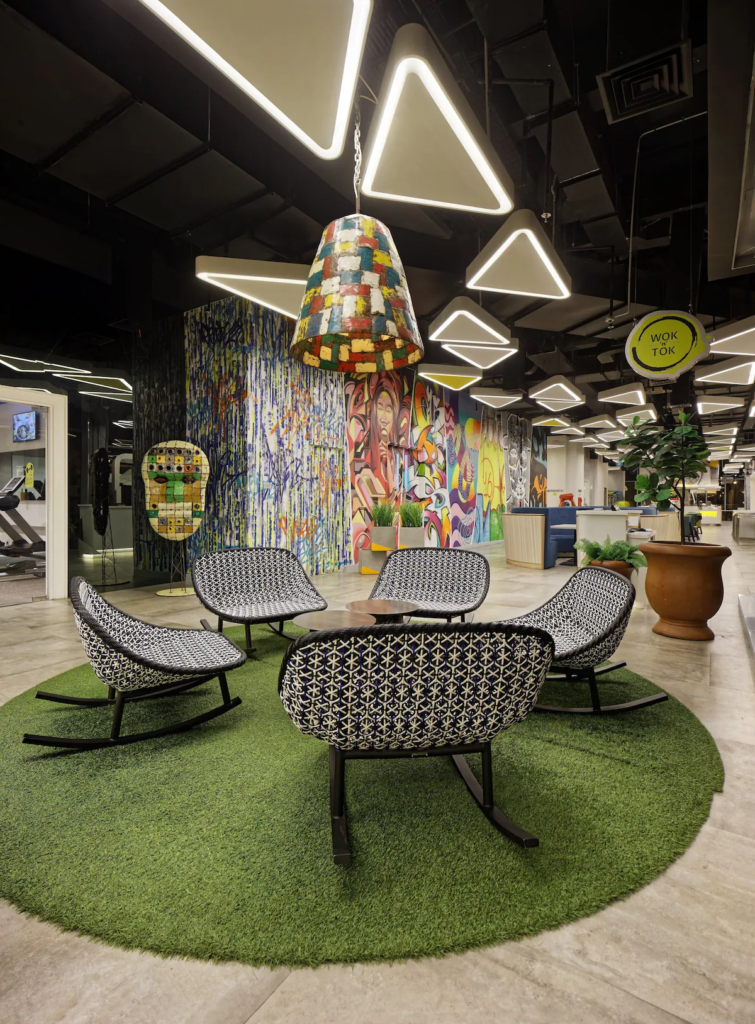
The Yello Hotel Harmoni is a 3-star hotel. Modern, vibrant & informal, I’d describe this place. A hotel where service is 24/7, also when you want a midnight bite & drink.
The YELLO doesn’t have a pool, but there’s the possibility to book a room with access to the pool of the neighboring Vertu Harmoni (see below). Breakfast here is great (buffet), but optional.
- When you want to include breakfast it’s best & generally cheaper to include it when reserving a room.
To learn more about this hotel, click on: YELLO Hotel Harmoni
Mid-range option: Vertu Harmoni Jakarta
The neighboring Vertu Hotel Harmoni Jakarta is a contemporary 4-star hotel.
- The Vertu Harmoni is actually in the same building as the YELLO hotel presented here above.
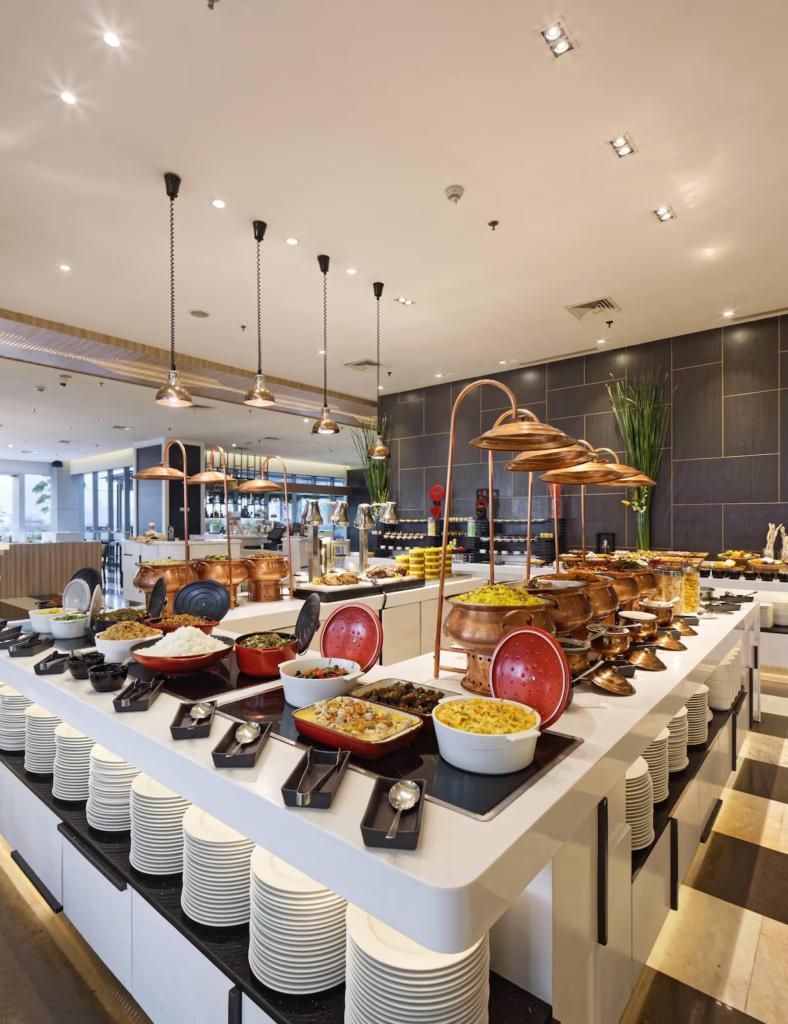
Spacious rooms, friendly staff, excellent breakfast (buffet) & welcome outdoor swimming pool.
- We ourselves opted for the Vertu Harmoni. Besides a good, mid-range option, we decided for this hotel because its location. Near Merdeka Square, but also close to the Gambir Trainstation from where we would travel on to Central Jakarta.
To learn more about this hotel, go to: Vertu Harmoni Hotel
High-End: Ascott Menteng Jakarta
Finally, when you’re searching for a more luxurious place, I’d like to recommend the 5-star Ascott Menteng.
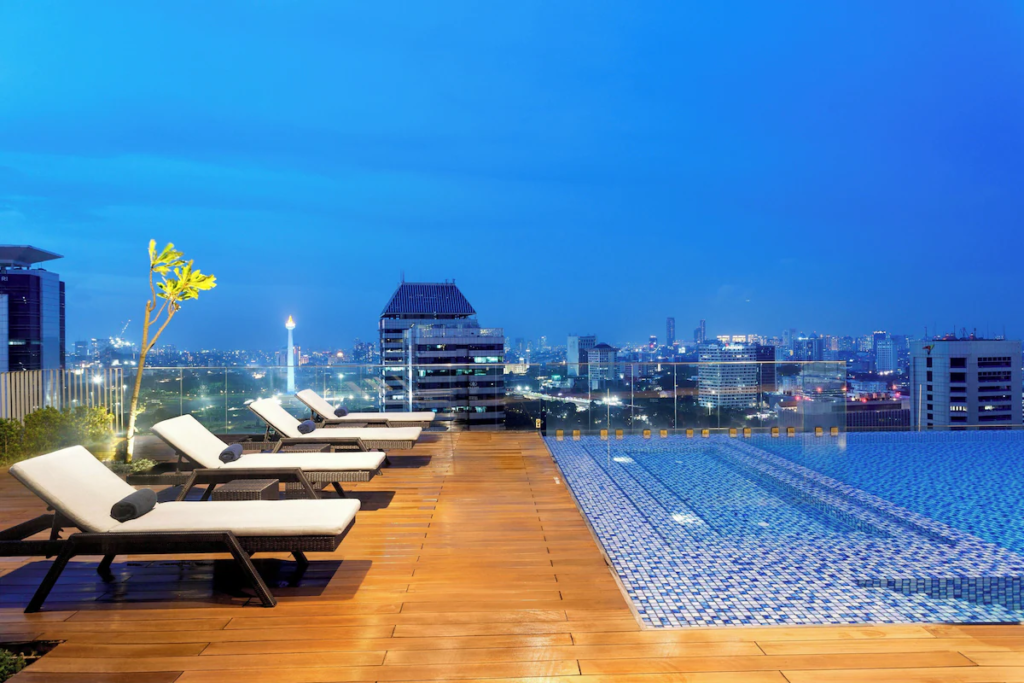
In this place you can expect spacious rooms/apartments, a rooftop pool with spectacular views of the city around, 24 hours service of a professional staff & a refined breakfast.
To learn more about this hotel, go to: Hotel Ascott Menteng
Jakarta things to do: Other areas
Although the main things to do are located around the two historical squares mentioned, South & West Jakarta have other attractions to offer.
The Textile Museum Tekstil
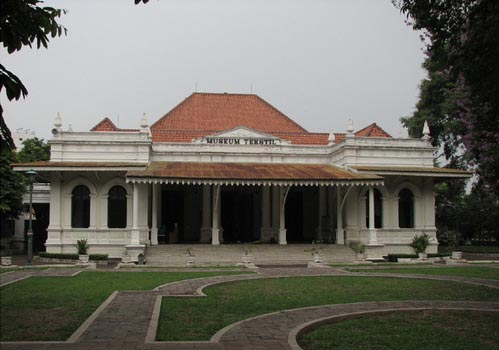
A little southwest of the Merdeka Square – 3km/2mi. – you’ll find this special museum. The Museum Tekstil exhibits thousands of textiles, including many made with a special technique called “Batik“.
- Batik is a wax-resist dyeing technique used to create patterned textiles. A method or style used all over the country, but especially in the Central region of Java. For example, in & around Yogyakarta & Surakarta (Solo).
This museum not only showcases the most beautiful designs, but also explains the way they are produced – the weaving, the dying, et cetera.
To learn about this museum, go to: Museum Tekstil, Jakarta
Museum of Modern & Contemporary Art
Further westward – about 9 km/5.6mi. from Merdeka Square – you can visit the Museum MACAN. Another Modern Art Museum to visit in Jakarta. Besides the Galeri Nasional (see above), which also exhibits modern art.
The MACAN is actually Indonesia’s first private Modern & Contemporary Art Museum, which opened to the public in 2017.
TravelTip: Take into account that most museums are closed on Mondays.
To learn about this museum, go to: Museum MACAN, Jakarta
Jakarta War Cemetery
Officially called the “Ereveld Menteng Pulo”, this cemetery is located 7km/4.3mi. south of Merdeka Square.


Maybe not for everyone, but for us this visit was a personal one. As we knew beforehand two family members are buried there.
All in all, a well maintained impressive spot in the middle of the Jakarta metropole. A place where over four thousand people found their last resting place. Victims of the Second World War & the following War of Independence.
In this case mainly Dutch, English, Australian, Indian & local victims of this brutal war. Soldiers, sailors & airmen, but also civilians who didn’t survive the Japanese prisoner camps.
TravelTip: Entrance to the Cemetery is FREE, but the gardeners had to open the gates for us. They also helped us to find the family graves & even plucked some flowers to decorate them.
The Kite Museum
Further south you can visit the Kite Museum Layang-Layang. Kite flying, which has a long tradition in Indonesia.
- My father-in-law, who lived his childhood years on Sumatra & Java, had the best memories of Kite flying during his youth. The beauty of it, but also the battles with rivals. Trying to cut the lines of your opponent’s kites.
The museum is located 18km/11.2 mi from Merdeka. A half-an-hour taxi ride… if traffic is not too busy of course.
TravelTip: The Kite Museum is an ideal museum in Jakarta to visit when you travel with children.
To learn more, click on: Jakarta Kite Museum
Indonesia Miniature Park
Officially Taman Mini Indonesia Indah. An enormous park, also located in South Jakarta. 22km/13.7 mi. from Merdeka Square.
TravelTip: The Miniature Park is also a perfect place to go with children.
As the park is extensive, you either have to make use of the free hop-on hop-off shuttle bus, or else rent a bike, scooter or golf cart. The same goes for the cable car which provides bird-eye views of the different sections of the park.
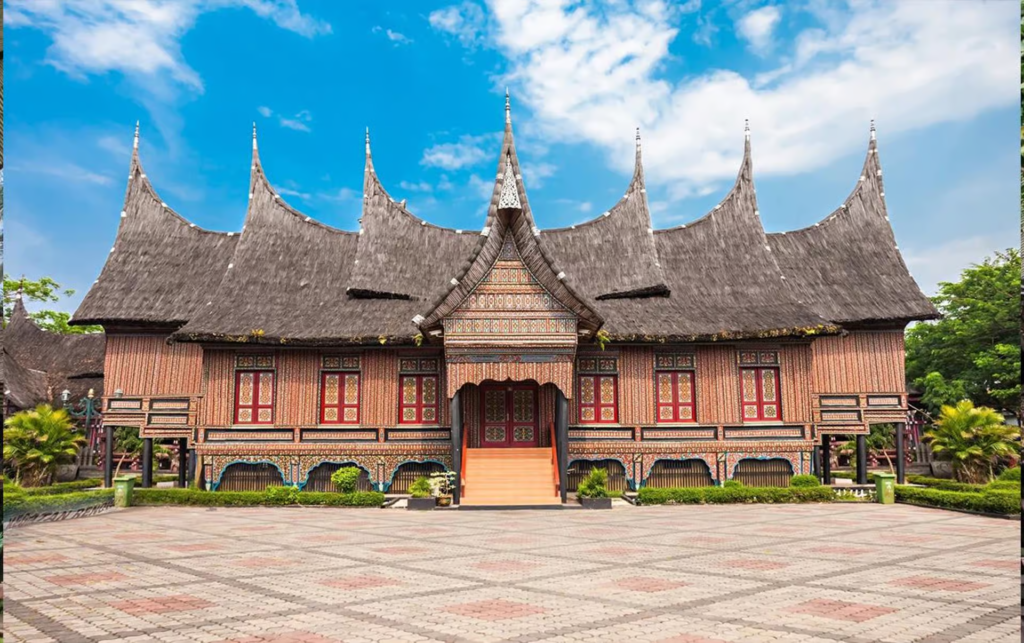
Alternatively you can go on a guided tour of several Jakarta highlights, including the Miniature Park. Besides attractions on & around Merdeka Square, an antique market, a batik shop + museum & more.
To learn more, go to: Jakarta Culture & Landmarks Tour
Day trips from Jakarta
To be honest, the capital of Indonesia is so big & there are so many things to do, few foreign visitors – besides the inhabitants – make day trips around.
If however, you only have time to visit the capital – and an extra day or two to spend – I’d like to recommend the following tours from Jakarta:
Thousand Island Boat Tour
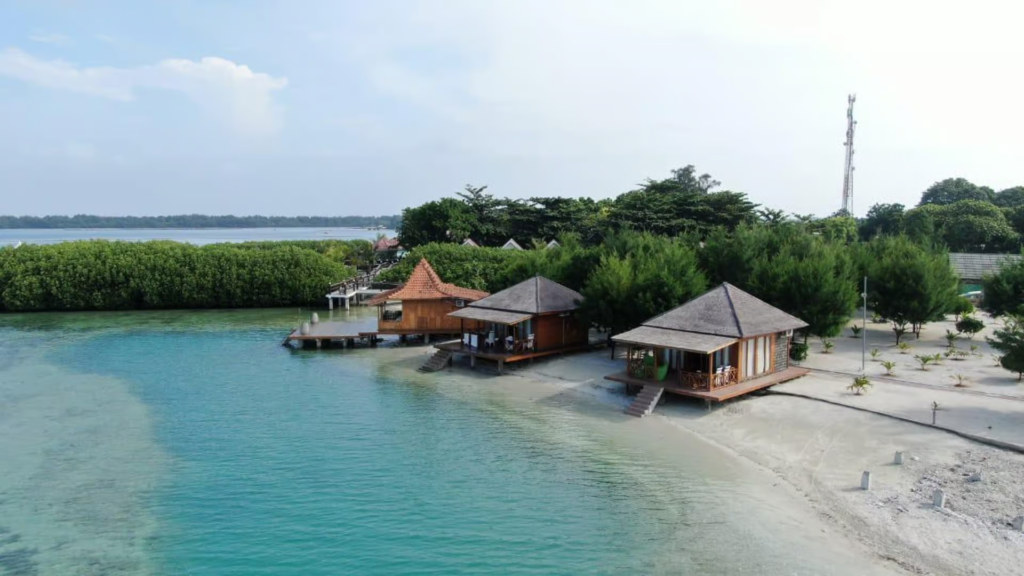
A popular full day tour from Jakarta is to visit “the thousand islands” in the Jakarta Bay.
In reality well over a hundred small islands which offer calm seas, blue skylines, white-sand beaches & palm trees.
In a few words, a fast way to escape the hectic capital for a while & completely relax in a surprisingly tropical green environment.
To learn more: Thousand Island Tour from Jakarta
Inland day-trip from Jakarta
Another popular tour – also filling up a full day – brings you to several attractions/activities on the way to Bandung. Giving you a perfect idea of what lays beyond the capital’s boundaries.
This day-trip includes visits to the Tangkuban Perahu Volcano, a tea and a coffee plantation, rice fields, hot springs, some local food stops & more.
Highly recommended if you don’t have the time to travel too far, but yes want to get an idea of inland Java.
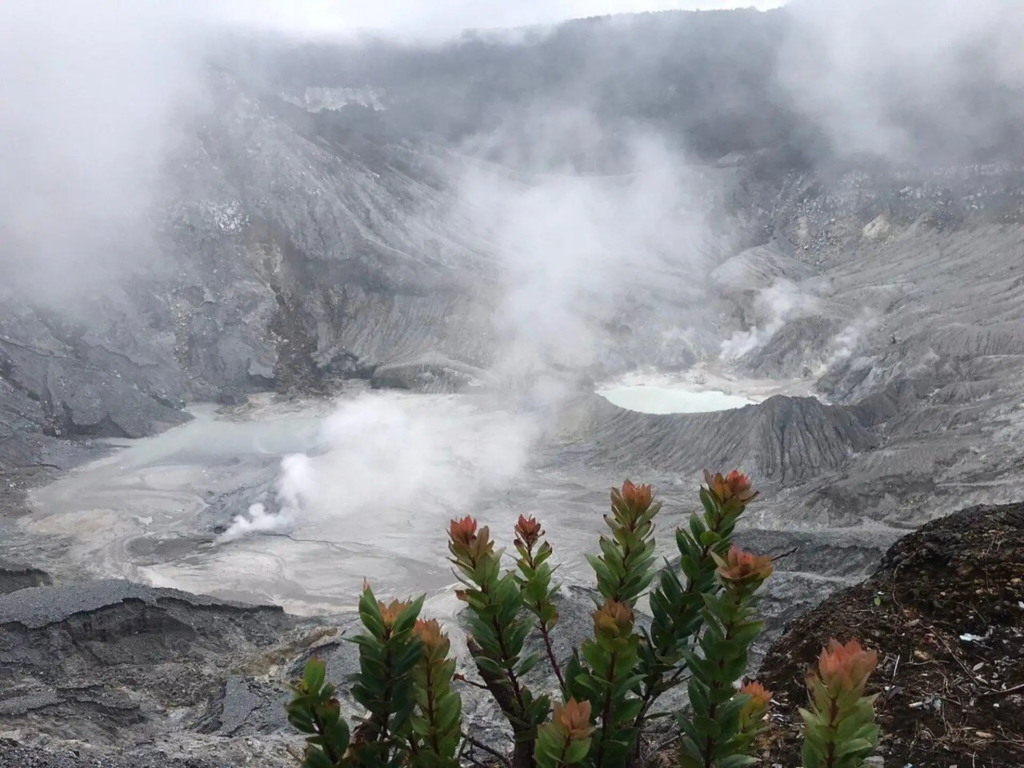
To learn more, go to: Inland day-trip from Jakarta
Bogor’s Botanical Garden
If you haven’t planned a stay in nearby Bogor – 60 km/ 37mi. distant- like we did, I highly recommend you to visit its world-famous Botanical Garden from Jakarta.
Known as the Kebun Raya, it’s a more than beautiful green area in the heart of Bogor. You can easily spend a whole day there.
- The Botanical Garden was first developed by the English Governor-General Sir Thomas Stamford Raffles. Its layout is inspired by the famous Kew Gardens in London. It opened its gates in 1817.
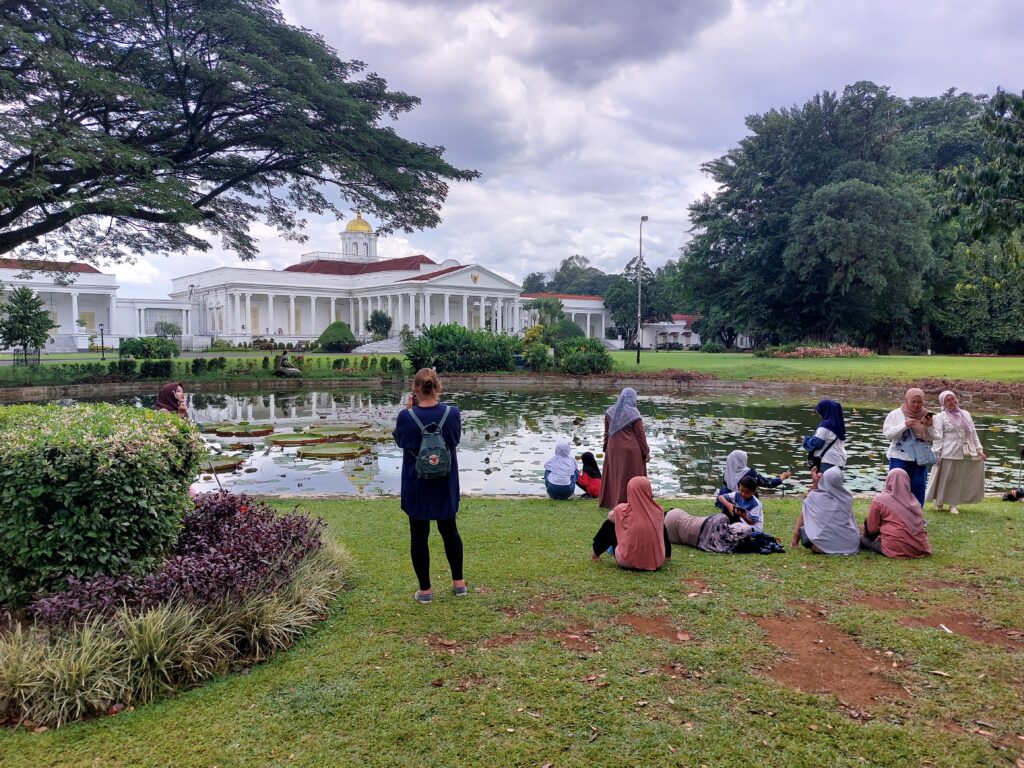
- Bogor’s Botanical Garden is vast, covering 87 hectares and home to over 15,000 species of trees & plants.
Besides that, one of the six Presidential Palaces is located within the Garden.
The following tour combines a visit to the Botanical Garden, with a nearby waterfall & rice terrace. All in all, it makes for a long but green day trip (14 hours), but one you’ll never forget.
To learn more, go to: Botanical Garden, Waterfall & Rice Field
Visit Jakarta: Getting Around
From/To the Airport
Soekarno-Hatta Airport (CGK)
The main International Airport is the Soekarno-Hatta Airport (CGK). Located west of the city. Depending on traffic, a taxi takes 30-40 minutes to the main tourist areas of Jakarta. Being it the central square of Kota or Central Jakarta.
- Be aware though, the ride will take longer during rush hours. Usually between 7-10 AM and 4-7 PM on weekdays.
TravelTip: Use an official taxi company like Grab, Bluebird or GoJek. All of them use apps.
Alternatively there’s a cheaper option (avoiding traffic jams). Taking the train from the Airport to the BNI City Station. Located in Central Jakarta. About 4km/ 2.5mi. south of Merdeka Square.
TravelTip: You can either get a taxi at the airport. Or else, if you prefer, arrange a transfer beforehand, using the link below.
To learn more, go to: Transfer from Soekarno-Hatta International Airport

The Halim Perdanakusuma Airport (HLP)
If you arrive with a Domestic flight at the older airport, a taxi is the best, if not the only option. This airport, located in East Jakarta, is closer to the tourist areas in distance, but travel time is the same.
Personal note: As we decided first to visit Bogor – south of Jakarta – we arranged a taxi beforehand from the airport. At the time we were traveling almost 72 hours – with stops in Amsterdam & Istanbul – and arrived early in the evening (see Bogor for more info).
Getting around in the city
There are many ways to get around in Jakarta. Depending also on where you are staying & where you want to go.
Instead of treating them all, I’d highly recommend you to consider using a taxi service. Or else, if you don’t have to go that far consider a Tuk-Tuk (“Bajaj” in Indonesian) or Motorcycle Taxi (Ojek).
That is, besides walking of course – to explore the city at your own pace.
Using a taxi is relatively cheap. Certainly when you fix a price beforehand or ask the driver to use the taxi meter.
TravelTip: Use a oficial taxi company (Grab, Bluebird or GoJek), for a guaranteed price. And – if happy with the service – you may tip the driver. A 10% is a good estimate (rounding up the fare).
On Java we mainly used Grab, but in Jakarta mostly Bluebird & didn’t have any problem.


TravelTip: Take into account that most Indonesians don’t speak English. So – besides studying Bahasa, consider writing down your destination or bring a map to avoid getting lost.
Besides a taxi or tuk-tuk, you can also take the train between the Old Town and the Central part of Jakarta. Both main train stations are closely located to the central squares.
Alternatively there are bus services, mini-vans, underground & above ground trains. Be aware though, to use public transport you have to purchase an electronic/e-money card.
In a few words, concerning transport there are too many options to choose from. So again – when staying for a few days only – consider using official taxis as the fastest & safest. Also because they are really affordable in Indonesia.
Getting Out of Jakarta
A short note on leaving the capital. Depending your next destination you can choose between a flight, a boat, a (mini-)bus, rent a car or motor bike, or the train.
We ourselves opted to use the train, traveling to Yogyakarta, Central Java. An ideal – affordable & comfortable – way of travelling through many parts of the island.
Overview Indonesia Posts:
Other travel posts written about destinations within Indonesia:
JAVA
- Bogor
- Yogyakarta
- Surakarta/Solo (under construction)
- Semarang (under construction)
BALI
For an overview of all travel posts of my blog, go to: My Home Page